A push by global technology leaders to slow the pace of artificial intelligence development could buy Indonesia time to build local capability, but it may also raise the cost of the hardware and compute power needed to do so.
Indonesia AI firms may gain time from slower launches
The central economic issue is not whether AI stops advancing — it is whether a slower release cycle from frontier players gives emerging markets room to absorb, adapt and commercialize existing tools before the next generation arrives. For Indonesia, that matters because the country is still largely a consumer of AI rather than a builder of frontier models, leaving its firms, universities and agencies dependent on foreign platforms and APIs.
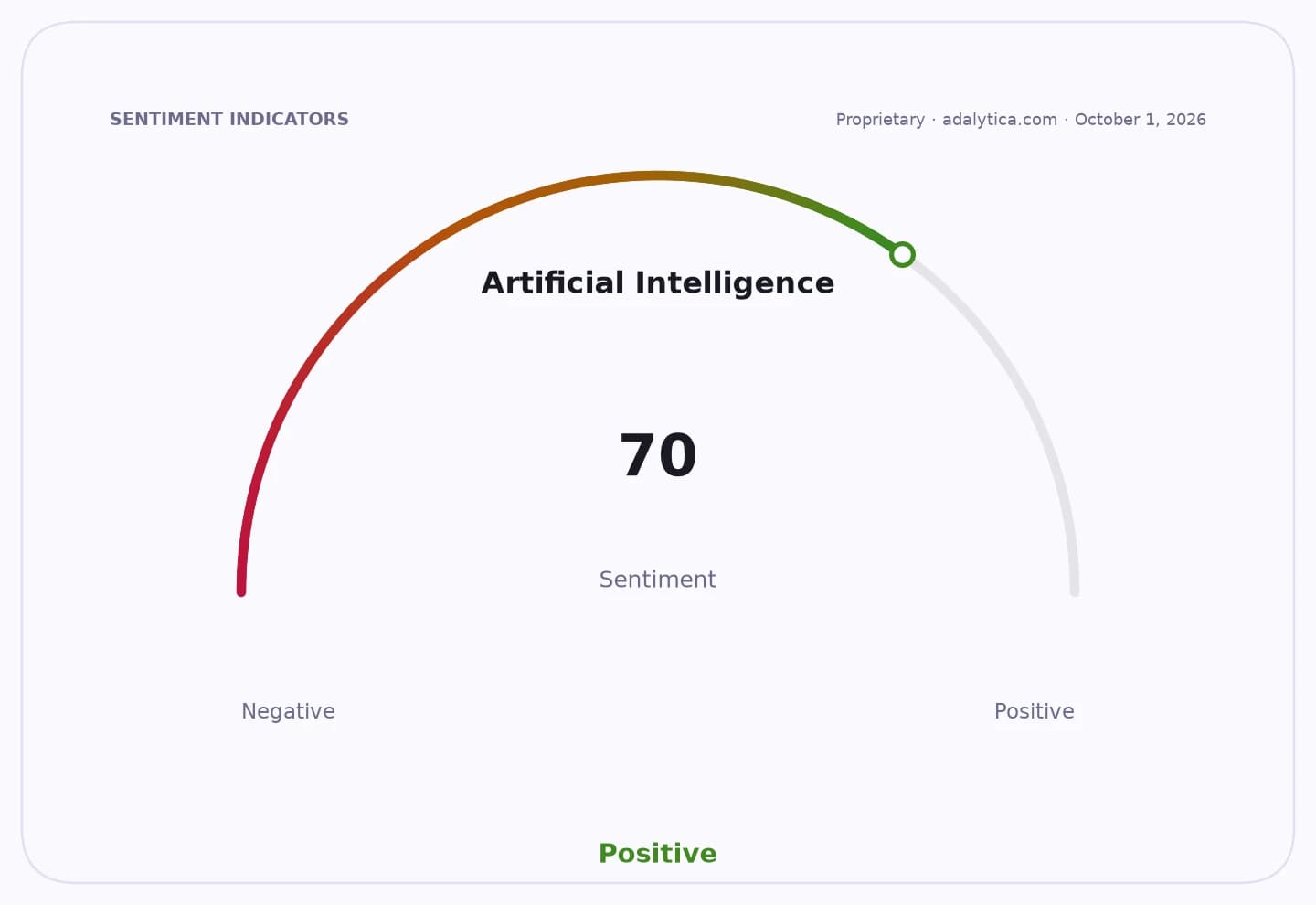
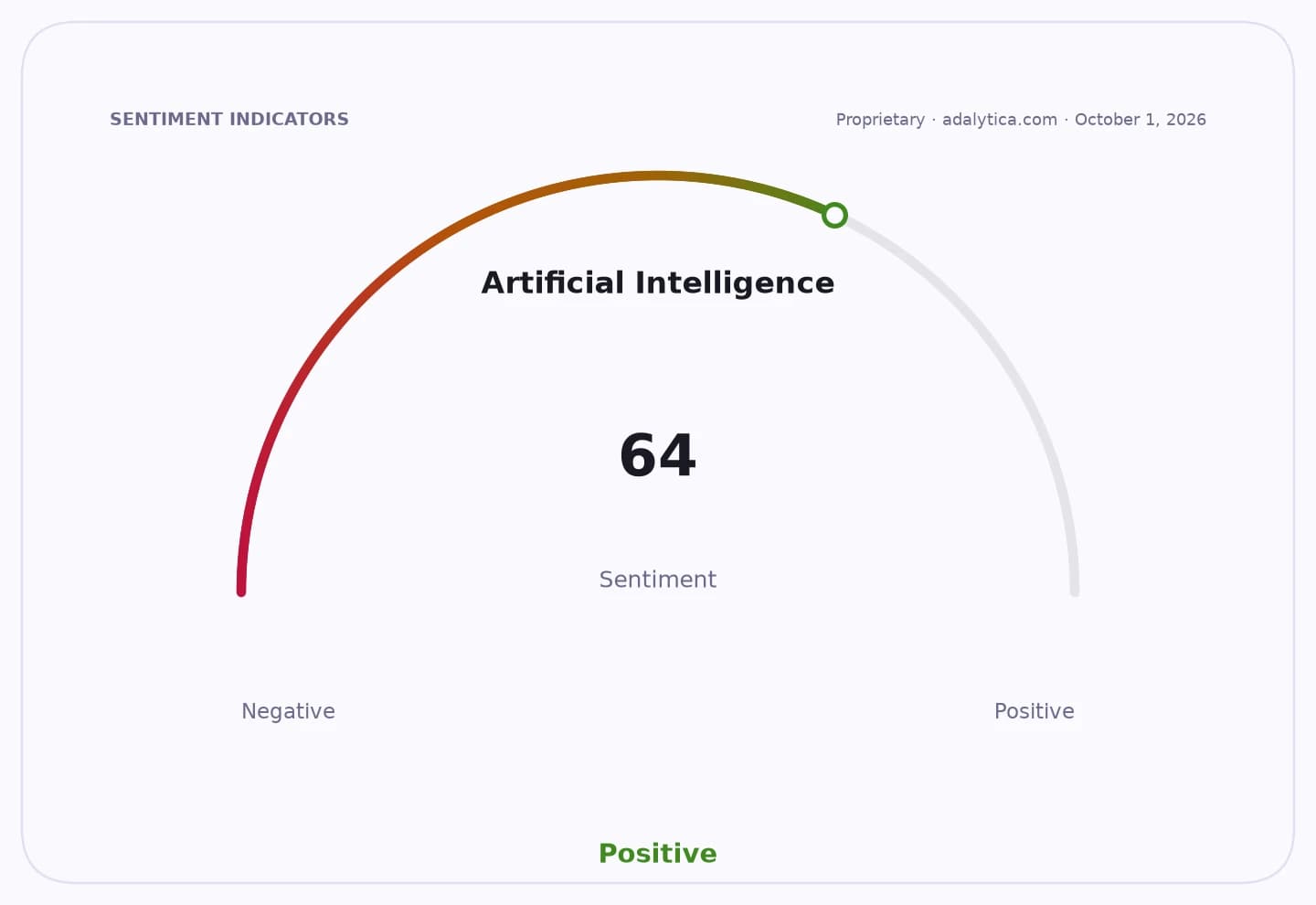
Sentiment IndicatorsⓘProprietary · adalytica.com · September 30, 2026
This is a snapshot — live sentiment, awareness and momentum for 130+ markets update continuously in the dashboard.Open AlphaPulse
AI safety commentator Alva Erwin said the gap between major global model launches such as ChatGPT and Anthropic systems could create breathing space for local talent and industry to catch up. That pause, he argued, would let domestic users understand and optimize available technologies instead of being forced to chase a rapid global cadence they cannot match.
For investors, the question is whether that window helps Indonesian enterprise software, data-services firms and sector-specific AI applications scale faster — or whether a slowdown merely delays the next leap while raising input costs. Erwin warned that if calls for restraint lead to tighter semiconductor export restrictions, access to RAM, GPUs and high-performance computing could become more expensive for universities and local companies, making AI development harder rather than easier.
That tension explains why the investment case in Indonesia is shifting from model-building to applied AI. Erwin argued the higher-value opportunities lie in local-language systems, regional content and sector deployments in health care, agriculture, education, logistics, maritime oversight and financial fraud detection. In other words, the immediate economic upside is less about competing with Silicon Valley on frontier models and more about building tools that improve productivity in a large, underpenetrated economy.
The policy implications are just as important. Erwin called for a risk-based regulatory framework with room for sandboxes, especially for enterprises, small businesses and academic research, while restricting AI in high-risk uses such as court decisions, weapons and mass manipulation. That approach would aim to avoid suffocating innovation while preserving oversight — a balance likely to matter to foreign investors weighing whether Indonesia can become a credible AI market rather than just a user base.
The broader narrative is one of strategic catch-up. If global AI growth slows, Indonesia may gain the rare chance to close part of the capability gap through training, research and localized deployment. But the opportunity will only translate into economic gains if it is matched by cheaper compute access, stronger talent pipelines and regulations that encourage adoption instead of freezing it.
| Entity | Gains | Losses |
|---|---|---|
| Indonesia’s local AI firms | ▲More time to adapt and deploy | ▼Faster global model churn |
| Universities and researchers | ▲Space to build skills | ▼More expensive compute if hardware tightens |
| Global frontier AI leaders | ▲Safer rollout narrative | ▼Some pace of market expansion |
| Enterprises adopting AI | ▲Better access to localized tools | ▼Delay in frontier capabilities |