A new push to develop Biak Numfor as Indonesia’s space and strategic hub is putting sovereignty, indigenous land rights and foreign influence at the center of the country’s Pacific policy debate.
Indonesia Biak Numfor space hub faces sovereignty debate
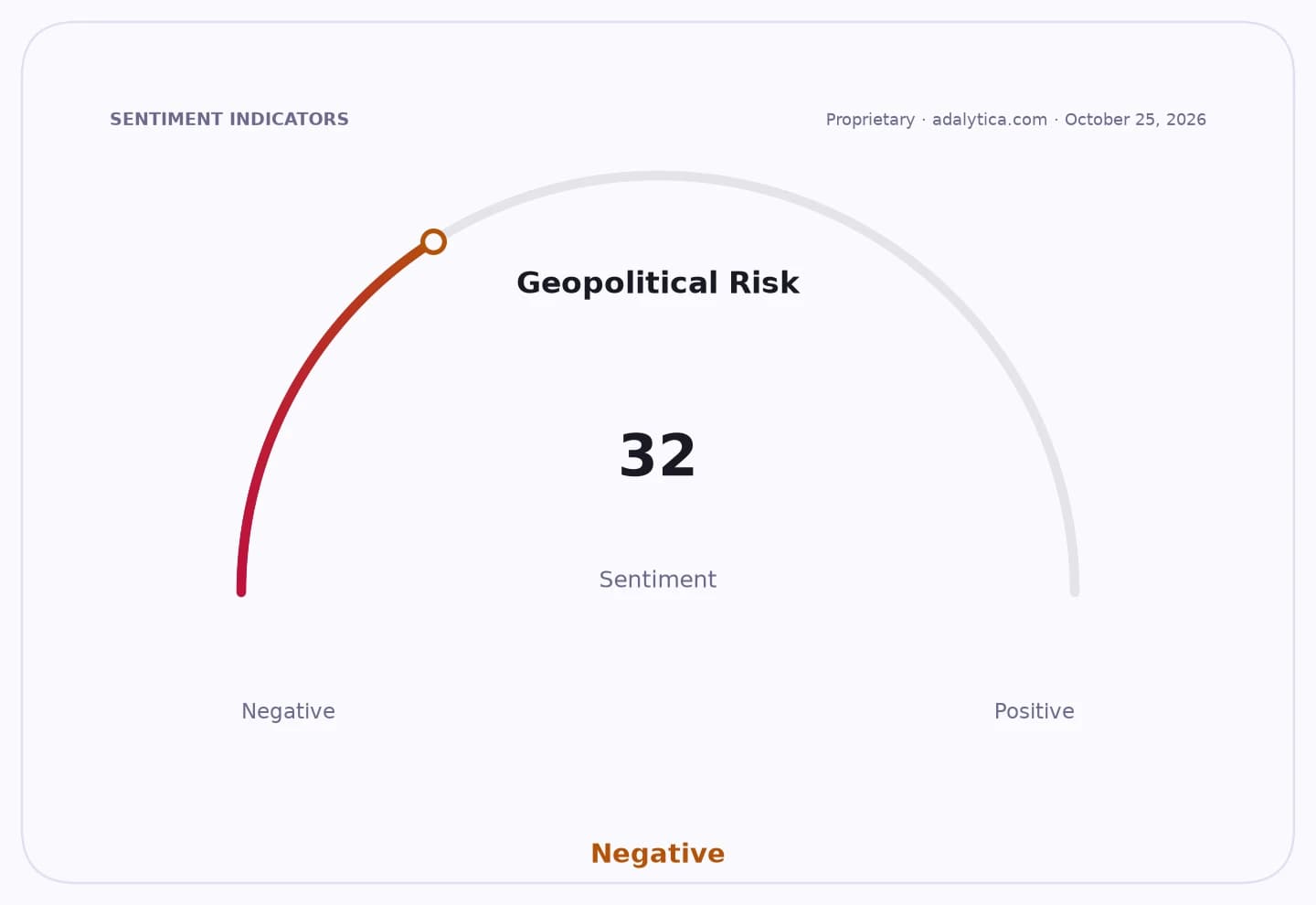
Geopolitical Risk
National Senator Filep Famafma said Biak’s location gives it unusual value in geopolitics, defense, diplomacy and space technology, but warned that any expansion of launch, satellite or logistics infrastructure must strengthen, not dilute, Indonesian control. For investors and policymakers, the message is that the project will be judged not only on engineering merit and commercial promise, but on whether it can clear legal, social and geopolitical hurdles in one of the country’s most sensitive regions.
Sentiment Indicators
That matters economically because Indonesia is trying to turn a remote eastern regency into an asset for maritime trade, digital industry and space technology while avoiding the kind of extractive development that can trigger local opposition and delay projects. Biak’s proximity to the equator, a traditional advantage for launches, gives it technical appeal. Its position in the Pacific also makes it relevant to the widening strategic competition between the US, China and Russia, which increases the value of any dual-use infrastructure and raises the political cost of missteps.
Famafma’s remarks underscore the central tension facing Jakarta: the same site that could strengthen Indonesia’s technological ambitions could also become a flashpoint over land tenure, environmental safeguards and revenue sharing. He explicitly argued that indigenous communities must receive direct economic benefits and a role in decision-making, reflecting the reality that any long-cycle infrastructure project in Papua will depend on social legitimacy as much as capital.
For investors, the immediate implication is less about a near-term revenue event than about policy execution risk. Space infrastructure can attract follow-on spending in telecommunications, logistics and research, and could eventually support domestic satellite capability and regional connectivity. But the project’s bankability will depend on clearer rules around land rights, permitting, environmental review and state participation, especially if foreign partners are involved.
The political framing also aligns with Indonesia’s “free and active” foreign policy, which seeks cooperation without creating dependence. That makes Biak potentially attractive as a national strategic platform, but also means any international partnership will be scrutinized for control rights, data access and defense implications. In that sense, the story is not simply about a spaceport; it is about whether Indonesia can convert a strategic frontier into an economically productive asset without ceding sovereignty.
TLK’s recent share price action, while not directly tied to Biak, reflects the broader capital-market backdrop in which Indonesia’s digital and communications infrastructure themes are being weighed. The stock closed at $11.23, below both its 50-day moving average of $12.87 and 200-day moving average of $15.29, with the RSI at 42.5 and MACD still below signal, suggesting investors remain cautious on telecom and infrastructure-related names even as strategic projects draw attention.
For now, Biak’s importance lies in optionality: a successful framework could open a new node in Indonesia’s eastern development strategy, while a poorly governed one could deepen distrust in Papua and stall a politically sensitive national ambition.
| Entity | Gains | Losses |
|---|---|---|
| Indonesian government | ▲Strategic foothold in the Pacific | ▼Policy credibility if sovereignty slips |
| Biak Numfor communities | ▲Infrastructure and jobs, if included | ▼Land rights and local control, if sidelined |
| Foreign partners | ▲Access to a launch and logistics site | ▼Influence over project terms |
| Indonesian state strategists | ▲Defense and diplomatic leverage | ▼Risk of delays from social and legal pushback |