Indonesia’s invitation for China to help research transmigration areas and map economic potential could become more than a planning exercise: it signals Jakarta is trying to turn a politically sensitive land-and-settlement programme into a vehicle for investment, infrastructure and industrial development.
Indonesia Invites China to Map Transmigration Areas
The move matters because transmigration sites sit at the intersection of land use, regional development and resource access in a country that is still trying to lift productivity outside Java. If foreign researchers and investors help identify agricultural, logistics or industrial opportunities in those areas, the policy could pull in capital for roads, ports, power and processing capacity — the kind of spending that can widen domestic demand while also reshaping supply chains.
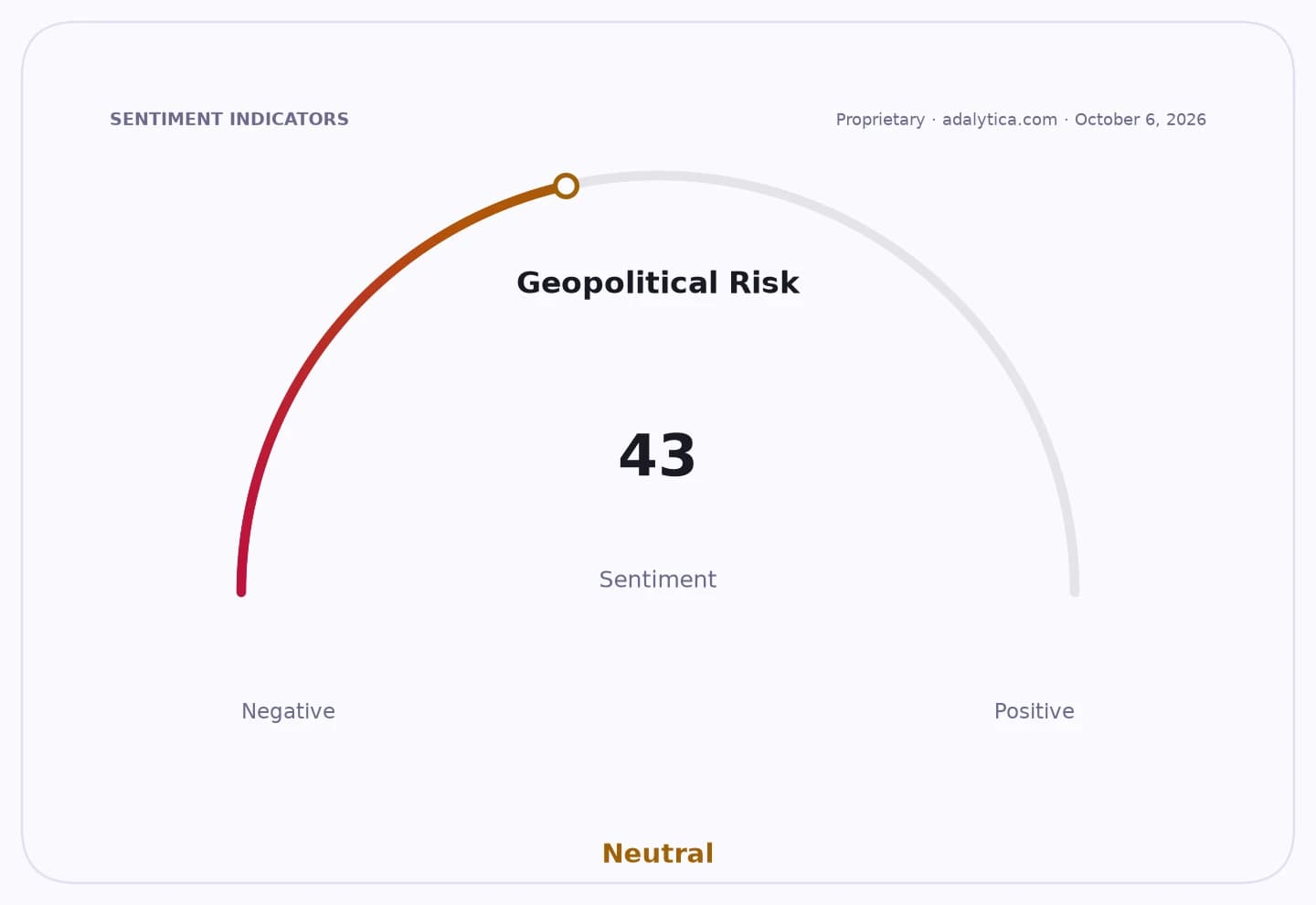
Sentiment IndicatorsⓘProprietary · adalytica.com · October 16, 2026
This is a snapshot — live sentiment, awareness and momentum for 130+ markets update continuously in the dashboard.Open AlphaPulse
For investors, the implication is that Indonesia is looking to translate a long-running state policy into bankable projects. That could benefit contractors, infrastructure financiers, utilities and resource-linked businesses if the mapping exercise leads to development plans with clearer land rights and better project visibility. It also fits a broader pattern in Jakarta’s infrastructure push, which has leaned on foreign partners to accelerate financing for energy and transport projects.
The China angle carries its own significance. Beijing has been a major source of capital and industrial expertise across Southeast Asia, and any role in assessing transmigration zones would deepen its footprint in a strategically important economy. That could help Indonesia attract funding and technical support, but it also raises questions about how much control Jakarta wants to retain over land, development priorities and local politics.
Market reaction has been limited so far, but the underlying theme is familiar for Indonesia: policy ambition often moves ahead of execution, and the value for investors depends on whether announcements turn into permits, funding and construction. Indonesia Infrastructure Finance and state-backed lenders may see more deal flow if the government packages transmigration zones as investable corridors rather than administrative experiments.
The risk is that a programme rooted in demographic redistribution can run into social resistance, environmental scrutiny and bureaucratic delays. For now, the message to markets is less about a near-term earnings boost than a possible opening of new development frontiers in one of Southeast Asia’s most resource-rich economies.
| Entity | Gains | Losses |
|---|---|---|
| Indonesia government | ▲More investment options | ▼Higher execution risk |
| China investors/researchers | ▲New project access | ▼Political exposure |
| Infrastructure lenders | ▲Potential deal pipeline | ▼Policy uncertainty |
| Local communities | ▲Possible jobs and services | ▼Land-use disruption |