Bulog is tightening the message around Indonesia’s rice aid program: the grain is meant to be eaten, not traded, as the government leans harder on food assistance to protect low-income households into year-end.
Indonesia Bulog Tightens Rice Aid Distribution Rules
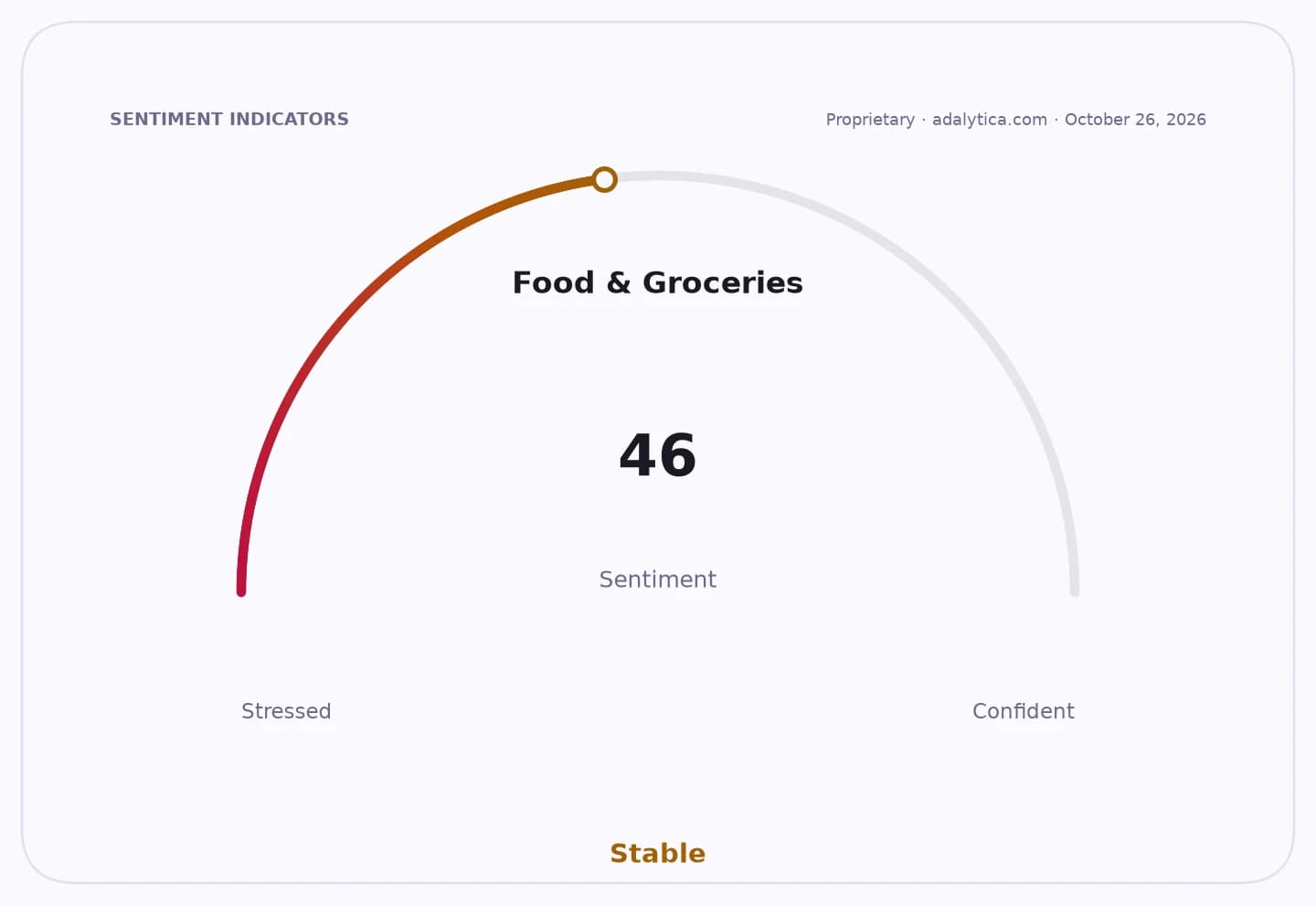
Food & Groceries
That matters because rice remains the country’s most politically sensitive staple, and any leak in the aid chain weakens both household food security and public trust in one of Jakarta’s biggest social spending tools. For investors, the issue is bigger than a local compliance warning. It speaks to how Indonesia manages inflation, protects purchasing power and keeps social stability intact when food prices and climate shocks remain a risk.
Sentiment Indicators
Perum Bulog chief Ahmad Rizal Ramdhani said recipients should not sell the rice they receive, warning that violations can lead to legal action and exclusion from future aid. He pointed to a case in Cirebon where aid rice was allegedly sold by a village head, a reminder that even well-intended distribution programs can be undermined by abuse if oversight is weak.
The government is distributing 30 kilograms of rice for each three-month allocation, with Bulog saying the aid is intended to cover daily consumption and help households prepare for Christmas and New Year demand. In Lampung alone, 1.26 million people are listed as beneficiaries, including 188,705 in Lampung Selatan and 1,779 in Desa Negara Ratu, where the total shipment is about 53.37 metric tons.
Food & Groceries — 30-day sentimentadalytica.com
Explore this data interactively — full history, time series and cross-market comparisons.
The broader economic narrative is straightforward: Indonesia is using food aid as a buffer against lingering supply stress after past El Niño disruption, and it wants that support to land where it is supposed to land. If the rice reaches the right households, it helps limit hardship and can soften pressure on consumer spending patterns at the bottom of the income scale. If it does not, the state pays twice — once for the subsidy and again for the loss of credibility.
For investors, the immediate takeaway is less about a direct market trade than about the health of Indonesia’s food system and policy execution. Stable, well-targeted rice aid supports domestic demand, reduces social strain and helps keep food inflation in check, all of which matter for the broader consumer and retail backdrop. Poor execution, by contrast, can feed volatility in staple prices and force the government to intervene more aggressively.
The long-term lesson is that food security policy is only as strong as its distribution discipline. Bulog’s warning is a sign that Jakarta wants tighter control over the final mile, and that is worth watching for anyone following Indonesian inflation, consumer resilience and the country’s ability to manage another year of climate and supply uncertainty.
| Entity | Gains | Losses |
|---|---|---|
| Low-income households | ▲More reliable rice access | ▼Less benefit if aid is resold |
| Indonesian government | ▲Better food security optics | ▼Credibility if leaks continue |
| Bulog | ▲Stronger distribution control | ▼Reputation if abuse persists |
| Illegal resellers | ▲None | ▼Legal exposure and aid cutoff |