Indonesia is moving to turn its natural gas surplus into a strategic weapon, with the government pressing ahead on compressed natural gas, or CNG, as a way to cut LPG imports and widen access to domestic fuel.
Indonesia CNG Push Targets LPG Imports
That matters because the real bottleneck in Indonesia’s energy story is no longer just production, but delivery. Officials say gas output reached about 6,789 MMSCFD in 2025, while around 69% of national gas use was already absorbed by domestic demand. In other words, Indonesia has the molecule — what it still needs is the infrastructure and logistics to get it to consumers outside the pipe network.
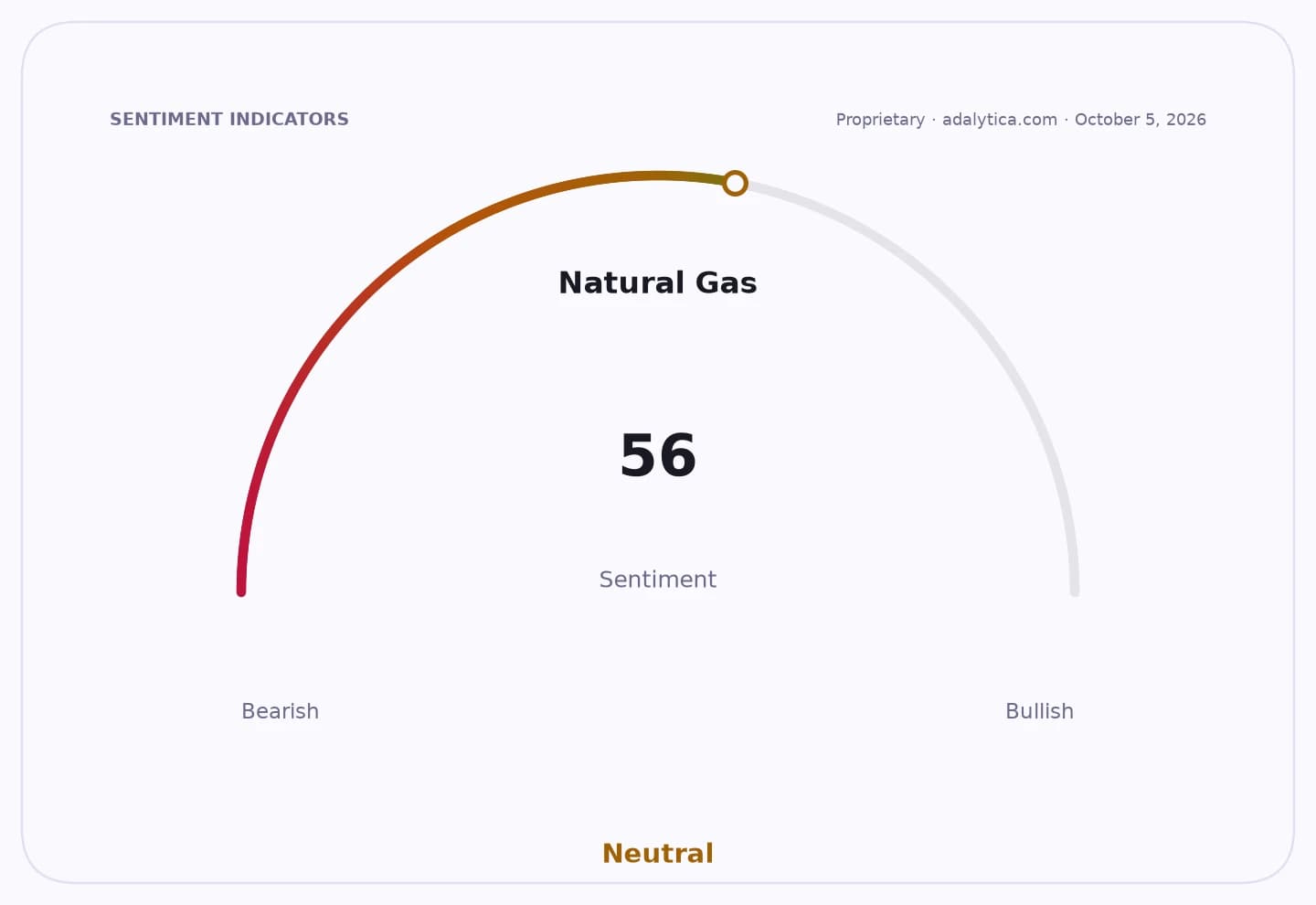
Sentiment IndicatorsⓘProprietary · adalytica.com · October 5, 2026
This is a snapshot — live sentiment, awareness and momentum for 130+ markets update continuously in the dashboard.Open AlphaPulse
For investors, that creates a classic picks-and-shovels opportunity. CNG is not just a distribution technology; it is a capital-allocation decision by the state to favor domestic gas over imported LPG. That shift can support midstream equipment makers, gas logistics providers, storage and compression infrastructure, and listed energy names exposed to domestic monetization of reserves. In a country where not all regions have pipeline access, CNG can become the bridge between upstream production and retail demand, especially in industrial clusters and underserved islands.
The macro backdrop strengthens the case. Indonesia is trying to reduce exposure to volatile global fuel markets at a time when geopolitical disruptions have already constrained import options. Every percentage point of fuel substitution that moves from imported LPG to domestic gas improves the current account, reduces foreign-exchange pressure, and gives policymakers more room to manage subsidies and inflation. That is why this is bigger than a technology story: it is an energy-security trade.
The market is also likely underestimating the second-order effects. If the government builds out CNG more aggressively, it can create demand for compressors, cylinders, distribution fleets, metering systems, and local gas handling services. That tends to favor companies with real physical assets and recurring service revenues over traders of imported commodities. It also reinforces a broader theme across emerging markets: countries with underdeveloped gas distribution networks are increasingly treating domestic gas as infrastructure, not just a commodity.
Technically, sentiment around natural gas remains choppy. Adalytica.com’s Natural Gas Market Trade Signals show neutral sentiment, but extreme fear on the awareness gauge, a setup that often appears before policy-driven capital starts moving. Against that backdrop, Indonesia’s CNG push looks like an early-stage catalyst rather than a fully priced theme.
The investable takeaway is straightforward: if Indonesia succeeds in converting abundant gas output into a wider domestic delivery system, the winners will be the companies that own the compression, storage, transport and service rails of that network. The market should watch for follow-on policy, tender activity and infrastructure spending, because CNG can become one of the country’s most asymmetric energy trades over the next several years.
| Entity | Gains | Losses |
|---|---|---|
| Indonesia domestic gas sector | ▲Higher monetization | ▼Slower import dependence |
| CNG infrastructure providers | ▲New capex demand | ▼Limited pipe-network operators |
| LPG importers | ▲— | ▼Lost market share |
| Industrial and off-grid consumers | ▲Better fuel access | ▼Higher exposure to imported fuel volatility |