Indonesia is moving to create a state-backed corn buffer for livestock producers, a policy shift that could reduce feed volatility, steady farmgate demand and give breeders a more predictable supply of one of their key inputs.
Indonesia corn buffer plan for livestock feed
Agriculture Minister Andi Amran Sulaiman said the government will link corn farmers, cooperatives, state logistics agency Bulog and breeders in an integrated supply chain designed to absorb surplus harvests and release stock during lean months, especially from September to November when feed availability typically tightens. The plan matters because feed costs are one of the biggest drivers of profitability in poultry and other livestock businesses, and sharp swings in corn prices can quickly cascade through the food chain.
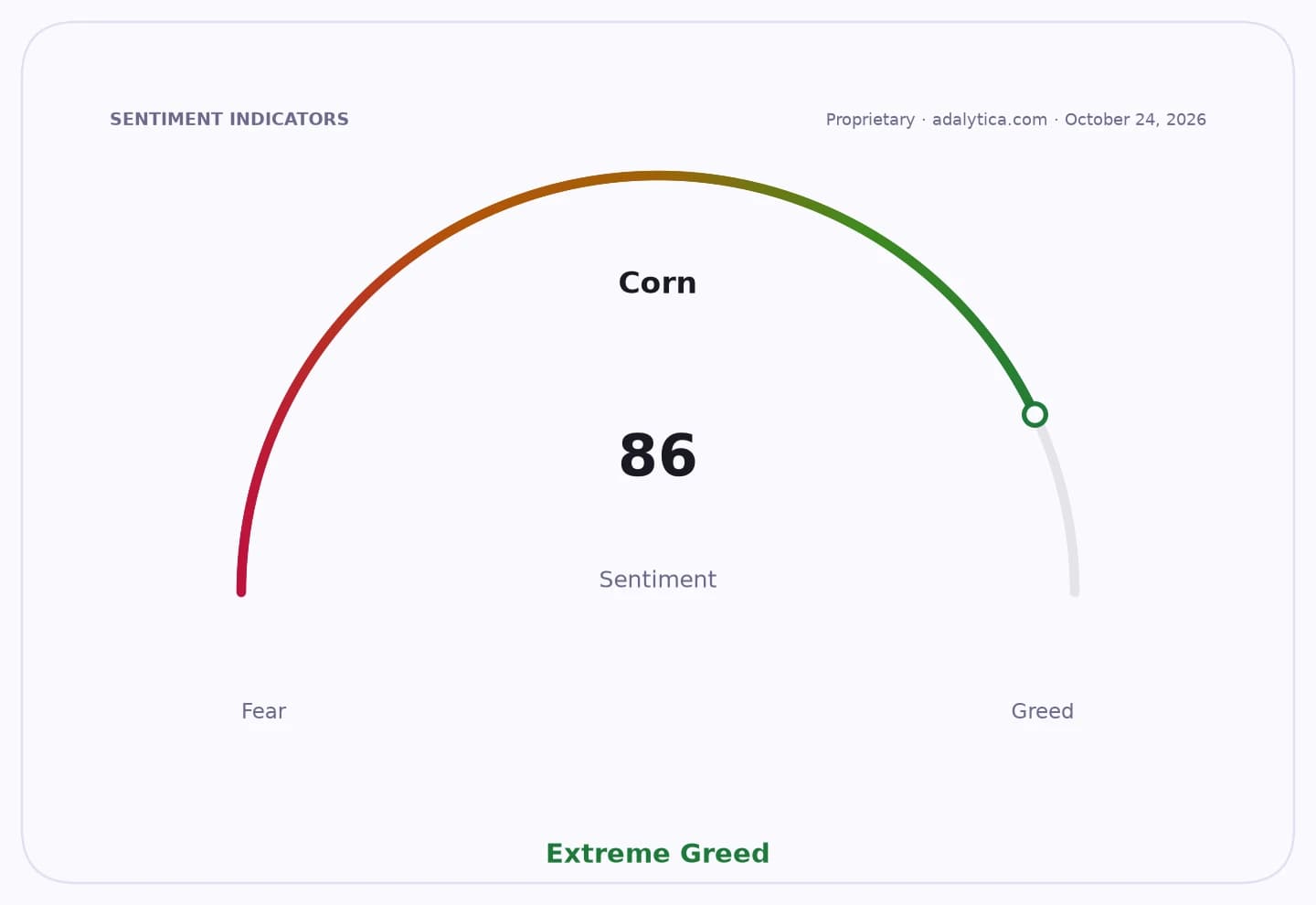
Sentiment Indicators
Under the proposed system, excess corn will be bought by Bulog and stored through warehouse receipt arrangements, creating a reserve that breeders can draw on later when supply thins out. That could function as a crude stabilization mechanism in a market where farmers often face weak bargaining power at harvest time, while breeders are exposed to sudden input inflation when feed ingredients tighten.
Amran framed the move as part of a broader effort to build an end-to-end livestock ecosystem, after more than 1,000 breeder representatives reportedly raised concerns in Jakarta about business conditions. He also pointed to distortions in the egg market, where breeder prices have fallen even as consumer prices remain elevated, underscoring the government’s concern that market power along the chain is unevenly distributed.
For investors, the policy is economically significant because it could ease margin pressure on livestock producers if it works as intended, while improving income visibility for corn growers by guaranteeing an offtaker. It also reinforces Bulog’s role beyond rice, expanding the state’s footprint in agricultural warehousing and commodity management. That may be supportive for food-security policy credibility, but it also raises execution risks around storage, financing and inventory rotation.
The timing is important. Corn is already central to feed inflation, and even modest disruptions in supply can ripple through poultry, egg and dairy economics. A government-backed reserve system could blunt seasonal spikes, but it would not eliminate the structural challenge of aligning domestic output, logistics and pricing across a fragmented agricultural sector.
The bullish case is that a more organized corn channel reduces volatility, supports domestic breeders and creates a floor under farmgate demand. The bearish case is that the system becomes administratively heavy, slow to scale and vulnerable to mispricing or storage losses, limiting its ability to stabilize the market when it matters most.
For now, the announcement suggests Jakarta wants to move from ad hoc interventions to a standing supply-chain mechanism. If implemented well, it could become a template for managing other food inputs; if not, breeders and farmers may still be left to absorb the next price swing themselves.
| Entity | Gains | Losses |
|---|---|---|
| Corn farmers | ▲Steadier offtake | ▼Less spot pricing upside |
| Livestock breeders | ▲More feed security | ▼Lower leverage in shortages |
| Bulog | ▲Bigger policy role | ▼Storage and execution risk |
| Poultry consumers | ▲Less price volatility | ▼Less room for windfall margins |