Indonesia’s stock exchange says 114 debt securities issues have already raised IDR 103.86 trillion this year, with 11 more emissions still in the pipeline, underscoring a steady funding channel for corporate borrowers even as some state-linked credit names come under stress.
Indonesia Debt Issuance Remains Active Despite Credit Stress
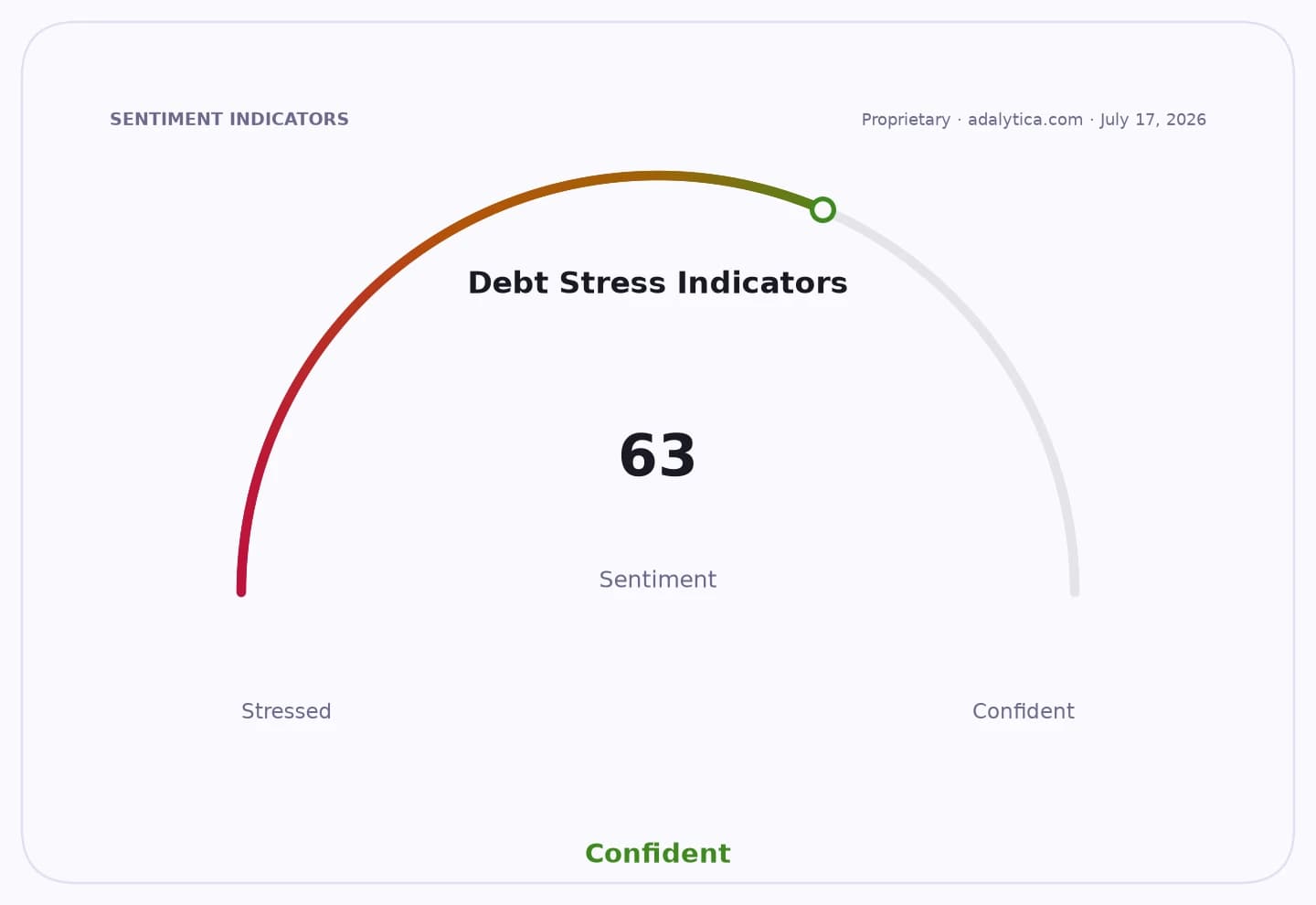
The pace matters because it shows domestic capital markets are continuing to absorb sizable issuance, giving companies an alternative to bank lending at a time when financing conditions remain sensitive to rates, liquidity and credit selection. For investors, the headline number points to a bond market that is still functioning and broadening, but one where underwriting discipline and issuer quality are becoming more important.
Sentiment IndicatorsⓘProprietary · adalytica.com · July 17, 2026
This is a snapshot — live sentiment, awareness and momentum for 130+ markets update continuously in the dashboard.Open AlphaPulse
The figure includes corporate debt, sukuk and other fixed-income securities listed on the Indonesia Stock Exchange, or BEI. The exchange’s latest tally suggests borrowers are still tapping the market to refinance, fund expansion and manage balance sheets, while investors are being asked to distinguish between healthy credits and weaker names.
That distinction has become more important after Fitch downgraded PT Pos Indonesia’s debt rating to C following a missed Rp 24 billion lease compensation payment, a reminder that not all local issuers carry the same risk profile. The downgrade does not change Indonesia’s sovereign backdrop, but it does highlight pressure points among state-owned borrowers and the need for tighter debt management.
The broader market tone remains constructive. BEI’s debt issuance pipeline is still open, and that supports transaction flow for banks, arrangers and asset managers looking for fixed-income supply. It also gives companies flexibility to lock in funding before conditions change, especially if global rates or domestic volatility turn less favorable.
For investors, the main takeaway is that Indonesia’s corporate debt market is active enough to support growth, but selective enough to punish weaker credits. The next test will be whether the remaining 11 planned emissions clear the market cleanly and whether default risks stay isolated or begin to spread across lower-rated issuers.
| Entity | Gains | Losses |
|---|---|---|
| BEI / bond market | ▲Higher issuance activity | ▼Credit scrutiny rises |
| Quality corporate borrowers | ▲Easier access to funding | ▼Refinancing competition |
| Investors in top credits | ▲More yield opportunities | ▼Lower-rated issuer risk |
| PT Pos Indonesia / weak credits | ▲— | ▼Rating downgrade, higher stress |