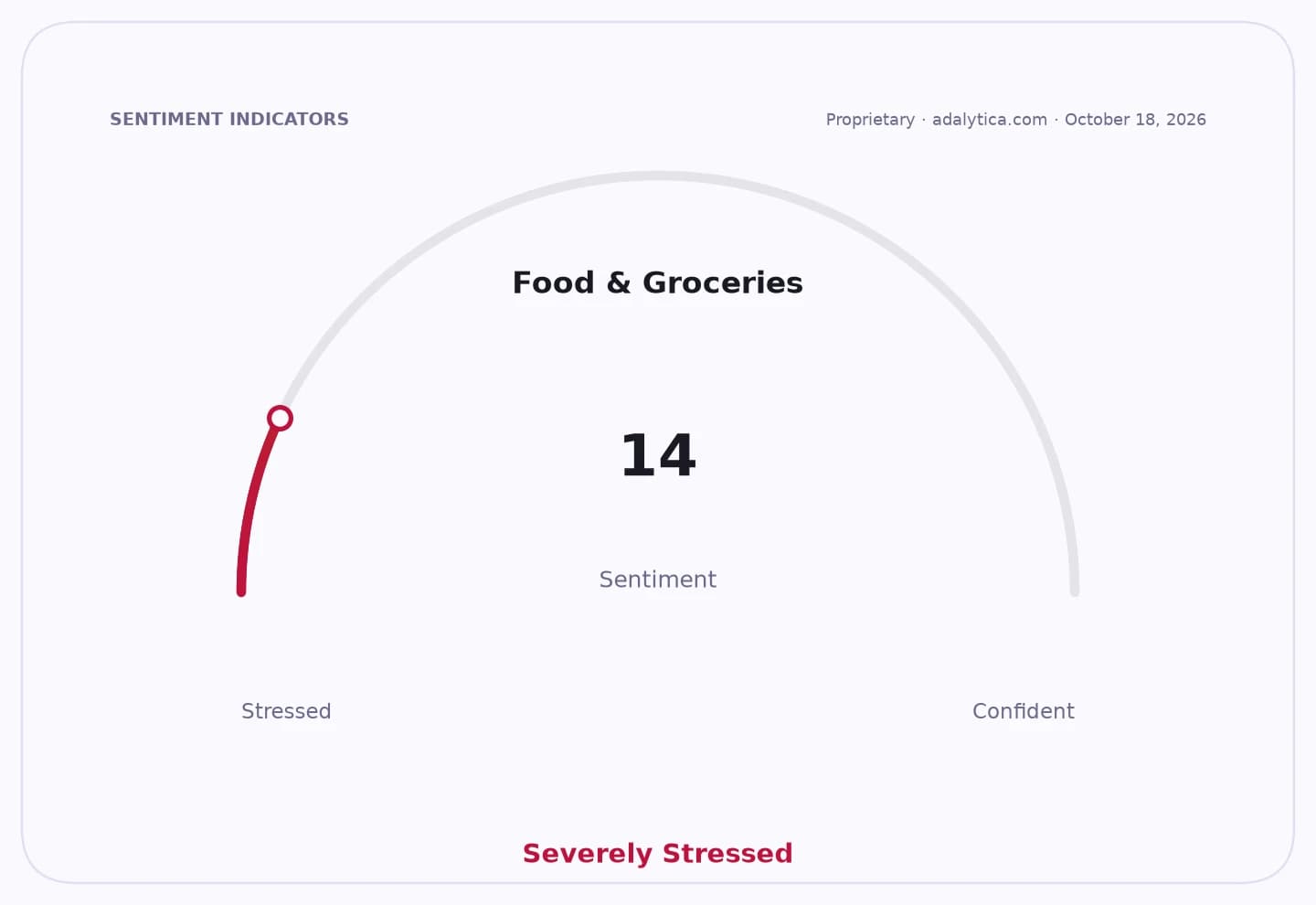
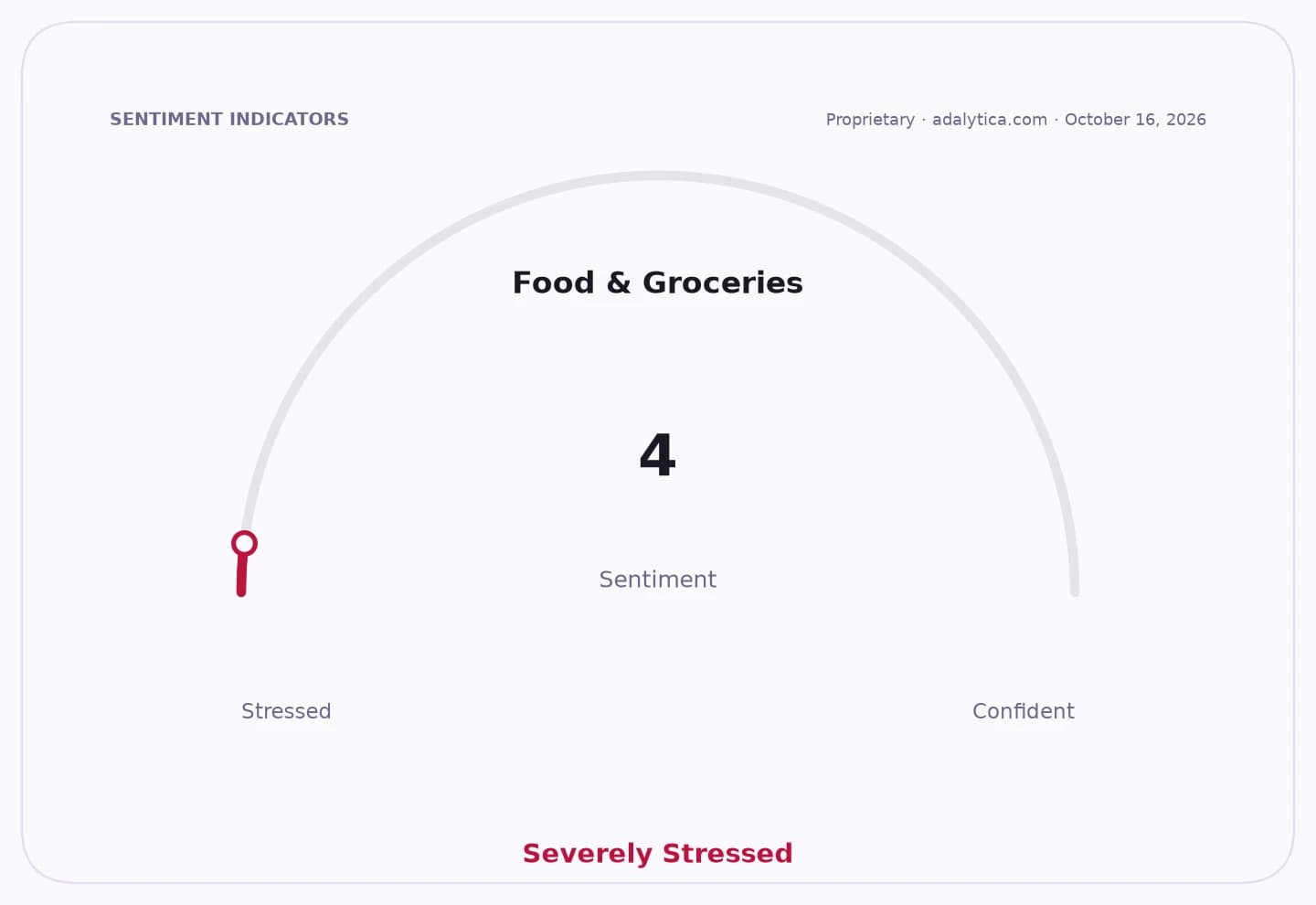
Food prices in Indonesia have spent most of the past 21 months above government benchmarks, leaving households with higher grocery bills and little protection from a policy that officials say is meant to keep prices fair.
Indonesia food prices stay above government benchmarks
Kompas data covering January 2025 through September 2026 show all 12 staple commodities tracked by the Trade Ministry’s market-monitoring system exceeded the official reference price or highest retail price more than 12 times, meaning every item was above the benchmark in more than half of the period. Five commodities — shell eggs, imported soybeans, garlic kating, garlic honan and both packaged and bulk sugar — were above the ceiling in every single month.
Sentiment IndicatorsⓘProprietary · adalytica.com · October 18, 2026
This is a snapshot — live sentiment, awareness and momentum for 130+ markets update continuously in the dashboard.Open AlphaPulse
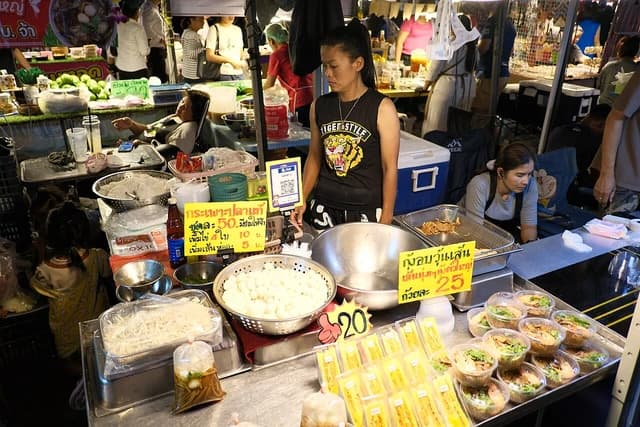
That gap matters because food remains one of the most immediate drivers of day-to-day inflation and consumer stress. In Jakarta, a private worker said chicken rose to Rp55,000 per kilogram from Rp45,000 a year earlier, while a West Sumatra resident said chicken climbed to Rp70,000 from Rp50,000 and beef to Rp150,000 from Rp140,000, forcing the family to trim discretionary spending. The price pressure also appears uneven across the archipelago, with 23 provinces seeing a majority of tracked commodities above the benchmark.
The worst-hit regions were concentrated outside Java. In Central Kalimantan, North Kalimantan, Papua, West Papua, Highland Papua and Central Papua, about 92% of the monitored commodities were priced above the benchmark. West Kalimantan, East Kalimantan, Maluku, Southwest Papua and South Papua followed at 85%, while Jakarta, Bangka Belitung and North Maluku were still at 77%.

The policy debate is now moving from price setting to enforcement. A shadow agriculture and food-sovereignty minister, Isnawati Hidayah, said reference-price and highest-retail-price rules are ineffective if they are not backed by tighter control across the supply chain, while economist Esther Sri Astuti said the rules need legal enforcement and penalties when violated. Trade Minister Budi Santoso defended the system as a market-balance tool, saying local conditions and cost structures must be considered and that unfair trading practices will be pursued.
For investors and businesses, the message is that household purchasing power remains under pressure even as nominal prices are officially managed. Indonesian consumers are already cutting nonessential spending, and prolonged food inflation can feed broader inflation expectations, squeeze retail volumes and complicate policy responses at a time when the government is trying to present price stability as a political and economic priority. The key risk for the months ahead is whether tighter enforcement can actually bring staple prices back within the benchmark, or whether the official reference system remains mostly symbolic.
| Entity | Gains | Losses |
|---|---|---|
| Households | ▲Some price visibility | ▼Higher food bills |
| Food traders/distributors | ▲Wider pricing room | ▼Risk of enforcement |
| Government | ▲Policy credibility if enforced | ▼Reputation if benchmarks fail |
| Retailers/consumer sectors | ▲Stable demand if inflation eases | ▼Slower spending if prices stay high |