Indonesia’s economy grew faster than expected in the third quarter of 2026, but the key driver was not a broad-based private demand rebound so much as government support for household spending. That matters because consumption still accounts for more than half of GDP, and the durability of fiscal-backed demand will shape growth, inflation and policy choices into year-end.
Indonesia Q3 GDP Beats on Consumption Support
The Institute for Development of Economics and Finance said subsidies and social assistance helped preserve purchasing power, especially among lower-income households, at a time when consumer demand is otherwise showing signs of strain. Indonesia’s statistics agency said GDP expanded 5.47% year on year in the third quarter, up from 5.29% in the second quarter and 5.04% a year earlier. Household consumption, the largest component of output, grew 5.04% and contributed 2.62 percentage points to growth, while its share of GDP remained high at 51.97%.
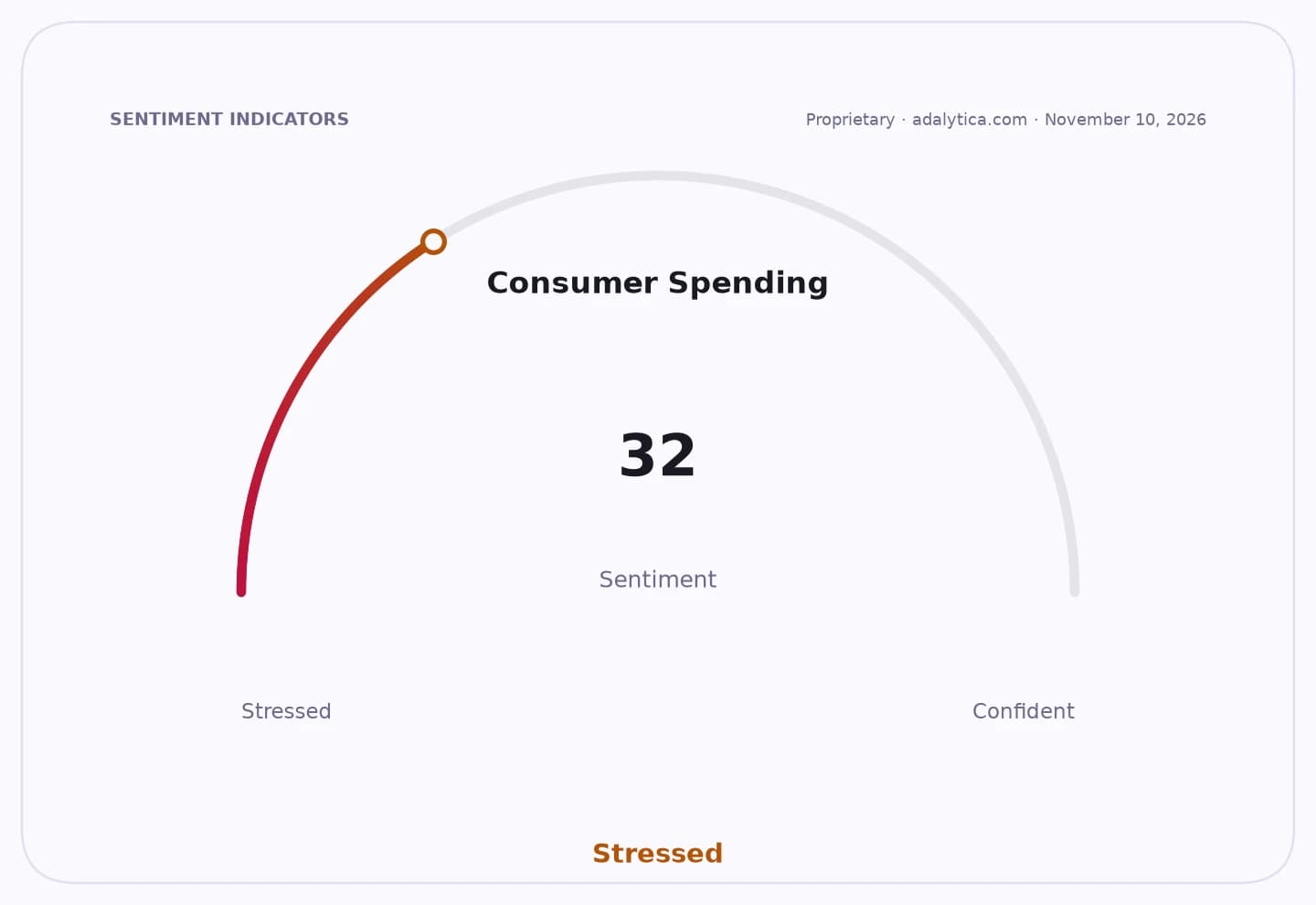
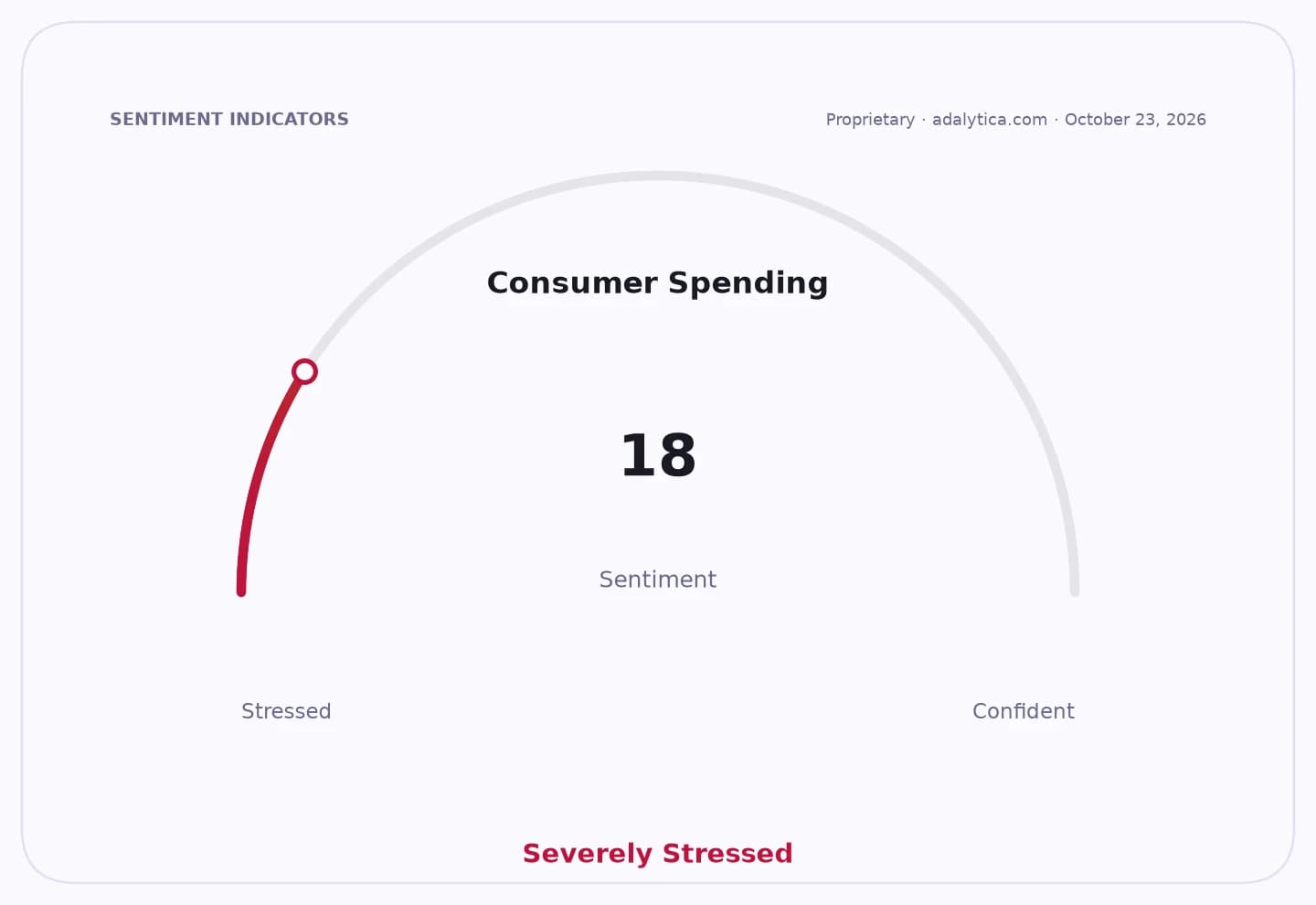
Sentiment Indicators
The fiscal impulse was visible in government spending on individuals, including subsidies and social assistance, which Indef said jumped to 30.68% in the third quarter from 10.92% a year earlier. That suggests the state is doing more of the heavy lifting for domestic demand at a time when private consumers are still vulnerable to higher living costs and tax pressure.
The government is extending that support into the fourth quarter with 10 kilograms of rice a month for 33.24 million beneficiary families from October to December, alongside a wage subsidy of 300,000 rupiah a month for three months for 13.3 million workers, backed by nearly 12 trillion rupiah in funding. The aim is straightforward: keep consumption from losing momentum as the economy heads into year-end.
For investors, the message is mixed. The near-term bull case is that policy support reduces the risk of a sharper slowdown and helps stabilize retailers, staples sellers and other domestic-demand plays. The bear case is that growth is becoming increasingly dependent on transfers rather than self-sustaining private spending, which can limit the breadth of the expansion and raise questions about how long fiscal support can be maintained without squeezing the budget.
Indef also warned that stimulus should not be focused only on the poor. It said the middle class is under pressure from higher everyday costs and tax burdens, and that broader targeting would be needed to preserve household spending momentum. That will be a key issue to watch in coming quarters: if fiscal aid continues to buttress consumption, Indonesia may keep posting solid headline growth, but markets will want evidence that demand can eventually stand on its own.
| Entity | Gains | Losses |
|---|---|---|
| Lower-income households | ▲Protected purchasing power | ▼Less exposed to food-price shocks |
| Indonesian government | ▲Supports GDP growth | ▼Higher fiscal burden |
| Domestic retailers/staples sellers | ▲Firmer consumer demand | ▼Dependence on transfers |
| Middle-class consumers | ▲Potentially broader aid if expanded | ▼Missed relief if stimulus stays narrow |