AI is moving from office software into the factory floor in Indonesia, and that is where the real economic payoff starts to show up.
Indonesia Smart Factory AI Training Expands
A Korea-Indonesia Smart Factory seminar in Bekasi trained 30 participants from 14 companies and cooperatives on using AI and data tools to improve production efficiency, underscoring how small and medium-sized enterprises, or UKM, are beginning to treat data as a competitive asset rather than a reporting burden. That matters because productivity remains the binding constraint for millions of smaller manufacturers across Southeast Asia: if UKM can squeeze more output from the same labor, energy and materials, the result is higher margins, stronger competitiveness and less vulnerability to wage and input-cost pressure.
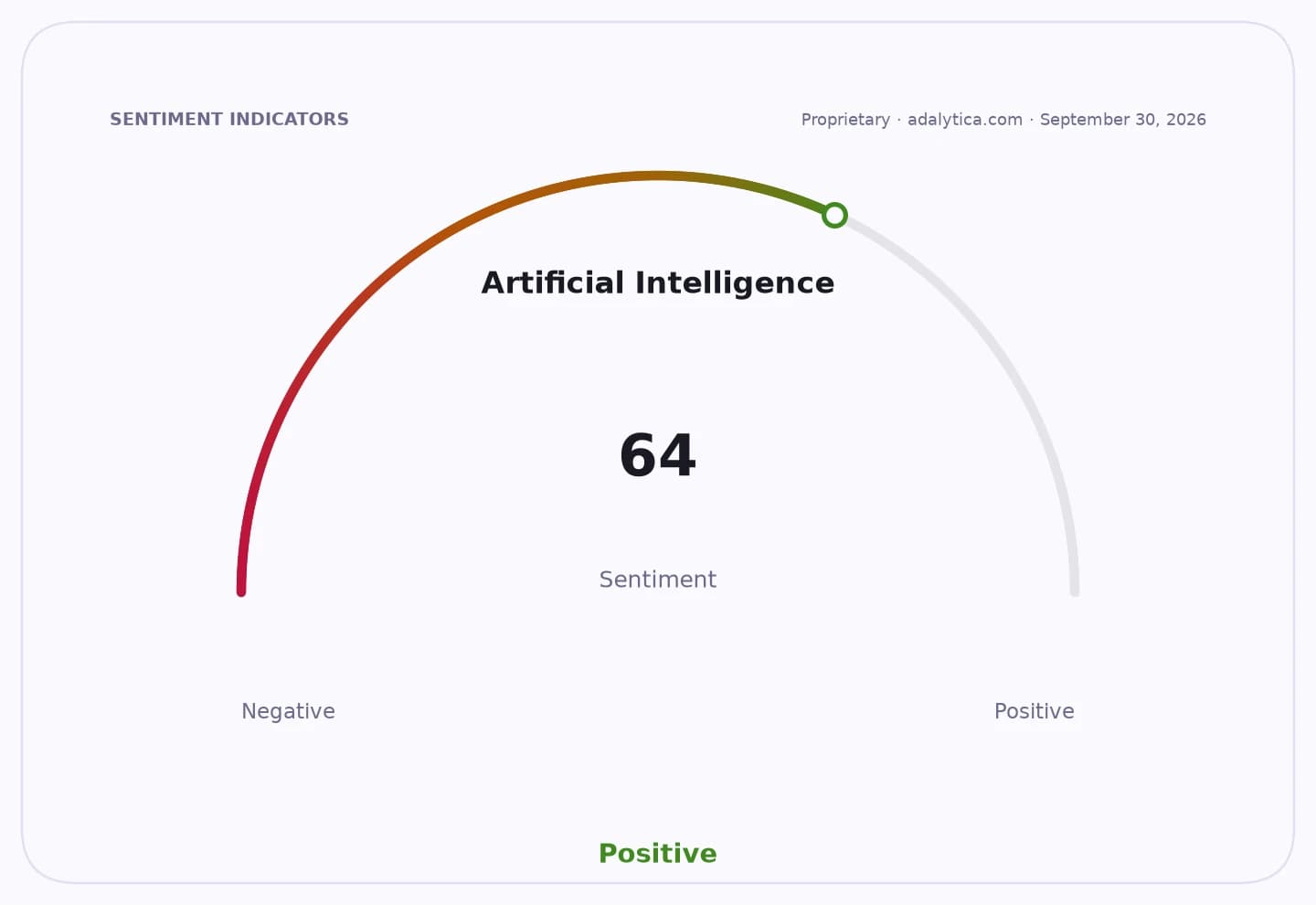
Sentiment IndicatorsⓘProprietary · adalytica.com · September 30, 2026
This is a snapshot — live sentiment, awareness and momentum for 130+ markets update continuously in the dashboard.Open AlphaPulse
The program, part of an ODA Smart Factory initiative backed by Korea, is not just classroom theory. Participants were shown how to use Orange 3 to analyze and visualize operational data, turning daily production records into practical decision-making tools. The shift is subtle but economically important. For years, digitalization in smaller businesses often meant accounting software or marketing automation. The new phase is about applying AI to the production process itself — spotting bottlenecks, improving workflow and reducing waste.
That is the kind of adoption investors should watch closely. Smart factory rollouts create a long tail of beneficiaries beyond the small firms being trained. Cloud providers, industrial software vendors, automation suppliers and systems integrators all stand to gain as data collection becomes more standardized and UKM begin buying tools to make AI usable on the factory floor. In markets, that points to a broader pick-and-shovels trade: the winners are not just the firms using AI, but the companies that help them capture, clean, move and analyze operational data.
The move also fits a wider regional trend. Governments and development partners are increasingly framing AI as an industrial policy tool, not just a consumer technology. That matters because productivity gains at the UKM level can compound through supply chains, especially in manufacturing clusters where smaller vendors feed larger exporters. If the model scales, it can lift output without requiring the same degree of new plant investment, a high-return outcome in an environment where capital is expensive and labor productivity is under pressure.
For investors, the takeaway is straightforward: the market is still underestimating how fast AI adoption can spread once it leaves the cloud and lands in real factories. The early money is in infrastructure, software and services that make production data actionable. If this pilot becomes a template, the next phase of AI spending may be less about flashy applications and more about durable industrial efficiency — exactly where the strongest compounding opportunities tend to emerge.
| Entity | Gains | Losses |
|---|---|---|
| UKM manufacturers | ▲Higher productivity | ▼Manual, low-margin workflows |
| Cloud and industrial software vendors | ▲New adoption demand | ▼Legacy analog tools |
| Automation and systems integrators | ▲More project spending | ▼Firms slow to digitize |
| Low-efficiency competitors | ▲— | ▼Cost disadvantage |