The best inflation hedge is not magic, lottery tickets or timing the market — it is owning assets that can keep pace when prices, rates and the currency all move against cash.
Inflation Hedges Beat Cash in Stubborn Inflation

That is the real lesson for investors after June U.S. inflation came in softer than expected, briefly easing pressure on the dollar and rate-hike fears, even as economists still see inflation and borrowing costs staying stubborn in 2026. For anyone sitting on a cash pile or a million rubles, the question is not whether inflation will disappear. It is how to stop purchasing power from quietly eroding while policymakers debate the next move.
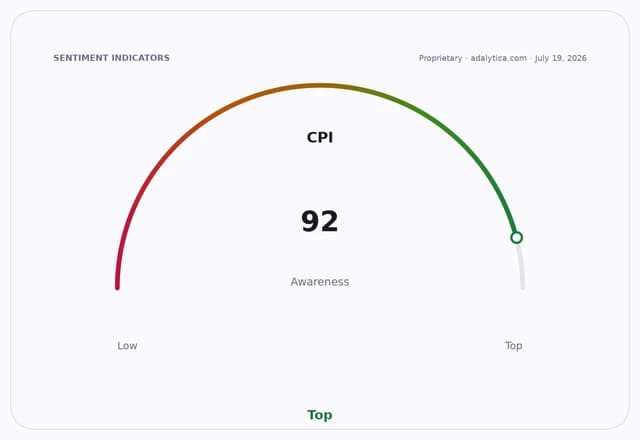
Sentiment IndicatorsⓘProprietary · adalytica.com · July 19, 2026
This is a snapshot — live sentiment, awareness and momentum for 130+ markets update continuously in the dashboard.Open AlphaPulse

The economic significance is straightforward: inflation may have cooled in one month, but the cost of money is still high and the policy backdrop remains restrictive. The U.S. consumer price index has more than tripled from the late 1940s to current levels, underscoring a simple truth markets often forget — cash is a wasting asset when prices rise over time. Even with the Federal Reserve keeping its benchmark rate around 3.6% and the 10-year Treasury near 4.56%, the real return on plain deposits can quickly turn negative once inflation expectations, taxes and currency swings are included.
That matters because the market is once again being forced to distinguish between temporary disinflation and durable protection. A softer CPI print can spark relief in bonds and currencies, but it does not change the structural case for inflation hedges. In Russia, that case is even more direct: the ruble has been volatile against the dollar and euro, and the recent rebound in USD/RUB and EUR/RUB trading reflects how quickly currency and inflation assumptions can shift. For domestic savers, the wrong asset mix can destroy real wealth far faster than any headline CPI decline can restore it.
CPIAUCSL vs DGS10 — macro contextadalytica.com
Explore this data interactively — full history, time series and cross-market comparisons.Open AlphaPulse
This is why the most effective inflation defenses are the boring ones the market tends to underprice until it is too late. Hard-asset exposure, commodity-linked funds, inflation-indexed securities and businesses with pricing power are the real workhorses. Gold remains a classic store of value when confidence in fiat money weakens. Broad commodity baskets such as DBC can benefit when energy, metals and food costs rise. Treasury Inflation-Protected Securities, where available, are built specifically to adjust with consumer prices. And equities in energy, infrastructure, defense, logistics and industrials can provide a second layer of protection because these businesses often pass through higher costs or benefit from nominal growth.
Investors should pay attention to what the latest macro mix is really saying. If inflation is easing faster than expected, the immediate winners can be duration-sensitive assets and the dollar. But if the Fed stays cautious and real rates remain elevated, the better long-term trade is still to own assets linked to scarce resources, essential services and pricing power. That is where the asymmetric opportunity sits: not in predicting one CPI print, but in building a portfolio that survives every CPI print.
The market underestimates how much wealth is destroyed by waiting for the perfect entry point. Inflation hedges do not have to be heroic; they have to work across regimes. For investors with a million rubles to protect, the practical takeaway is clear: keep cash exposure limited, diversify into hard assets and commodity-linked instruments, and favor businesses that can raise prices without losing demand. That is how you defend capital before inflation quietly takes it away.
| Entity | Gains | Losses |
|---|---|---|
| Gold and commodity funds | ▲Higher inflation protection | ▼Cash holders |
| TIPS and inflation-linked bonds | ▲Real-return defense | ▼Nominal bond investors |
| Pricing-power equities | ▲Pass-through margins | ▼Consumer staples buyers |
| Cash savers in rubles | ▲Short-term flexibility | ▼Long-term purchasing power |