Inflation remained stubbornly above 6% in the latest reading, underscoring why household budgets are still under pressure and why markets are still pricing a slower, more uneven normalisation in monetary policy.
Inflation Above 6% Keeps TLT at 82.25

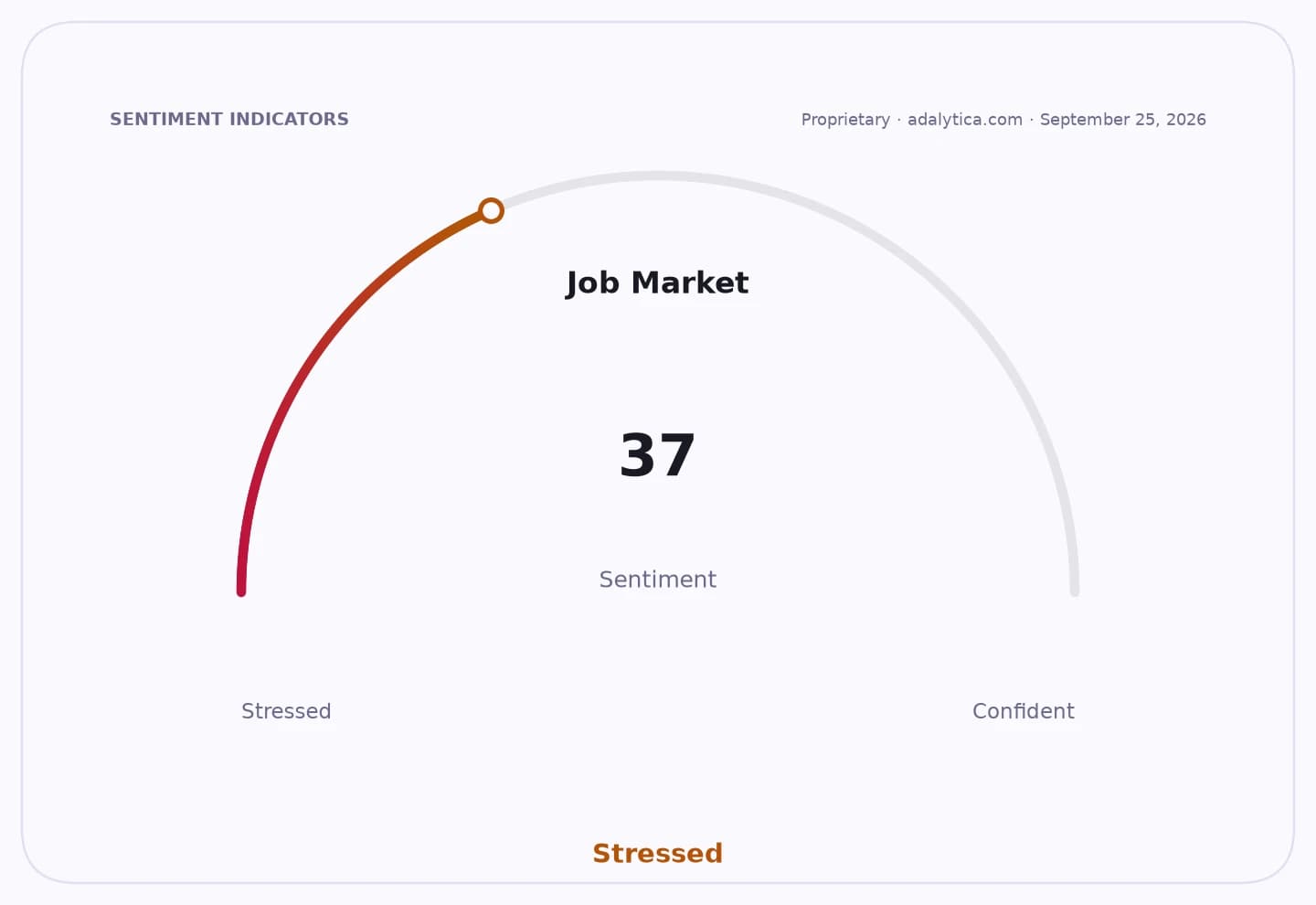
The clearest economic message is that price growth is easing only reluctantly. Headline consumer prices are expected to rise 0.89% in July from June, leaving the index at 335.512, while core prices are forecast to increase 0.33% to 337.1758. Even with unemployment at 4.18% and edging lower, the labour market is not loosening enough to offset the damage from elevated living costs. That combination — sticky inflation and still-resilient employment — is the hardest backdrop for households, because wage gains tend to lag essential expenses such as food, housing and transport.
Sentiment IndicatorsⓘProprietary · adalytica.com · August 2, 2026
This is a snapshot — live sentiment, awareness and momentum for 130+ markets update continuously in the dashboard.Open AlphaPulse
For investors, the significance is twofold. First, persistent inflation reduces the odds of an aggressive easing cycle from the Federal Reserve, keeping real rates higher for longer. Second, it supports the view that consumer spending power will remain uneven, favouring companies with pricing power and pressuring those reliant on lower-income discretionary demand. That matters for equity valuations, credit quality and sector rotation, particularly in retail, consumer staples, travel and housing-related names.
Bond markets have already been signalling caution. TLT, the long-dated Treasury ETF, has struggled to hold gains, slipping to 82.25 after trading above 89 in late February. Standard technical indicators show the fund below both its 50-day and 200-day moving averages, with RSI readings in the low 30s, a sign that investors have not yet embraced a durable rally in long-duration Treasuries. SPY, by contrast, has recovered to 747.03, but its momentum has moderated from May’s highs, suggesting equities are absorbing the inflation backdrop without fully discounting relief.
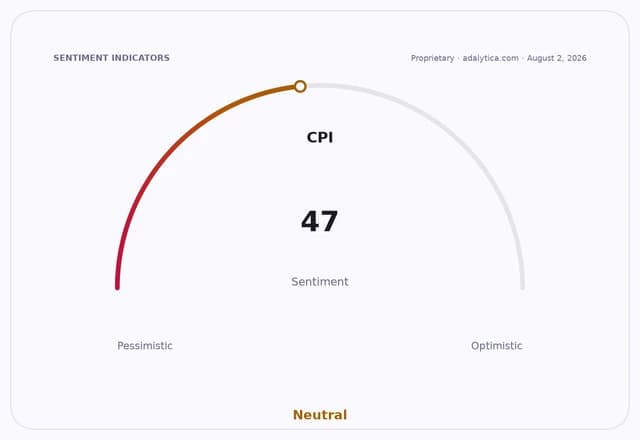
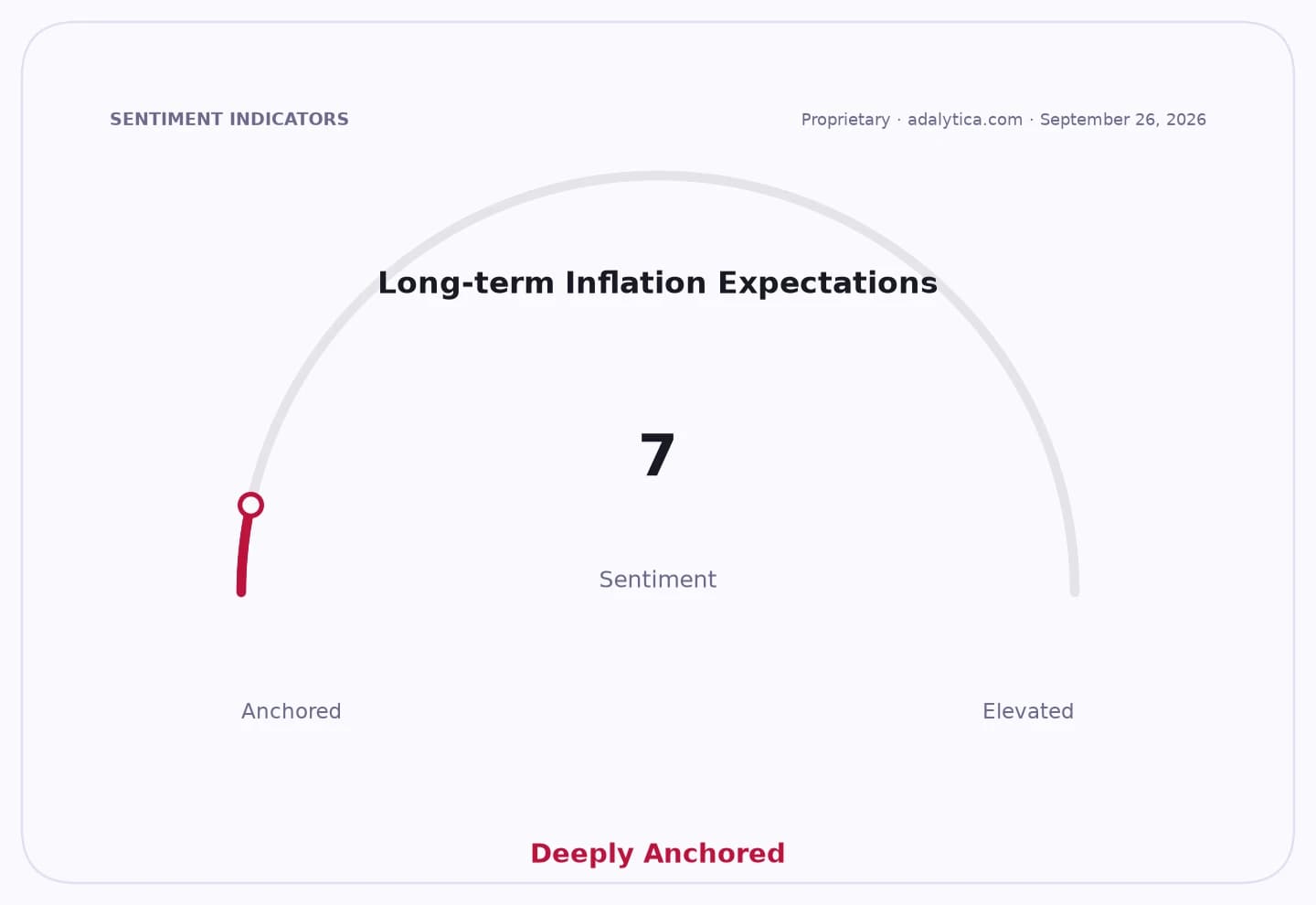
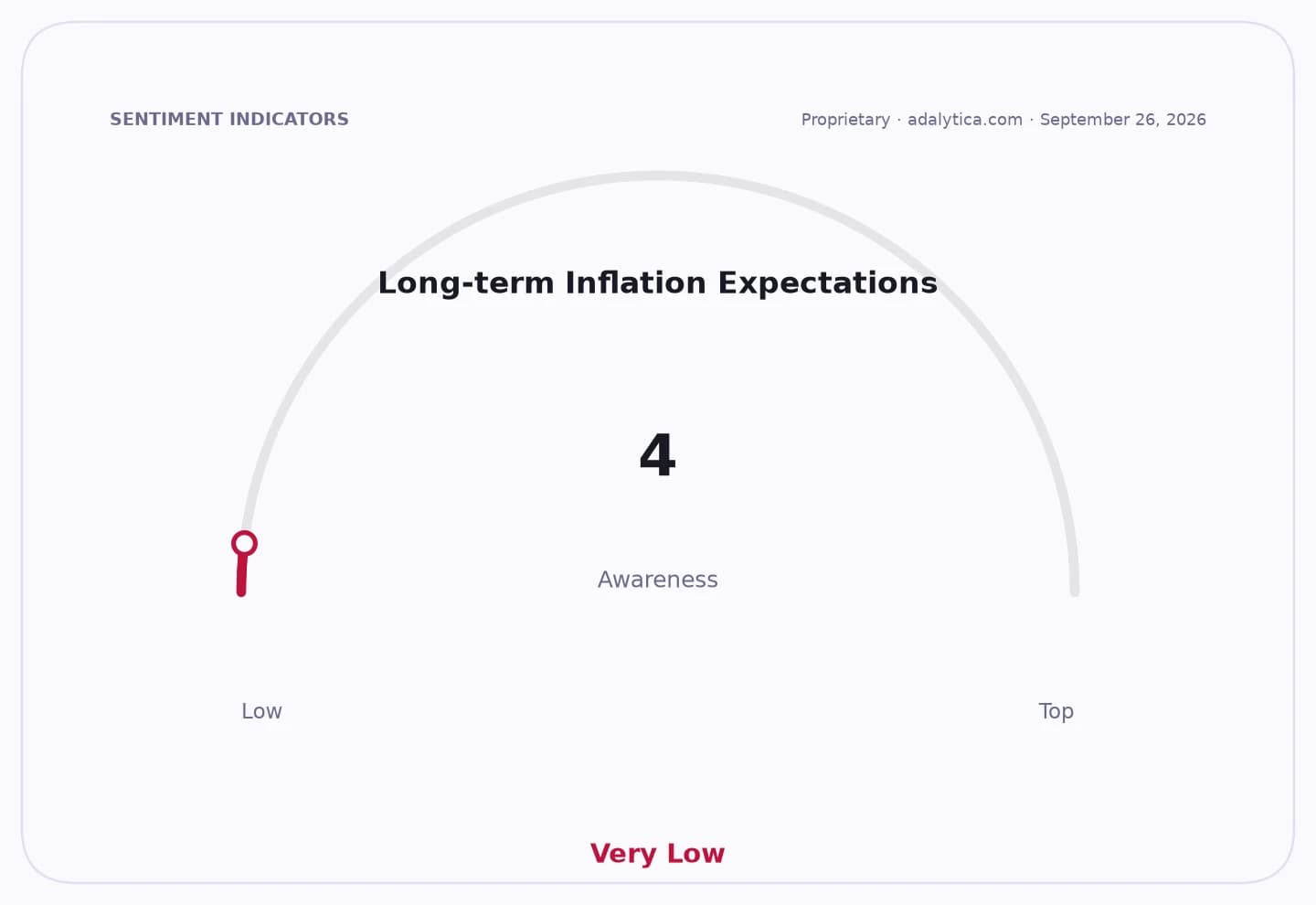
The broader narrative is one of an economy that is no longer in crisis, but is still far from price stability. The Fed’s 2% inflation goal remains credible in the long run, but confidence in that target is still fragile, according to Adalytica’s inflation-target gauge, which has only recently recovered from sharp swings in sentiment. That leaves policymakers walking a narrow line: cut too early and risk re-accelerating prices; stay tight too long and deepen the household squeeze that is already weighing on consumption.
For investors, the key question is whether the next few releases confirm a genuine downtrend or merely a pause in disinflation. A sustained moderation would support duration-sensitive assets and household-sensitive sectors. If inflation stays above 6% for longer, the market will keep rewarding defensive balance sheets, while consumers and rate-sensitive assets bear the cost.
| Entity | Gains | Losses |
|---|---|---|
| Savers and Treasury holders | ▲Higher yield income | ▼Slower rate cuts |
| Borrowers and households | ▲None | ▼Higher living costs |
| Defensive consumer firms | ▲Pricing power | ▼Demand erosion |
| Long-duration bonds | ▲Potential relief if inflation cools | ▼Pressure from sticky prices |