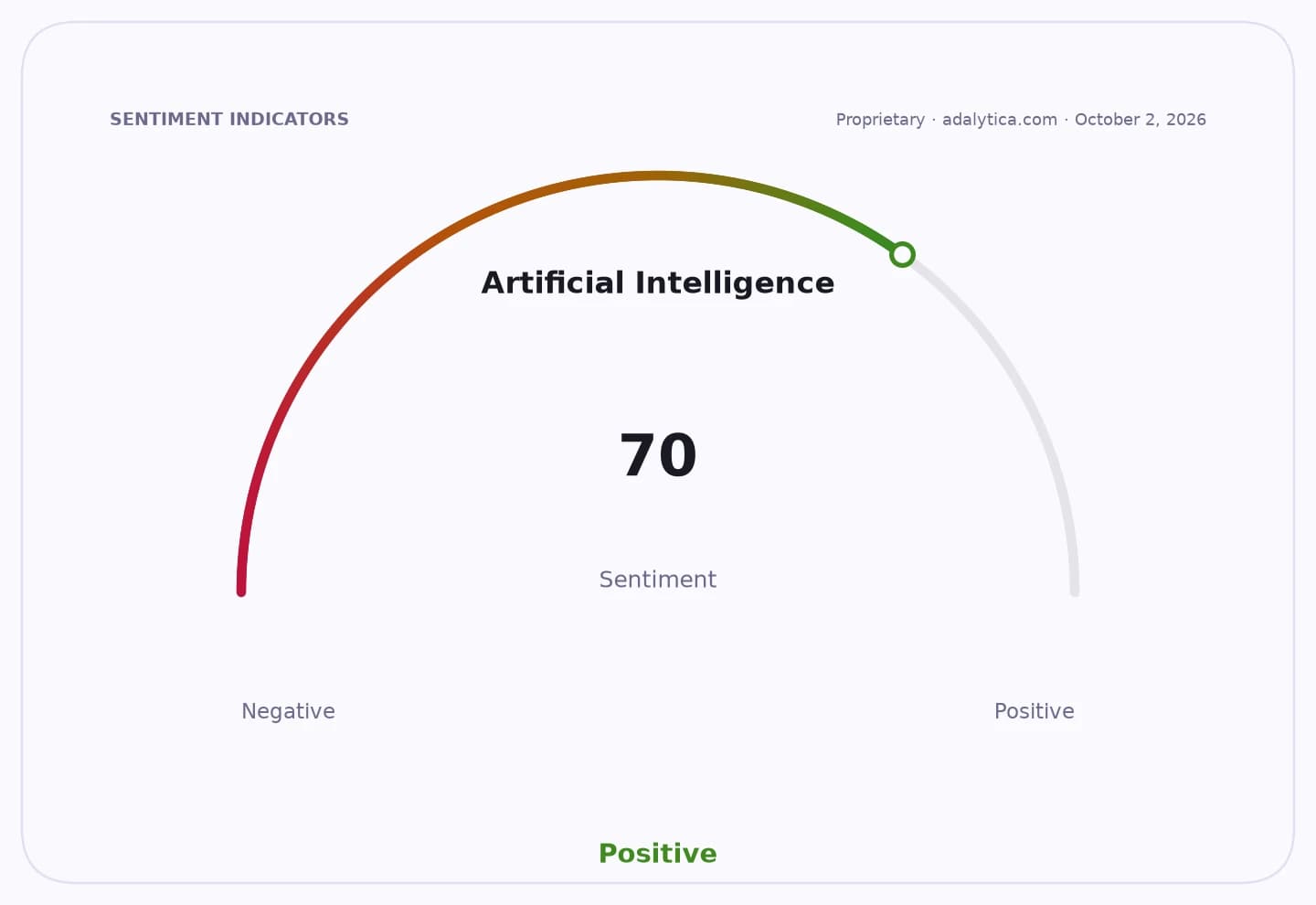
IRS guidance may be lagging the speed at which AI is being folded into tax and payroll software, leaving U.S. consumers and businesses exposed to errors even as the technology becomes a bigger part of filing and compliance.
Intuit, H&R Block, ADP Face AI Tax Risk

That matters because tax software is built on a thin margin for error. A misplaced deduction, misread form or hallucinated answer can trigger IRS penalties, refunds delays or audits, shifting liability from the software maker to the taxpayer. For investors, the issue is not just legal risk but commercial risk: trust is the main product in tax preparation, and any erosion in confidence can slow adoption, raise compliance costs and widen the gap between AI marketing and actual monetization.
The concern lands at a sensitive time for the sector. Intuit, H&R Block and ADP all disclose expanding use of artificial intelligence while warning that accuracy, privacy and regulatory scrutiny could create material exposure. Intuit’s latest filing said tax software development is unusually difficult because it must absorb unpredictable and sometimes late changes in tax law and forms, while also dealing with AI-related legal frameworks in states such as California, Colorado and Utah. ADP said its use of generative and agentic AI introduces risks tied to accuracy, bias, transparency, security and privacy that could lead to enforcement actions or litigation.
Investors have already priced in some of that uncertainty. Intuit’s shares have been volatile, with the stock recently around $325 after plunging as low as $305.72 in May and rebounding from a February trough above $430, while H&R Block has recovered to roughly $46 after falling below $28 earlier this year. ADP, by contrast, has held up better and was trading near $271, reflecting a steadier payroll and human-capital franchise. The divergence suggests the market still distinguishes between firms whose AI use is mostly additive and those whose core product depends on error-free tax advice.
The economic stakes extend beyond the companies themselves. The World Bank has argued AI can accelerate growth in developing economies, but tax and payroll systems in advanced markets are where the technology runs into its sharpest practical limits: regulation, auditability and liability. AI can speed customer support and automate routine work, but it cannot easily absorb the constantly changing tax code without human oversight. That raises the cost of deployment and caps how quickly vendors can convert AI investment into margin expansion.
For Intuit, H&R Block and ADP, the bull case is that AI improves productivity, lowers support costs and deepens customer retention without materially raising compliance risk. The bear case is that more automation creates more room for mistakes, which forces firms to keep humans in the loop and dilutes the economics of the technology. Until IRS rules, liability standards and disclosure expectations catch up, AI may be more of a reputational risk buffer than a growth engine for tax preparers and payroll providers.
| Entity | Gains | Losses |
|---|---|---|
| Tax software users | ▲Faster routine filing help | ▼Higher risk of incorrect returns |
| Intuit, H&R Block, ADP | ▲Efficiency gains from AI | ▼Liability, compliance and trust risk |
| IRS and regulators | ▲More pressure for clearer rules | ▼Slower adoption of automated tax tools |
| Human tax preparers | ▲Continued demand for oversight | ▼Less benefit from full automation |