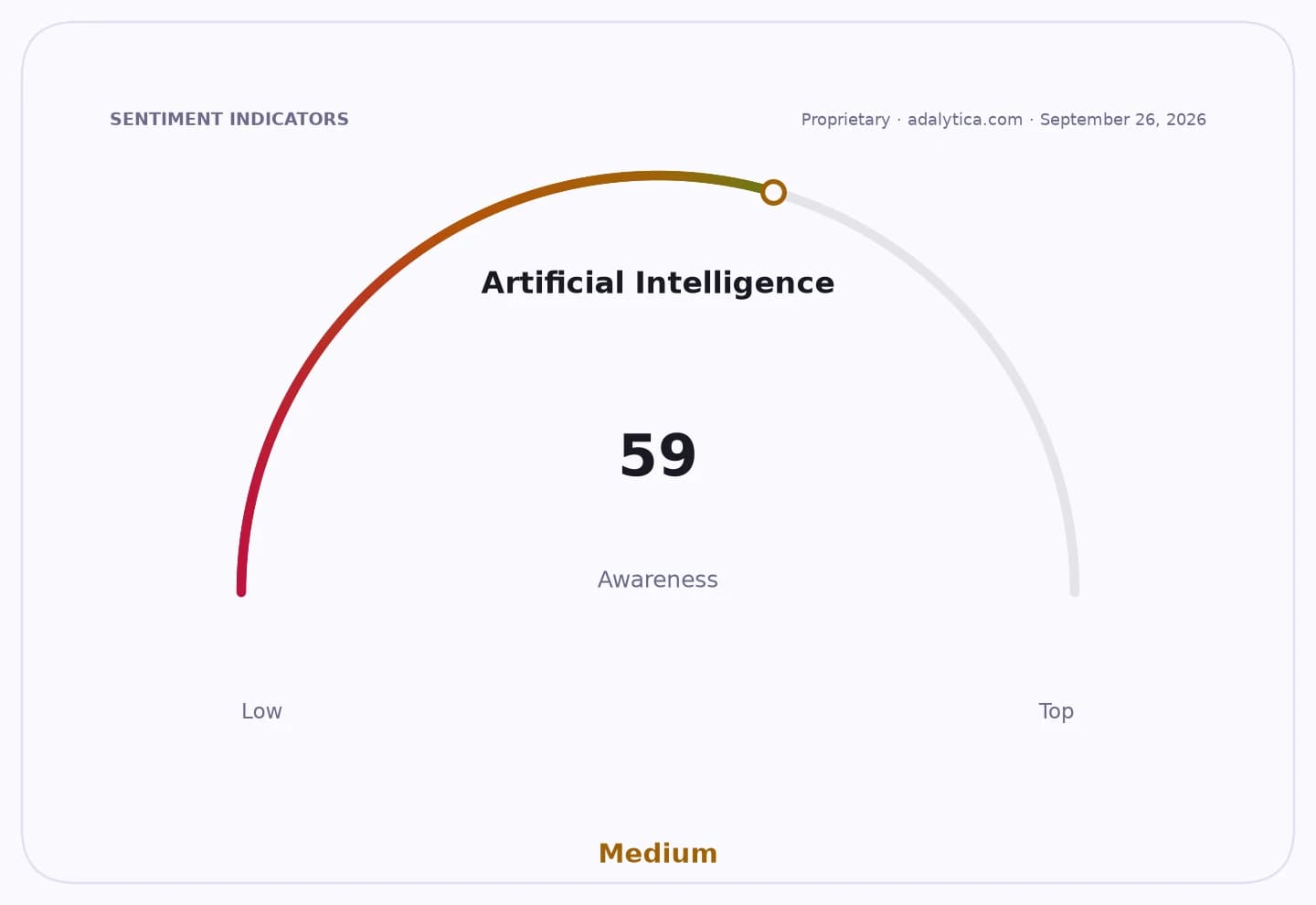
Nine in 10 investors in Davivienda’s survey are optimistic about the economy over the next 12 months, a sharp signal that sentiment is turning more constructive even as hard data still point to a slower, uneven recovery.
Investor Optimism Supports Risk Assets
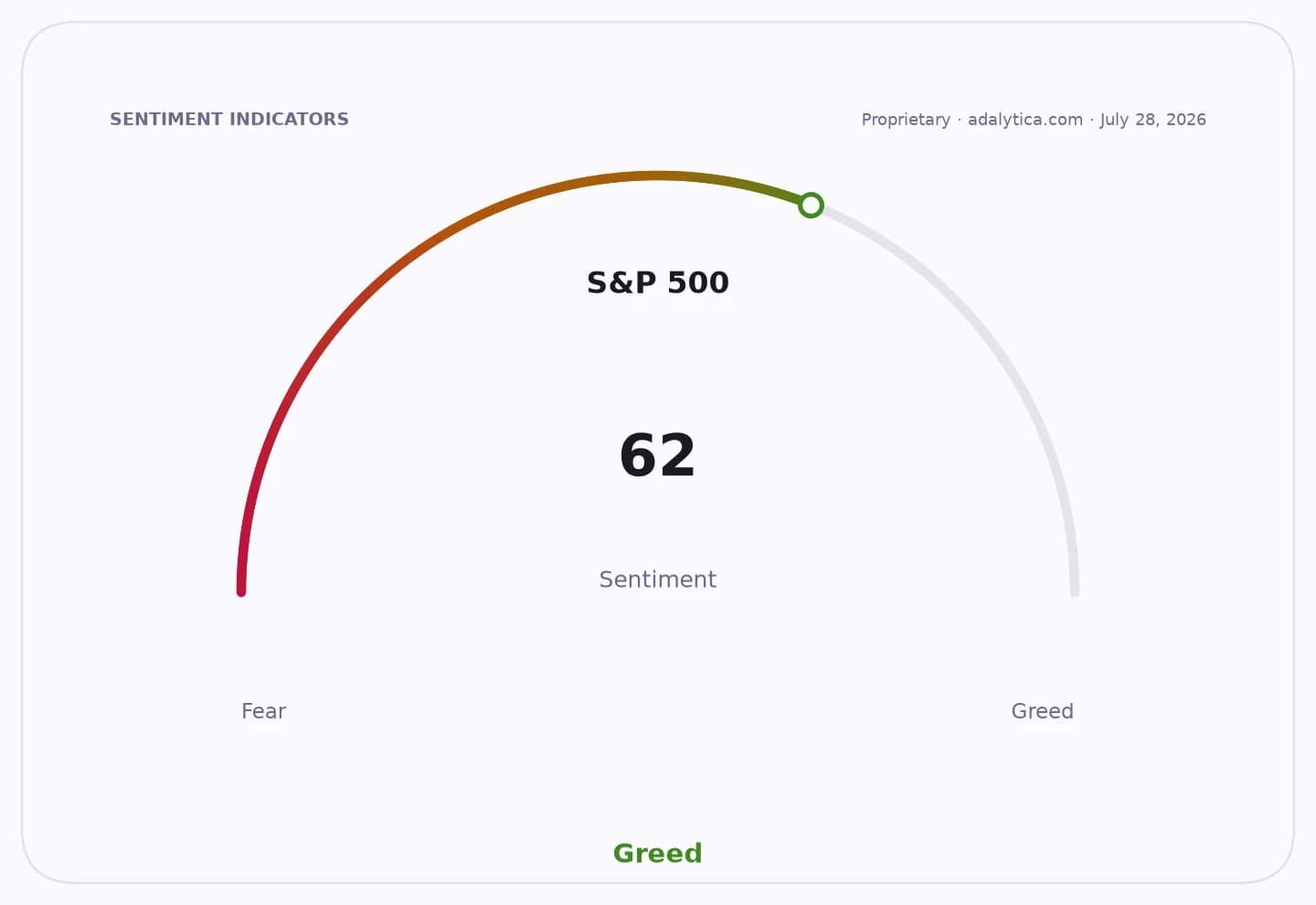
That matters because investor confidence is often the first channel through which easier financial conditions, stronger spending and better corporate earnings expectations begin to feed through the economy. When optimism rises this broadly, it can support risk assets, credit demand and capital allocation before the improvement is fully visible in employment or output figures.
Sentiment IndicatorsⓘProprietary · adalytica.com · July 28, 2026
This is a snapshot — live sentiment, awareness and momentum for 130+ markets update continuously in the dashboard.Open AlphaPulse
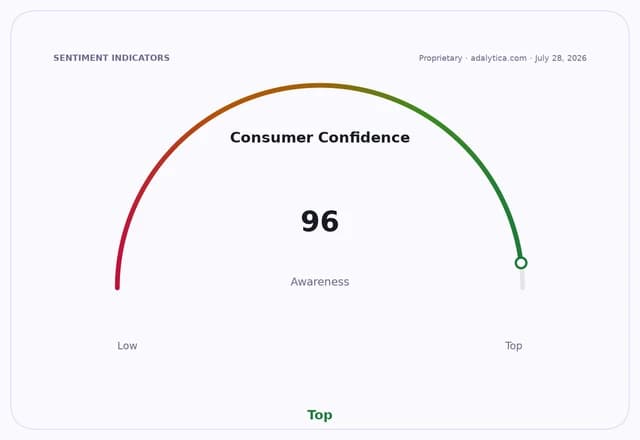
The survey snapshot comes against a backdrop of a labor market that remains steady, with the latest unemployment rate at 4.2%, near levels associated with full employment, and a 10-year Treasury yield around 4.69% to 4.71%, high enough to keep borrowing costs meaningful but not so elevated as to rule out a softer landing. In the same environment, U.S. consumer confidence indicators tracked by Adalytica show “Extreme Greed,” underscoring a risk-on mood that can reinforce spending and asset prices.
The tension for investors is that sentiment and fundamentals are moving at different speeds. Broad optimism can be self-fulfilling if it translates into higher consumption, inventory restocking and business investment. But it can also fade quickly if inflation, rates or geopolitical shocks reassert themselves. For equity markets, the constructive read is that a more upbeat investor base tends to favor cyclical sectors, financials and domestically oriented companies that benefit first from improved demand. The bear case is that optimism is already embedded in pricing, leaving assets vulnerable if growth disappoints or rates stay restrictive.
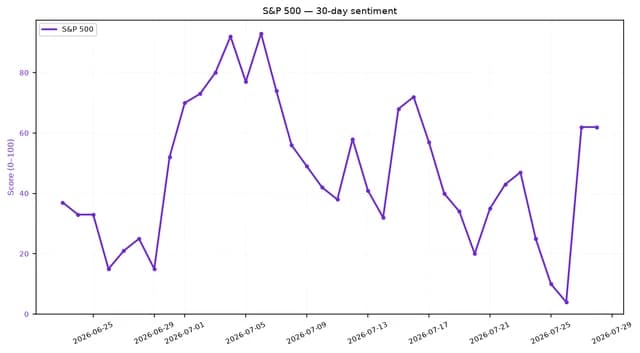
That is why the Davivienda reading is more than a mood indicator. It suggests investors are increasingly willing to look through near-term uncertainty and position for a better macro backdrop, a stance that tends to support valuations and new capital flows. The next test is whether confidence spreads from survey responses into actual spending, credit growth and earnings guidance, which would determine whether this is a durable shift or just another sentiment bounce.
| Entity | Gains | Losses |
|---|---|---|
| Risk assets | ▲Higher appetite for equities | ▼Defensive positioning |
| Cyclical sectors | ▲Better demand outlook | ▼Slow-growth stocks |
| Borrowers | ▲Easier access to credit | ▼High-rate caution |
| Cash holders | ▲Less relative appeal | ▼Missed upside if rally extends |