Iran’s alleged ability to move 70 million barrels of oil to China is less important as a single shipment than as a reminder that sanctioned barrels are still finding a path into the world’s largest importer — and that crude prices are reacting to supply fear before the market has full clarity on volumes. That matters because every barrel that slips through the cracks blunts the impact of sanctions, supports Tehran’s war chest, and keeps a floor under oil just as traders were trying to determine how much Middle East risk was already embedded in prices.
Iran-China Oil Flows Keep Crude Geopolitically Bid
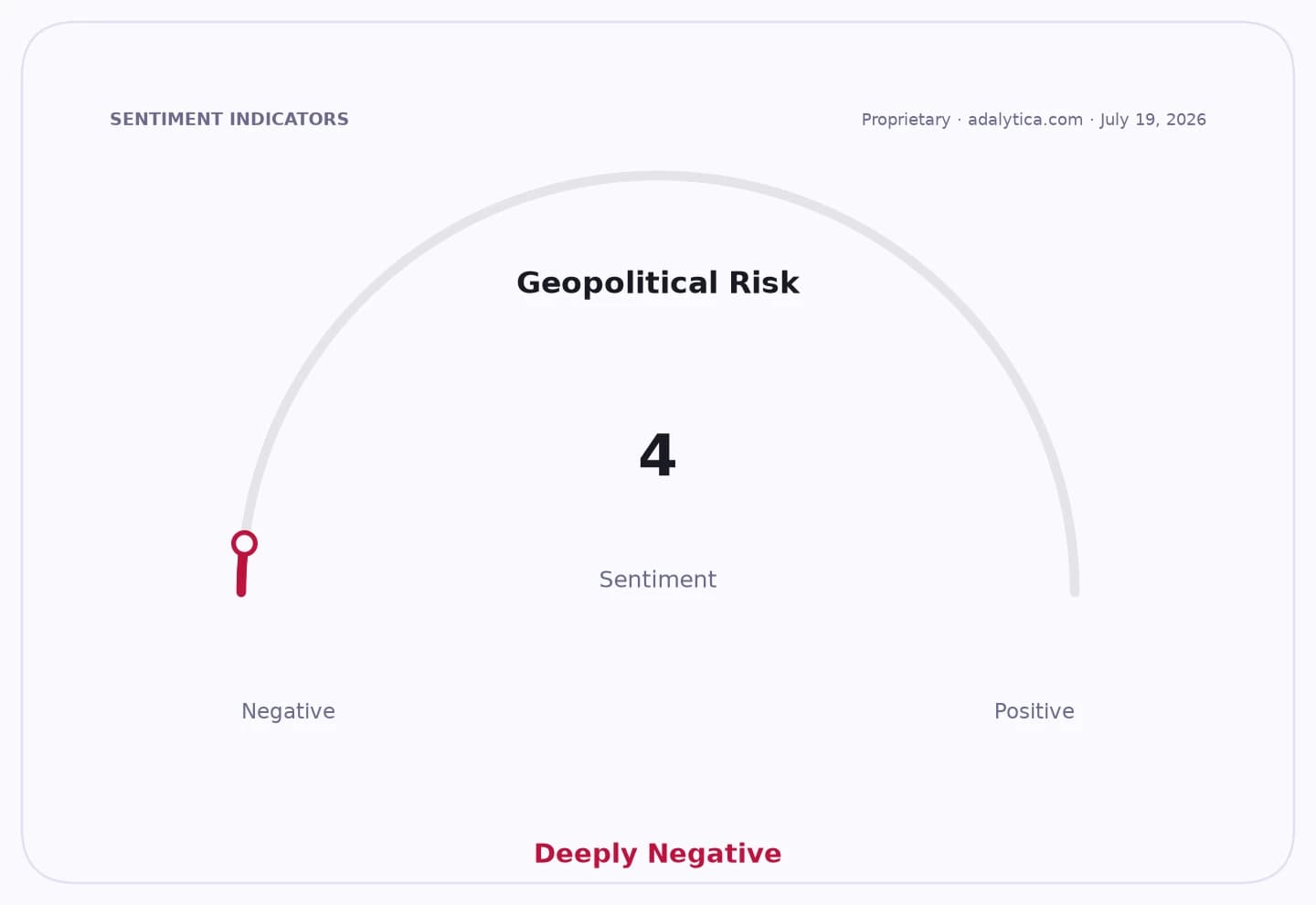
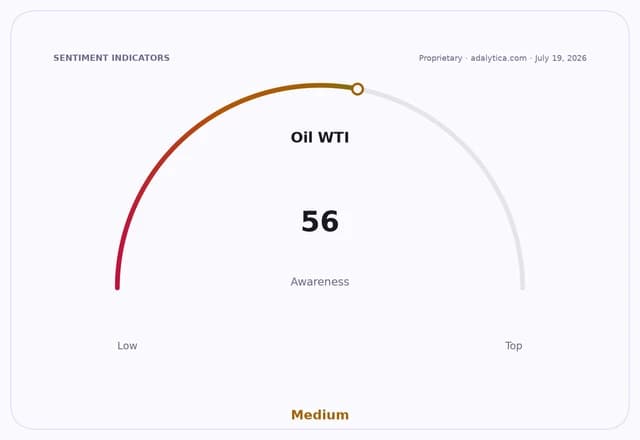
The bigger economic story is that the oil market has shifted from a clean supply-demand picture to a geopolitical one. WTI futures, reflected by USO, have been volatile but elevated, closing at $123.96 on July 17 after a sharp swing from a June low near $106.29. That rebound came alongside a jump in oil-trade fear signals on Adalytica’s data, which shows extreme fear in crude and a sharp deterioration in global stability sentiment. In plain terms: investors are paying up for uncertainty, not confidence.
Sentiment IndicatorsⓘProprietary · adalytica.com · July 19, 2026
This is a snapshot — live sentiment, awareness and momentum for 130+ markets update continuously in the dashboard.Open AlphaPulse
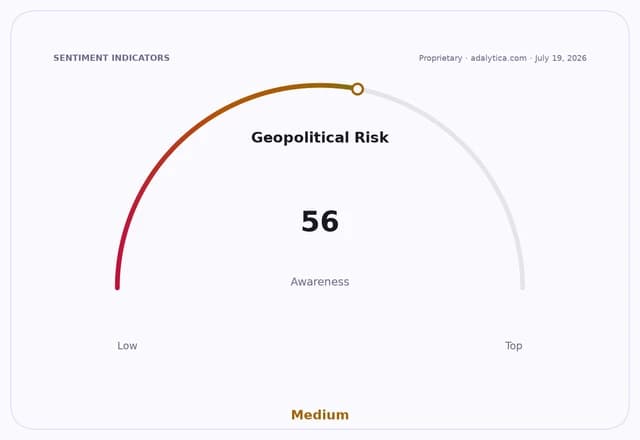
That is why the alleged Iran-China flow matters beyond the barrel count. If sanctioned crude continues moving into China, it suggests enforcement is porous and replacement supply may not be as tight as headline risk implies. Yet the market cannot ignore the possibility that any disruption to those flows — whether from tighter U.S. sanctions, shipping chokepoints or a widening regional conflict — could remove a meaningful amount of incremental supply. That keeps crude supported and makes energy equities more attractive than they often look in calmer tape.
The price action in energy stocks tells the same story. The Energy Select Sector SPDR Fund, XLE, has climbed back to $57.68, while the VanEck Oil Services ETF, OIH, has staged a powerful recovery to $378.99 after a bruising pullback. Both are still below recent highs, but the sector’s technical posture has improved, with RSI readings back in bullish territory and prices reclaiming key moving averages on the rebound. In other words, the market is starting to price a higher-for-longer oil regime even as volatility remains elevated.
For investors, the asymmetric opportunity is not to chase every swing in crude, but to own the toll roads that benefit if geopolitics keeps the market tight: integrated producers, oil services, and select energy ETFs. The market still underestimates how quickly a sanctions story can turn into a cash-flow story for upstream names. If Iran’s exports to China are truly flowing at scale, that is a bearish signal for diplomatic leverage — but not necessarily for oil bulls, because it also confirms a fragile, shadow-market supply chain that can be interrupted at any time.
The real catalyst now is policy. Any U.S. escalation on secondary sanctions, any further disruption in the Gulf, or any sign that China is forced to diversify away from discounted Iranian crude could tighten balances fast and send crude higher again. For now, the message is straightforward: stay long the energy infrastructure that profits from disorder, because the market is telling us the geopolitics premium is still being built, not unwound.
| Entity | Gains | Losses |
|---|---|---|
| Iran | ▲Sanctions revenue | ▼Diplomatic leverage |
| China | ▲Discounted crude supply | ▼Energy-security risk |
| Oil producers | ▲Higher crude prices | ▼Demand-sensitive users |
| U.S. sanctions hawks | ▲None | ▼Enforcement credibility |