Iran has raised five conditions for regional peace, putting an end to sanctions, compensation claims and a new security architecture around the Strait of Hormuz at the center of any de-escalation with the US and its allies.
Iran Conditions for Peace, Strait of Hormuz Demands
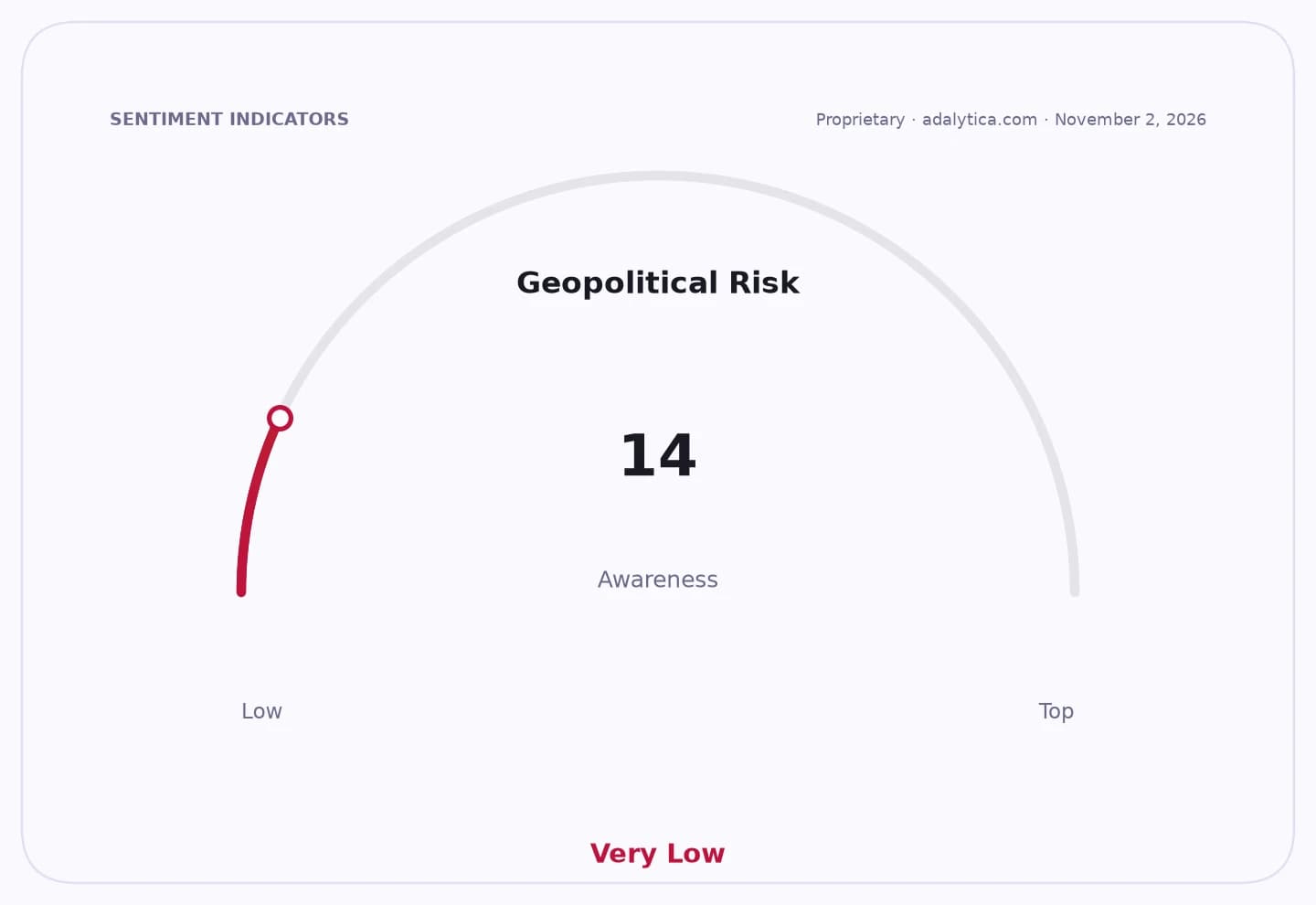
The demand set underscores how far apart Tehran and Washington remain after months of conflict rhetoric and military strikes, and why traders are still pricing a persistent geopolitical risk premium into oil and gold. Iran’s chief of general staff, Ali Abdollahi, also warned that the armed forces would respond to any threat “without geographical limits,” signaling that any renewed confrontation could spill well beyond Iran’s borders.
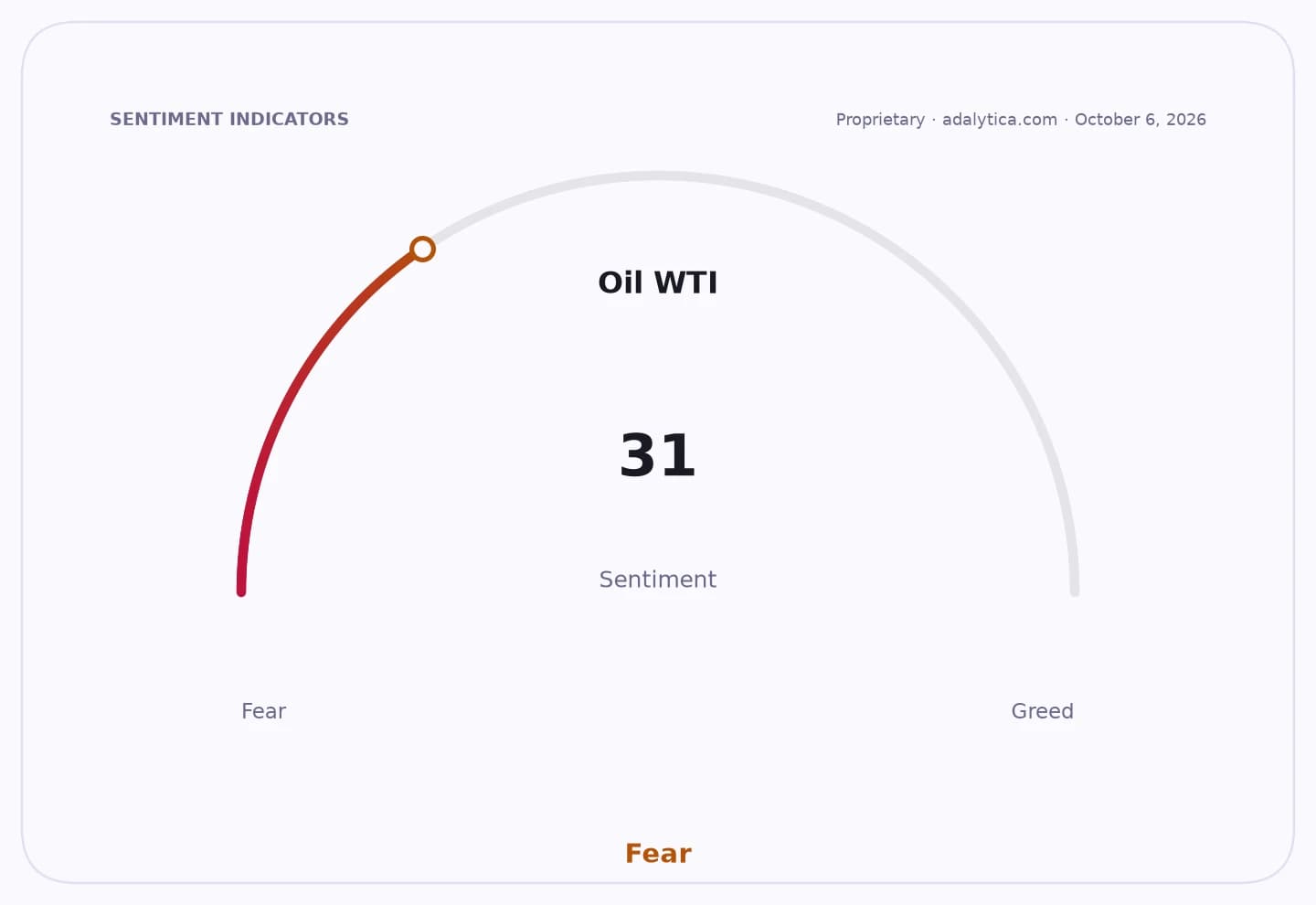
Sentiment Indicators
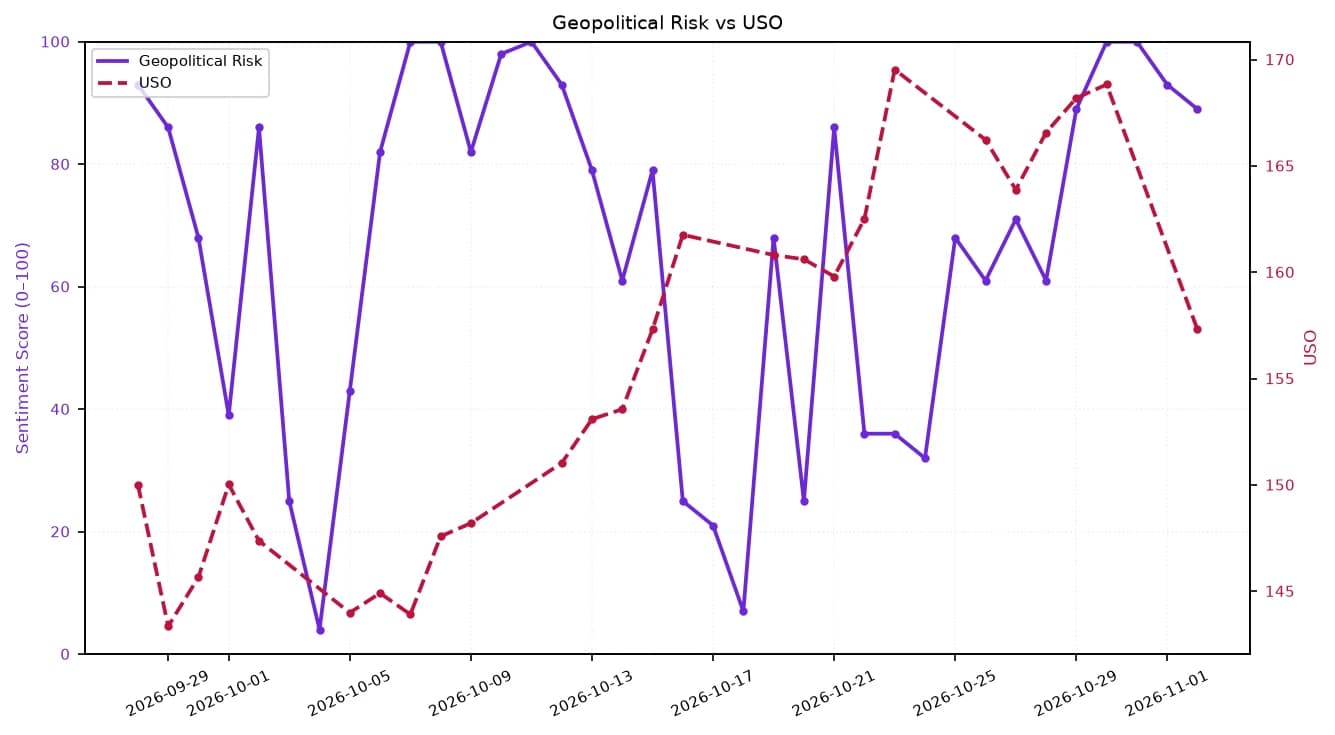
Geopolitical Risk
Tehran’s framework calls for an immediate end to fighting across regional fronts, especially Lebanon and Gaza, the full lifting of sanctions, release of frozen assets and compensation for damage from the conflict. It also wants recognition of Iranian sovereignty over the Strait of Hormuz and replacement of the US-led security arrangement with what it calls a “Hormuz mechanism” led by regional states.
That matters for markets because the strait is the world’s most sensitive energy chokepoint, and any threat to shipping there quickly ripples through crude benchmarks, tanker rates, insurance costs and refinery margins. WTI proxy USO has been volatile, with the fund closing at $145.41 on Nov. 4 after swinging sharply over recent sessions, while gold-backed GLD gained to $372.49 as investors sought hedges against escalation.
Geopolitical Risk vs USOadalytica.com
Explore this data interactively — full history, time series and cross-market comparisons.
Oil WTI
The broader backdrop is a fragile global risk environment. Adalytica’s Global Stability Sentiment gauge remains at 93, labeled “Extreme Greed,” even after a 7-point one-day decline, suggesting markets are still heavily exposed to a sudden deterioration in geopolitical conditions. The US dollar gauge shows “Extreme Fear” at 15, reflecting uncertainty over how prolonged Middle East conflict could affect growth, inflation and safe-haven flows.
For investors, the key issue is whether Iran’s list becomes the basis for talks or a marker of entrenched confrontation. If tensions stay elevated, energy and defense-linked assets should keep drawing bids, while broader emerging-market sentiment and risk appetite remain vulnerable; if diplomatic channels reopen, some of the war premium embedded in oil and gold could unwind quickly.
| Entity | Gains | Losses |
|---|---|---|
| Oil producers | ▲Higher risk premium | ▼Demand erosion if conflict widens |
| Gold and safe havens | ▲Inflows on stress | ▼Reversal if tensions ease |
| US and Israel | ▲Leverage from pressure | ▼Higher escalation risk |
| Iran | ▲Bargaining power | ▼Sanctions and isolation |