Iran’s real center of power appears to be shifting further away from the clerical hierarchy and toward a small circle of Islamic Revolutionary Guard Corps veterans who control security, intelligence and the missile arsenal, a development with direct implications for the Strait of Hormuz, regional conflict risk and oil markets.
Iran Power Shift Raises Oil Risk
The immediate significance is not simply who sits in the top office, but who can actually make and enforce decisions as Tehran faces renewed confrontation with the United States and the prospect of wider escalation. If the reporting is right, President Masoud Pezeshkian is increasingly reduced to managing the fallout from choices made elsewhere, while the IRGC’s old guard sets strategy behind the scenes. That makes Iran harder to read, harder to deter and potentially quicker to mobilize.
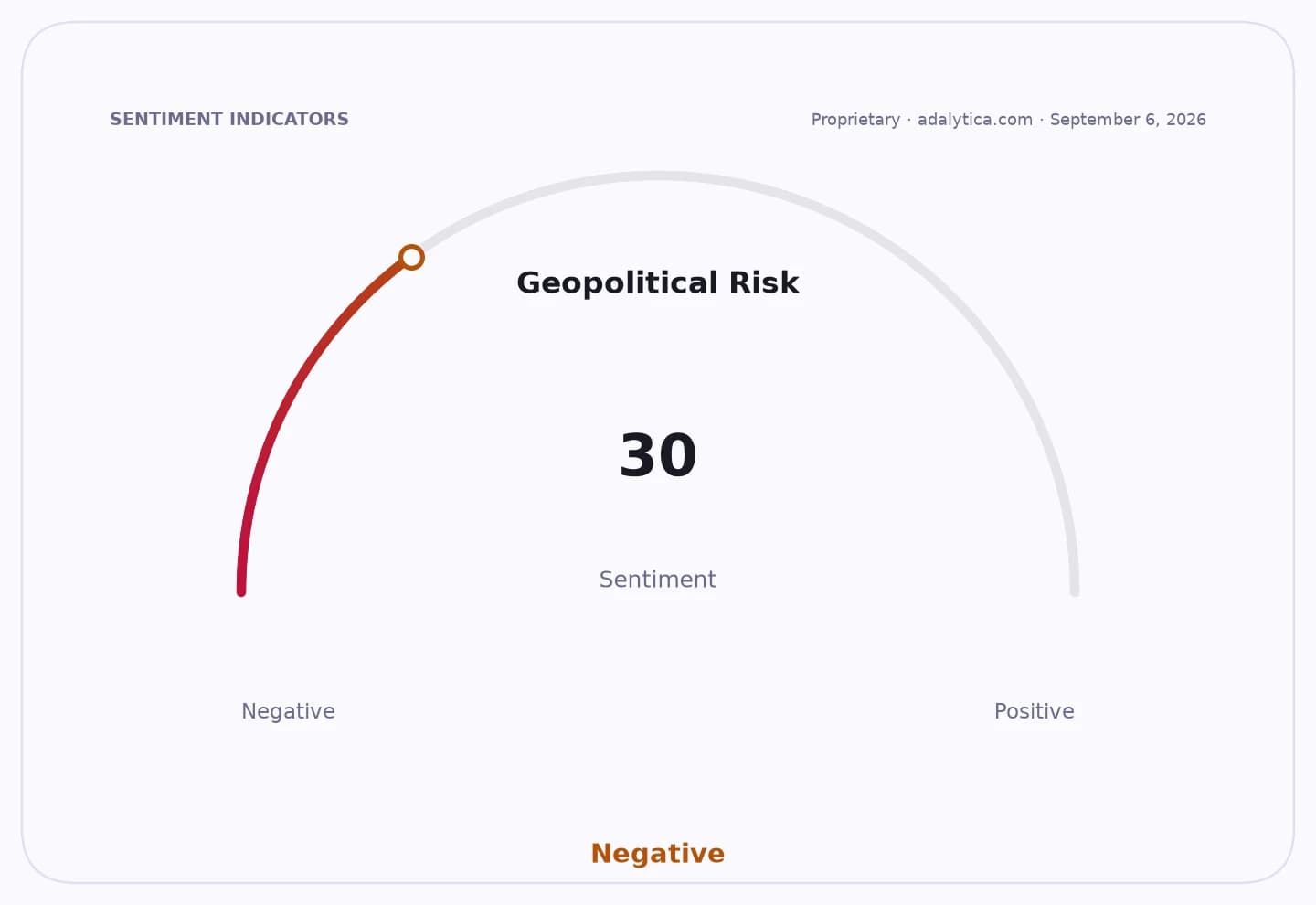
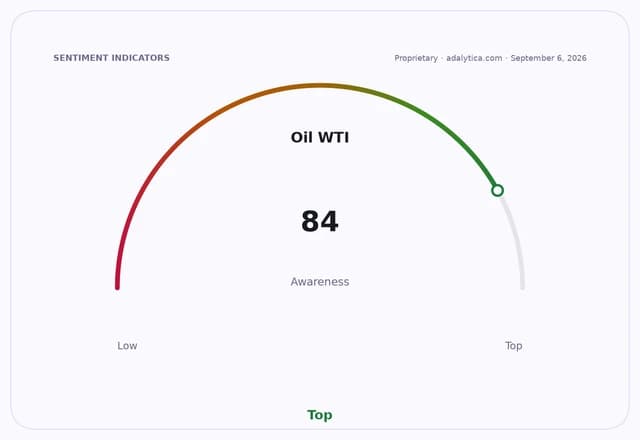
Sentiment IndicatorsⓘProprietary · adalytica.com · September 6, 2026
This is a snapshot — live sentiment, awareness and momentum for 130+ markets update continuously in the dashboard.Open AlphaPulse
At the center of the account is Ahmad Vahidi, described as the key operational figure in the security establishment, alongside Mohsen Rezaei, Mohammad Bagher Zolqadr and Hossein Taeb. Together, they represent the institutions that matter most in a coercive state: armed force, intelligence, internal repression and strategic planning. The article’s core claim is that Iran has not experienced a classic coup, but a quiet internal consolidation in which the Guards have absorbed the state from within rather than overthrown it.
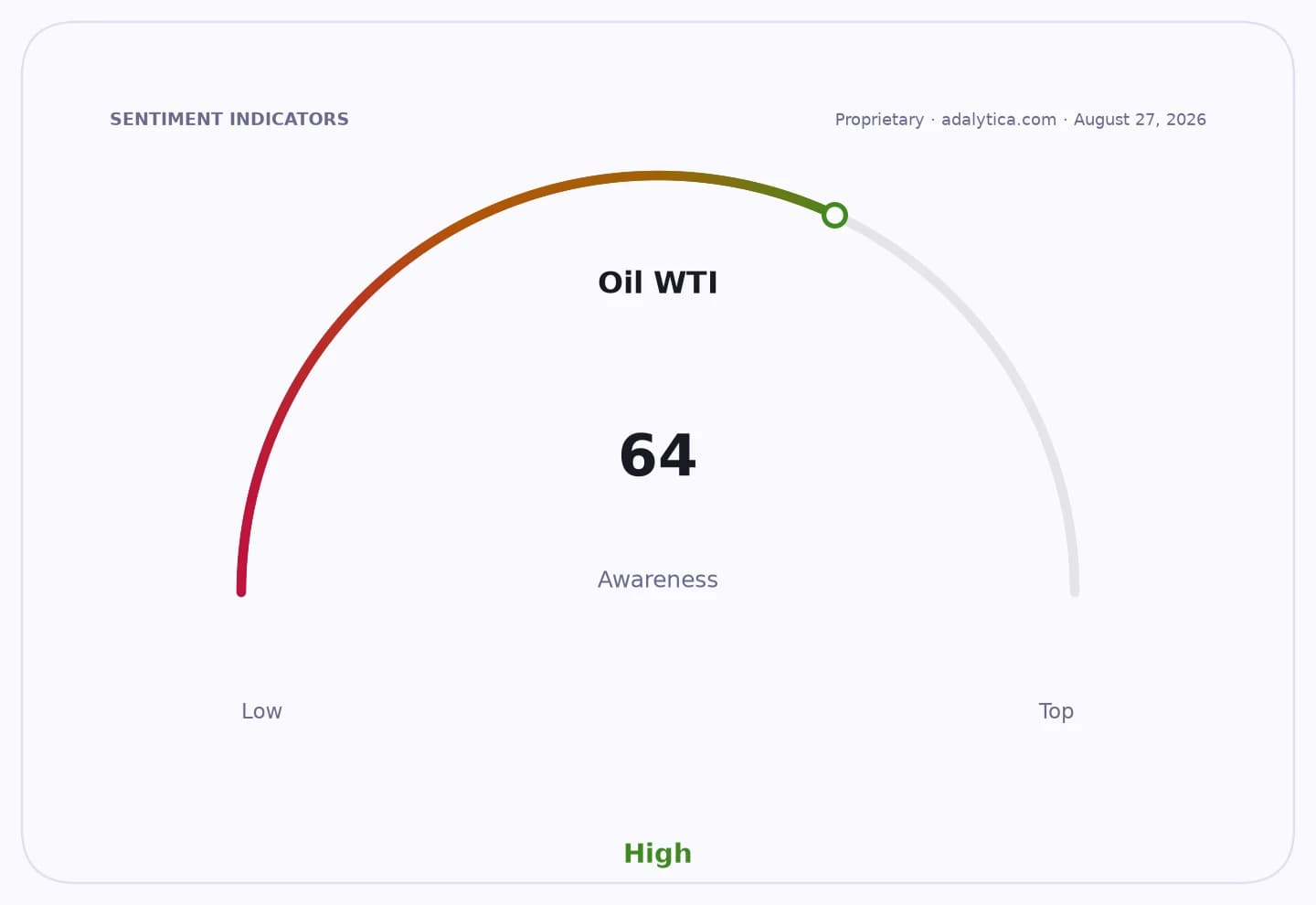
That matters economically because the control of Iran’s security apparatus shapes the likelihood of disruption to Gulf energy flows. Iran remains a central variable for oil traders whenever tensions rise around Hormuz, and the latest flare-up has already pushed energy risk higher. WTI has climbed to about $142 a barrel in the supplied market data, while the energy sector ETF XLE has risen to around $64, with the 50-day moving average still above the 200-day trend but momentum now extended. The market is pricing in a world where geopolitical shocks can quickly spill into supply, freight and insurance costs.

The policy risk is particularly acute because the story suggests Iranian decision-making is concentrated in men whose worldview prizes endurance over compromise. That raises the odds that diplomacy is used tactically rather than as a true off-ramp. In practical terms, it means any talks with Tehran could buy time without necessarily reducing the chance of renewed violence. For investors, that is a fragile backdrop: a market can tolerate tension, but it struggles when escalation and negotiation coexist unpredictably.
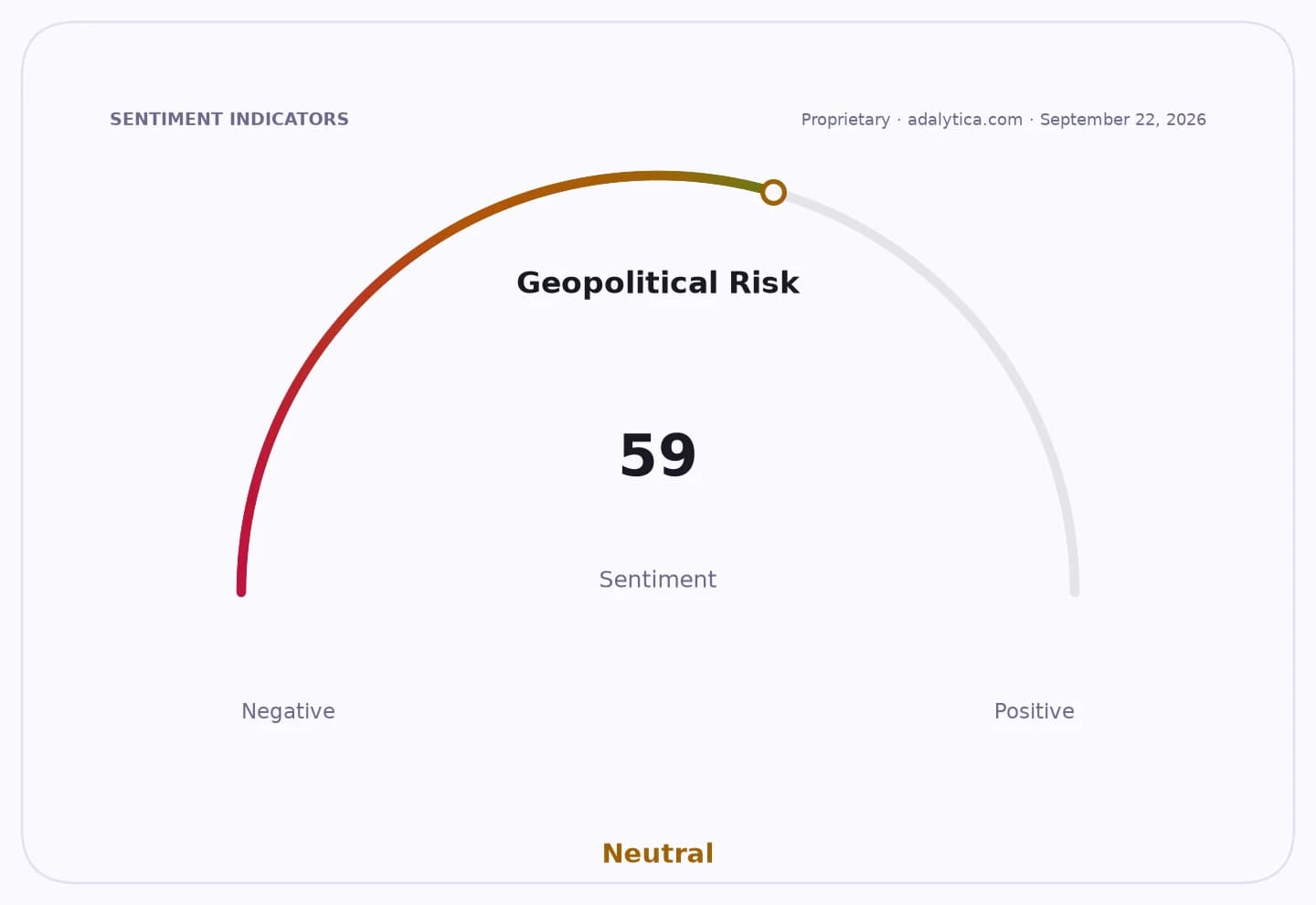
Adalytica’s Global Stability Sentiment gauge shows fear at 30, with awareness still elevated at 81, underscoring how quickly geopolitical risk has deteriorated. At the same time, the U.S. dollar trade signal remains in greed territory, reflecting a market preference for safety, while the oil signal has turned more neutral after a sharp run-up. That combination points to a market that is still braced for shocks, even if it is not yet fully pricing a sustained supply disruption.
The bull case for markets is that Iran’s internal power structure may actually make the regime more disciplined, not less. Veteran security officials understand the costs of uncontrolled escalation and may prefer calibrated pressure, proxy actions and controlled retaliation. The bear case is that a more secretive, less accountable chain of command can miscalculate faster, especially if succession politics overlap with external confrontation. In that scenario, the risk is not just a spike in crude, but a broader repricing across shipping, defense and emerging-market assets.
For investors, the important conclusion is that the question of who rules Iran is not academic. It determines whether Tehran behaves like a state seeking tactical relief or a security machine willing to absorb economic pain to preserve its grip on power. As long as the IRGC veterans dominate the levers of force, the market should assume a higher floor for geopolitical risk and a lower ceiling for confidence in any de-escalation.
| Entity | Gains | Losses |
|---|---|---|
| IRGC veteran network | ▲Consolidated power | ▼Institutional transparency |
| Oil producers | ▲Higher risk premium | ▼Demand stability |
| Oil importers | ▲Short-term diplomacy | ▼Predictable supply |
| Pezeshkian / civilian presidency | ▲Limited cover | ▼Real authority |