Iran is worried about Israel’s deepening relationship with the United Arab Emirates because it looks less like a symbolic diplomatic opening and more like the kind of security alignment that can squeeze Tehran on its doorstep. For investors and policymakers watching the Gulf, that matters because the UAE sits next to Iran, astride the Strait of Hormuz, and at the center of regional energy and trade flows that still shape the price of risk in the Middle East.
Iran Eyes UAE-Israel Security Ties

The latest flashpoint was former Israeli Prime Minister Benjamin Netanyahu’s visit to Abu Dhabi on Sept. 27, which Iranian officials treated as fresh proof that the UAE is becoming part of an Israeli-led security network. Tehran’s concern is not just rhetoric. Iranian officials have repeatedly warned Gulf states against allowing their territory to be used against Iran, while hardliners have framed the UAE as a “second Israel” and accused it of hosting Western military infrastructure that could support attacks on the Islamic Republic.
Sentiment IndicatorsⓘProprietary · adalytica.com · October 13, 2026
This is a snapshot — live sentiment, awareness and momentum for 130+ markets update continuously in the dashboard.Open AlphaPulse
That is why geography matters so much here. The UAE is directly across the Gulf from Iran and sits beside the Strait of Hormuz, the narrow waterway through which a large share of the world’s oil trade passes. Any perception that the UAE is drawing closer to Israel and the United States raises the stakes for Iran, which has long viewed nearby Gulf infrastructure, ports and military sites as potential pressure points in a conflict it cannot afford to let spill out of control.
The dispute over three Gulf islands — Abu Musa, Greater Tunb and Lesser Tunb — adds another layer of friction. Tehran says the islands are non-negotiably Iranian. The UAE says they are occupied. When Abu Dhabi renewed its claim at the United Nations just days before the Netanyahu trip, Iranian leaders seized on the issue again, turning a long-running sovereignty dispute into part of a broader argument that the Emirates are moving into Israel’s strategic orbit.
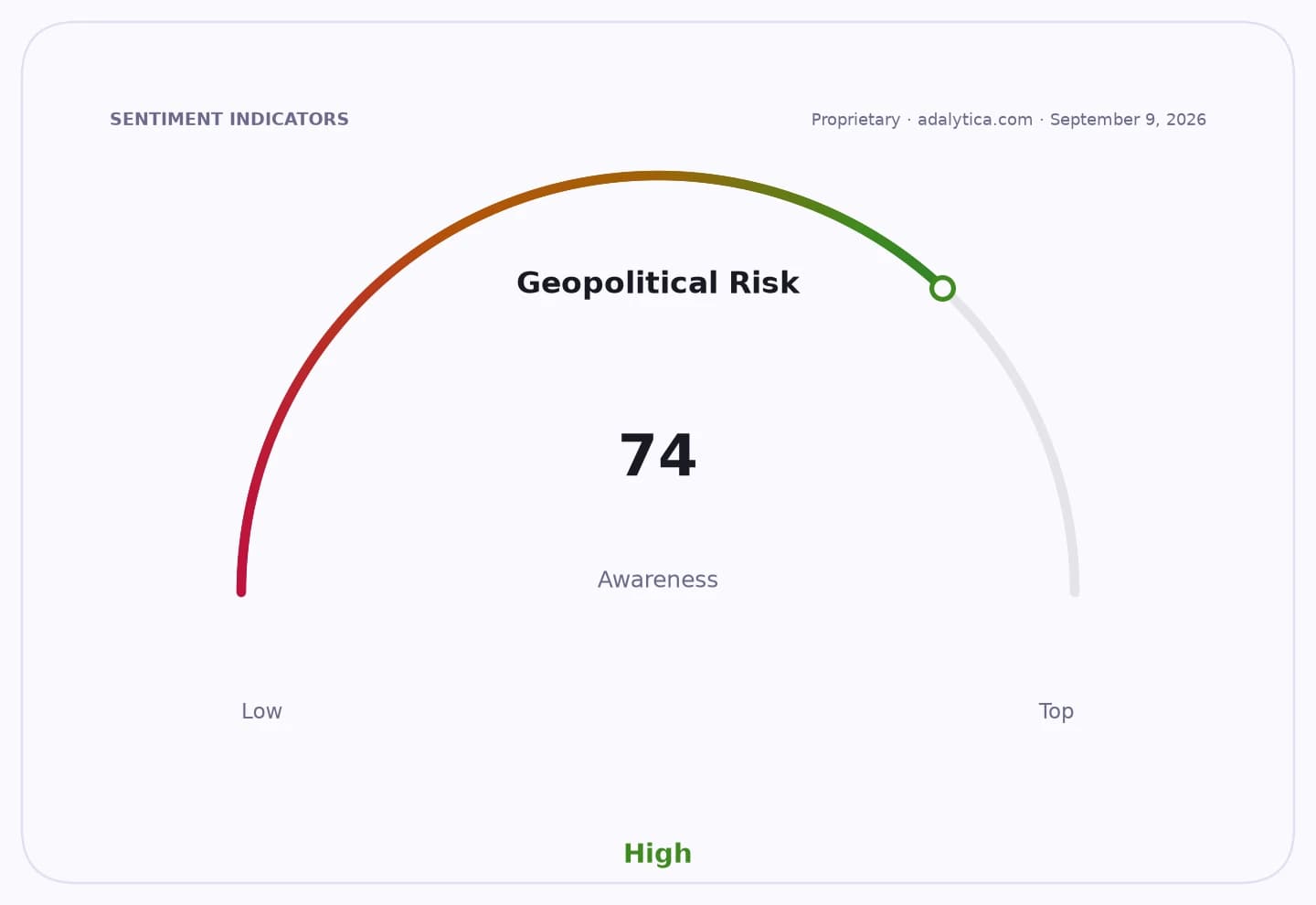
Geopolitical Risk — 30-day sentimentadalytica.com
Explore this data interactively — full history, time series and cross-market comparisons.Open AlphaPulse
The economic contradiction is what makes this relationship so important. Iran and the UAE are security rivals, but they are also commercial counterparts. Dubai has long served as a critical gateway for Iranian imports, re-exports and financial transactions, especially under sanctions. Iranian media cited estimates of roughly $16 billion in informal trade between the two countries. That is not a trivial side story — it is a reminder that even hostile neighbors can remain economically entangled when one depends on the other for goods, logistics and access to the outside world.
But war has made that balance harder to sustain. The UAE said in August that it suspended trade and financial exchanges with Iran until further notice amid escalating regional tensions. For Iran, that sharpens the strategic dilemma: the Emirates are close enough to matter militarily, important enough to matter economically, and increasingly aligned enough with Israel to look like part of the same containment structure Tehran has tried for years to disrupt.
That is the real narrative investors should watch. The issue is not simply whether Israel and the UAE will keep talking. It is whether their ties harden into a durable regional security framework — one that leaves Iran feeling more exposed while simultaneously reducing the commercial room it still has to maneuver. If that happens, the result could be more volatility around Gulf shipping, energy infrastructure and cross-border trade, even if the diplomacy stays quiet on the surface. For long-term investors, the UAE remains worth watching as both a commercial hub and a geopolitical pressure point.
| Entity | Gains | Losses |
|---|---|---|
| Israel | ▲Regional security reach | ▼Less diplomatic ambiguity |
| UAE | ▲Strategic backing, defense ties | ▼Iranian distrust, retaliation risk |
| Iran | ▲Domestic hardline support | ▼Strategic isolation, trade disruption |
| Global energy markets | ▲Clearer risk pricing | ▼Higher Gulf volatility |