The United States has stepped up economic pressure on Iran by urging other countries to enforce reimposed UN sanctions while also targeting people and entities it says are helping finance Hamas, reinforcing a sanctions campaign that could tighten energy and trade flows across the Middle East.
US Steps Up Iran Sanctions Enforcement
The move matters because Washington is trying to do two things at once: choke off funding networks tied to Iran and Hamas, and signal that even where it allows limited humanitarian or religious exceptions, those carve-outs will remain narrow. That keeps pressure on Iran’s ability to move money, aircraft and other logistics through regional transit hubs, while also leaving room for selective waivers that Washington can use to preserve diplomatic leverage.
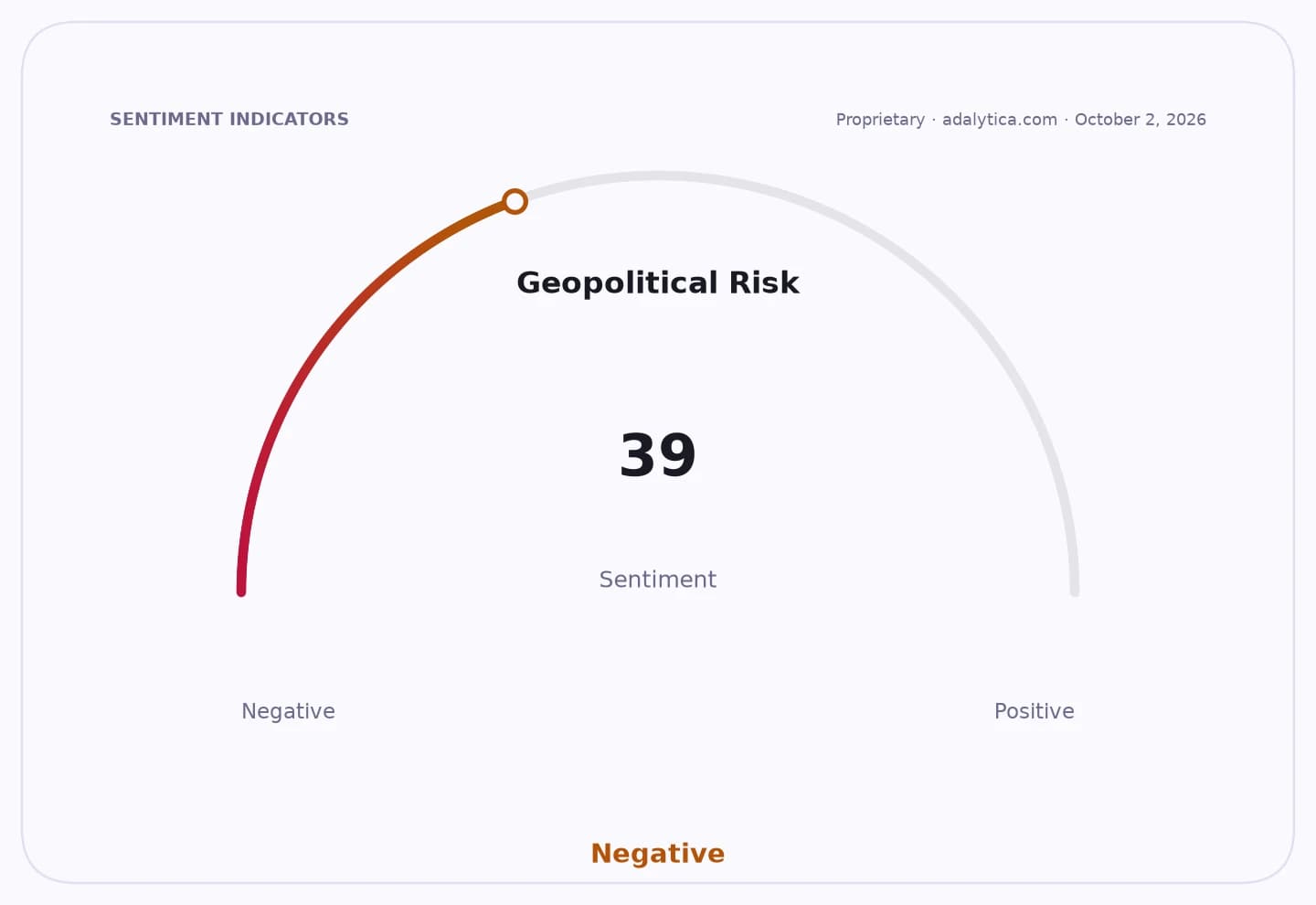
Sentiment IndicatorsⓘProprietary · adalytica.com · October 3, 2026
This is a snapshot — live sentiment, awareness and momentum for 130+ markets update continuously in the dashboard.Open AlphaPulse
Iraq’s decision to allow Iranian airlines 40 flights a day to and from Najaf, while excluding US-sanctioned Mahan Air, shows how sanctions policy is being enforced unevenly across the region. Najaf traffic is tied to Shiite pilgrimage flows, which gives Baghdad and Washington an incentive to preserve limited access even as broader restrictions deepen. The result is a two-track regime: tighter compliance for sanctioned carriers and finance networks, but exemptions where the political cost of a full cutoff would be higher.
Markets have treated the renewed pressure as another reminder that the conflict premium around the region is still alive. US oil fund USO has swung sharply in recent sessions and remains elevated even after its pullback from above $160, while the energy sector ETF XLE is holding above its longer-term averages. Gold fund GLD also remains well above levels seen earlier this year, reflecting continued demand for defensive assets even after recent weakness. Standard technical indicators such as the 50-day and 200-day moving averages show both oil and energy equities still trading above longer-run trend support, even as momentum has cooled.
Geopolitical Risk vs USOadalytica.com
Explore this data interactively — full history, time series and cross-market comparisons.Open AlphaPulse
The macro significance is straightforward: sanctions that curb Iranian exports, aviation and payment channels can tighten already fragile regional supply chains and keep a floor under crude prices if enforcement proves credible. The downside for the White House is that tougher pressure can also raise the risk of retaliation through proxies or disrupt maritime and logistics routes, which would widen the energy risk premium rather than contain it.
For investors, the key question is not whether sanctions exist, but whether they are enforced consistently enough to alter behavior. If member states move to comply with snapback measures and more carriers, banks and intermediaries pull back, oil-linked equities and commodity prices could remain supported. If waivers proliferate or enforcement proves symbolic, the market impact may fade quickly, leaving the policy story more important than the price action.
| Entity | Gains | Losses |
|---|---|---|
| US government | ▲More leverage over Iran | ▼Higher escalation risk |
| Iran | ▲Limited pilgrimage access via waivers | ▼Airline, trade and funding pressure |
| Hamas-linked networks | ▲— | ▼Financing channels and intermediaries |
| Oil producers / XLE holders | ▲Higher risk premium | ▼— |