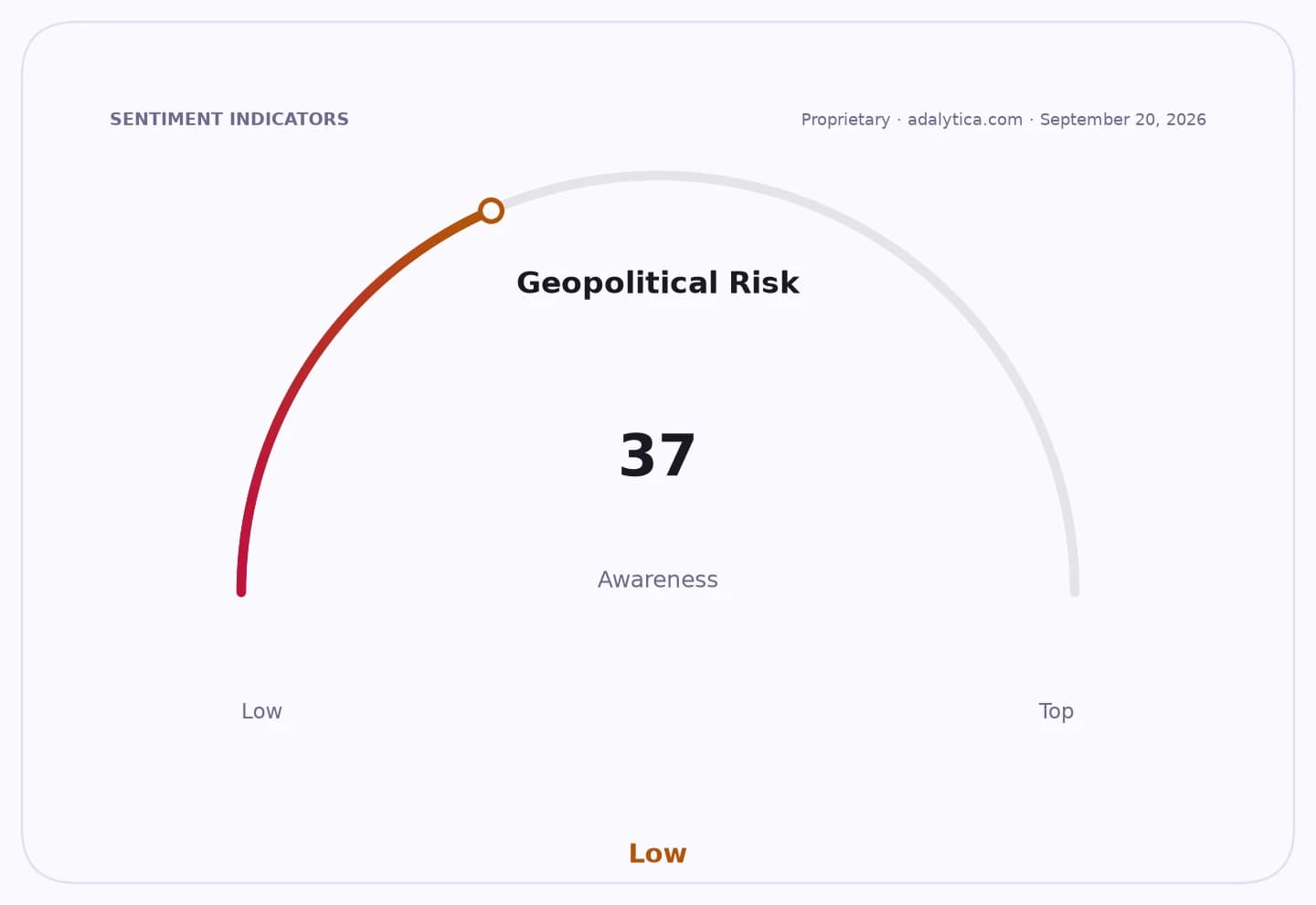
The United States, France, Germany and 53 other countries have endorsed a joint declaration backing the reimposition of U.N. sanctions on Iran, sharpening diplomatic pressure on Tehran just days after the sanctions snapback took effect.
Iran sanctions snapback gets broader enforcement backing

The declaration matters because it turns a procedural U.N. move into a broader enforcement effort. By lining up 56 governments across Europe, Asia and the Pacific, the coalition is signaling that compliance with the revived Security Council resolutions will not be treated as a paper exercise. That raises the odds of tighter export controls, more interdictions and greater scrutiny of shipping, technology transfers and dual-use goods linked to Iran’s nuclear and missile programmes.
Sentiment IndicatorsⓘProprietary · adalytica.com · October 3, 2026
This is a snapshot — live sentiment, awareness and momentum for 130+ markets update continuously in the dashboard.Open AlphaPulse
According to the text released by the governments on Oct. 2, six Security Council resolutions — including 1696, 1737, 1747, 1803, 1835 and 1929 — returned into force on Sept. 27 after the snapback process concluded. France, Germany and the UK triggered the mechanism over what the declaration called Iran’s “continued and significant non-compliance” with its nuclear commitments under the Joint Comprehensive Plan of Action.
The statement, backed by members of the Proliferation Security Initiative, goes beyond nuclear material. It explicitly calls for measures to block the sale, supply or transfer to and from Iran of items that could aid sensitive proliferation activities, including unmanned aerial vehicles and weapons-related materials covered by the revived U.N. restrictions. It also encourages faster information-sharing among PSI partners and reviews of national legal powers to keep interdiction measures effective.
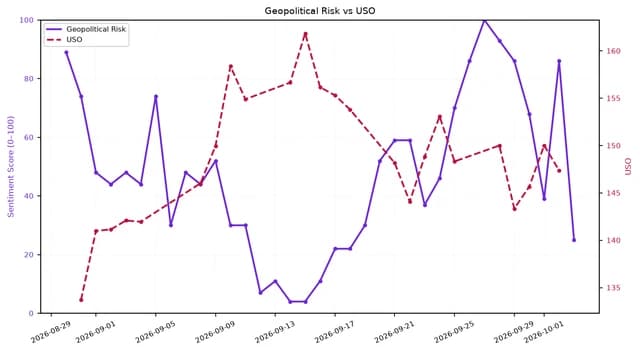
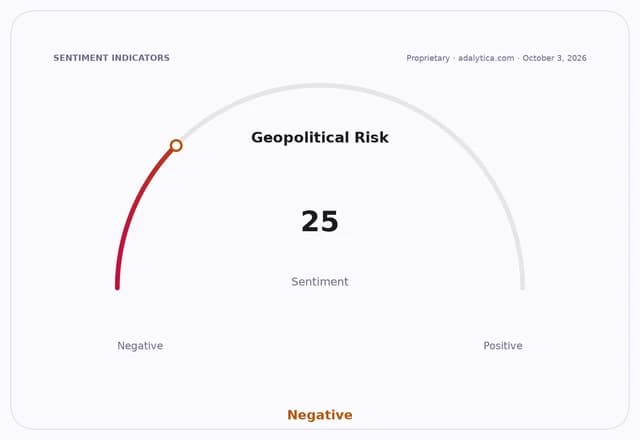
For investors, the immediate relevance is not a direct market shock so much as a higher geopolitical risk premium. Any tightening in enforcement can complicate trade flows through the Middle East, raise insurance and logistics costs, and keep energy markets sensitive to escalation risks. U.S. crude benchmark fund USO has already been trading with elevated volatility, while gold, often a haven in geopolitical stress, remains supported even after recent pullbacks. Adalytica’s Global Stability Sentiment gauge shows extreme fear at 25, underscoring how quickly the market can price in instability when nuclear tensions rise.
The policy backdrop also has consequences for Iran’s partners and counterparties. Countries and companies handling shipping, industrial equipment, electronics, aerospace components or drone-related technology face more compliance risk if the coalition’s coordinated enforcement becomes more aggressive. That is especially relevant for exporters in Europe and Asia that may need to harden screening procedures or reduce exposure to Iran-linked transactions.
For Tehran, the declaration is a reminder that the window for easing isolation is narrowing. The coalition is urging Iran to return to non-proliferation compliance and to cooperate fully with the International Atomic Energy Agency. For markets, the key question is whether this becomes a contained diplomatic signal or the start of a wider enforcement cycle that could tighten sanctions pressure, unsettle energy trade routes and keep investors leaning toward defensive assets.
| Entity | Gains | Losses |
|---|---|---|
| U.S., France, Germany and allies | ▲Stronger sanctions leverage | ▼Higher enforcement burden |
| Iran | ▲Diplomatic visibility | ▼Greater isolation and scrutiny |
| Energy and defense havens | ▲Safe-haven demand | ▼Geopolitical uncertainty |
| Exporters and shippers | ▲Limited benefit from compliance clarity | ▼Compliance costs and trade friction |