Iron ore steadied on Nov. 3 after weeks of pressure as China’s steel demand weakened more slowly than traders had feared, tempering the case for a sharper fourth-quarter price drop.
Iron ore steadies as China steel demand eases
The benchmark Singapore iron ore contract rose 0.47% to $91.2 a tonne, while the most-traded January 2027 contract on China’s Dalian exchange slipped just 0.07% to 674.5 yuan a tonne after erasing earlier gains. The relative calm followed two months of declines — 6.1% in September and 2.6% in October on the SGX contract — that had reflected expectations of excess supply and a deeper slowdown in Chinese steelmaking.
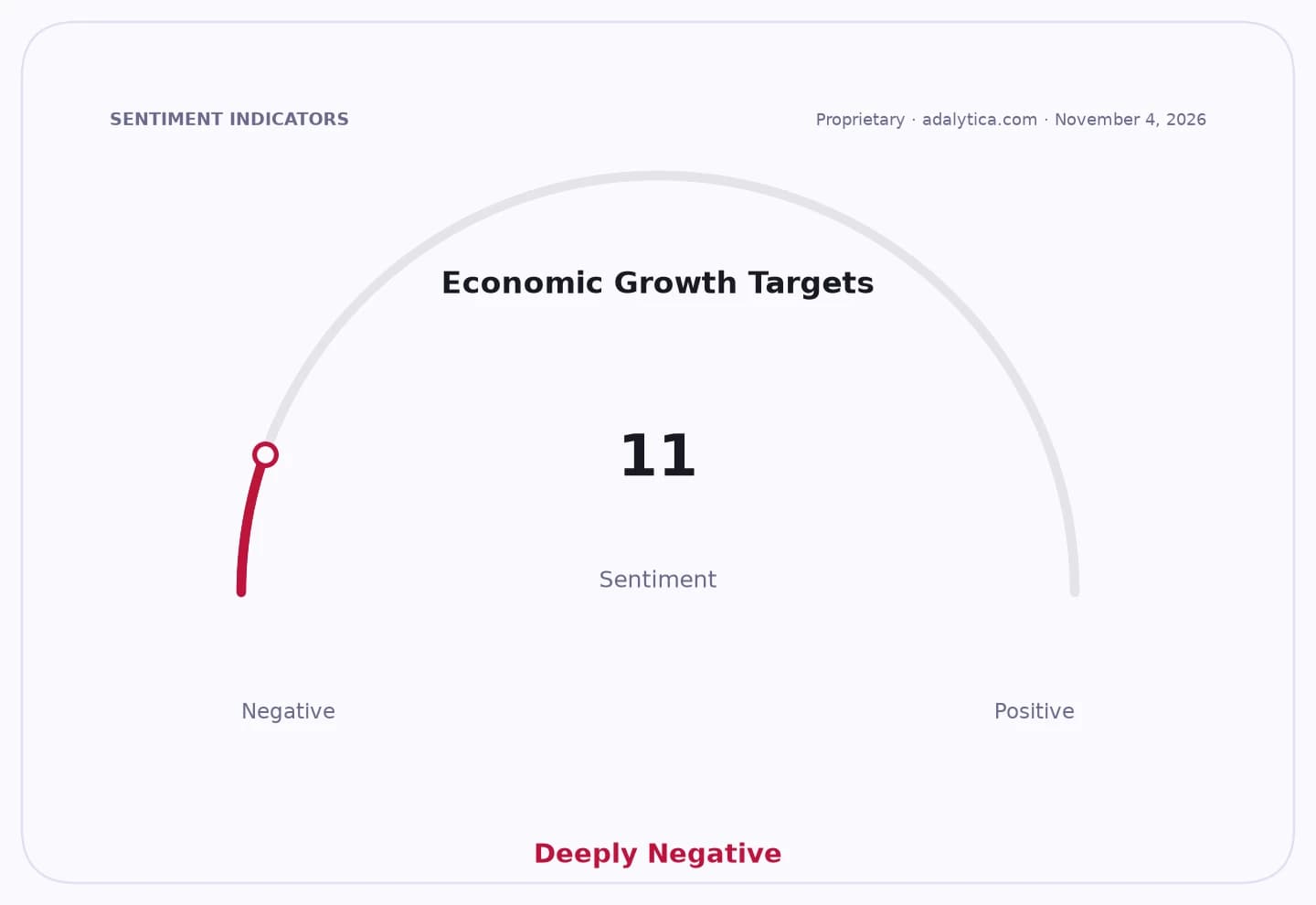
Sentiment Indicators
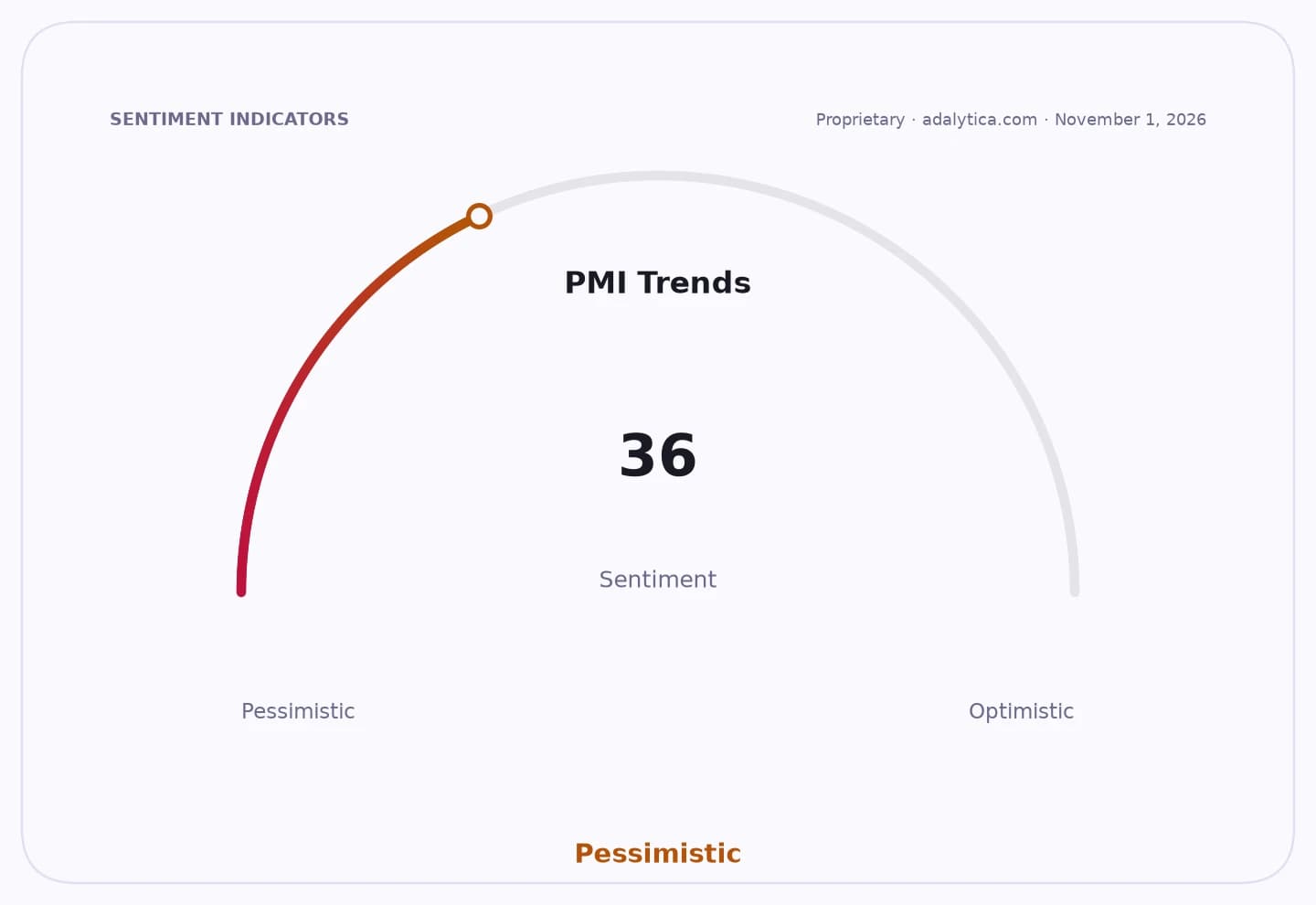
PMI Trends
That matters because iron ore remains the key raw material for blast-furnace steel and a proxy for the health of China’s construction and heavy industry cycle. Traders had been bracing for a sharper fall in demand as some Chinese mills entered maintenance and others cut output to improve air quality, but Mysteel data showed average daily hot metal production at surveyed mills down only 0.2% week on week to about 2.32 million tonnes as of Oct. 29. In other words, the demand pullback has been real, but not severe enough yet to trigger the kind of inventory unwind that typically sends ore sharply lower.
The market’s ability to hold above the recent lows also suggests buyers are stepping in near support levels, even as fundamentals remain weak. Analysts at Guoxin Futures said the balance still tilts to the downside, but the recovery in sentiment helped iron ore stabilize after the October selloff. For steelmakers, that is not good news on margins: raw-material costs have not fallen fast enough to offset soft finished-steel demand, especially in bars and other construction products, leaving mills with limited room to raise prices.
Coking coal and coke also eased, down 0.95% and 1.6%, after Beijing urged energy security heading into winter, raising expectations of a quicker supply recovery. On the Shanghai exchange, rebar fell 1.05%, hot-rolled coil lost 0.72% and wire rod slipped 0.24%, underscoring that downstream demand is still fragile even if the iron ore market is no longer deteriorating as fast as feared.
The picture is mixed globally. In Europe, limited supply and heavy maintenance are keeping hot-rolled coil offers elevated, with some mills reportedly sold out into early 2027. In the U.S., U.S. Steel has begun work on a $1.9 billion direct-reduced iron plant in Arkansas, a longer-term bet on lower-carbon steelmaking and tighter integration with iron ore supply. But those regional bright spots have yet to offset China’s role as the dominant swing factor in seaborne iron ore pricing.
For investors, the immediate takeaway is that the worst of the recent iron ore panic may be passing, but the market is not signaling a durable recovery. Steel-linked equities and miners remain hostage to whether Chinese mills cut output more aggressively in November and December, and whether policy support or seasonal restocking can stabilize demand. If hot metal production slips materially from here, ore could retest the lows; if it holds near current levels, prices may stay range-bound rather than resume a decisive downtrend.
| Entity | Gains | Losses |
|---|---|---|
| Iron ore sellers | ▲Near-term price stabilization | ▼Weak demand expectations |
| Chinese steel mills | ▲Some relief from falling ore prices | ▼Margin pressure from soft steel prices |
| Miners with low costs | ▲Support above recent lows | ▼Less upside if demand stays sluggish |
| Steel consumers | ▲Lower input-cost risk | ▼Limited sign of broad end-demand recovery |