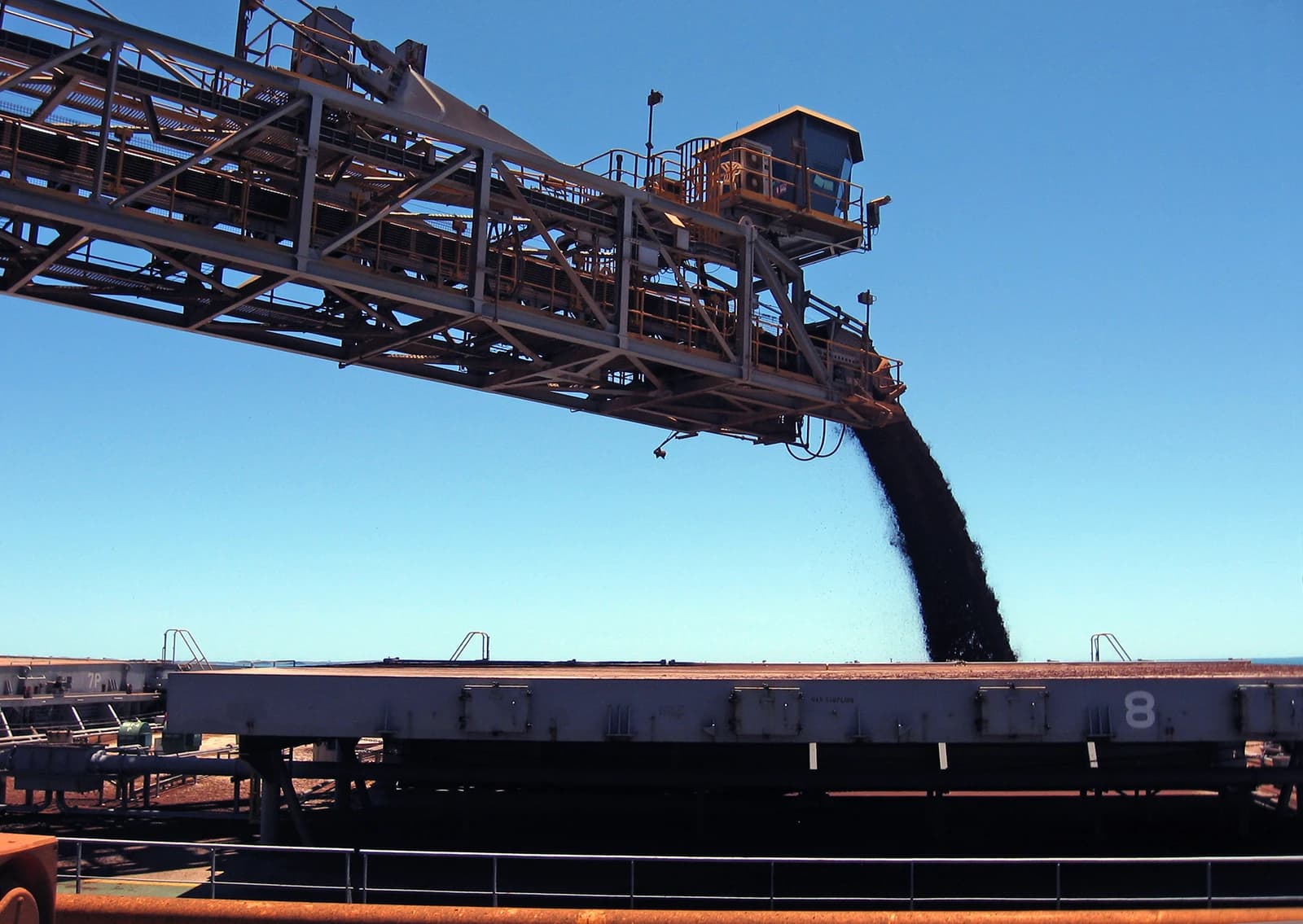
Iron ore prices have dropped to a one-year low as China’s steel demand softens and supply stays heavy, squeezing miners and pressuring the broader materials complex.
Iron ore hits one-year low as China demand softens
The benchmark decline matters because iron ore is a key input for steel, construction and infrastructure spending, so weaker prices often signal softer industrial activity in the world’s second-largest economy. The imported iron ore margin has already slipped into negative territory at minus 4.89 yuan per metric ton, a sign that mills are losing room to profit from imported cargoes even as inventories are being rebuilt.
Sentiment Indicators
The pullback comes after iron ore futures fell to $89.6 a ton on Oct. 27, the lowest in a year, while China’s imports rose 4.1% in the first nine months of the year as buyers replenished stocks against a sluggish steel backdrop. At the same time, the official producer price index for all commodities, tracked by the PPIACO series, shows broader goods inflation still running hot relative to pre-pandemic levels, underscoring how sharply commodity-specific weakness can diverge from the wider price environment.
Cement prices are also easing, adding to the view that construction demand remains uneven. That combination is important for investors because it points to margin pressure across miners, steelmakers and building-material suppliers, even as some low-cost producers and diversified groups can still generate strong earnings.
Market reaction has been mixed across the sector. Vale shares have fallen to $11.18 from $15.73 earlier in the year, with its RSI reading at 9.6 suggesting deeply oversold conditions, while Freeport-McMoRan has slid to $66.14 from late-October levels and is trading below its 50-day moving average. Nucor, by contrast, has held up far better at $275.29, still well above its 200-day average, reflecting investor preference for U.S. steel names with stronger pricing power.
The next catalyst is whether China’s steel output and housing-related demand show enough recovery to tighten the market, or whether inventory rebuilding simply delays further price pressure. Until that turns, iron ore and cement are likely to stay a read-through on industrial momentum rather than a source of relief for producers.
| Entity | Gains | Losses |
|---|---|---|
| Steel mills | ▲Lower raw-material costs | ▼Worse finished-steel margins |
| Miners such as Vale | ▲None in the near term | ▼Iron ore revenue pressure |
| U.S. steelmakers such as Nucor | ▲Relative pricing resilience | ▼Sector sentiment spillover |
| Construction and cement buyers | ▲Cheaper materials | ▼Signal of weak demand |