Israel's election is unlikely to alter the country's hard line on Iran, and that matters because the world's most volatile security flashpoint is already feeding into defense spending, regional risk premia and investor caution.
Israel Election and Iran Risk Keep Markets Cautious
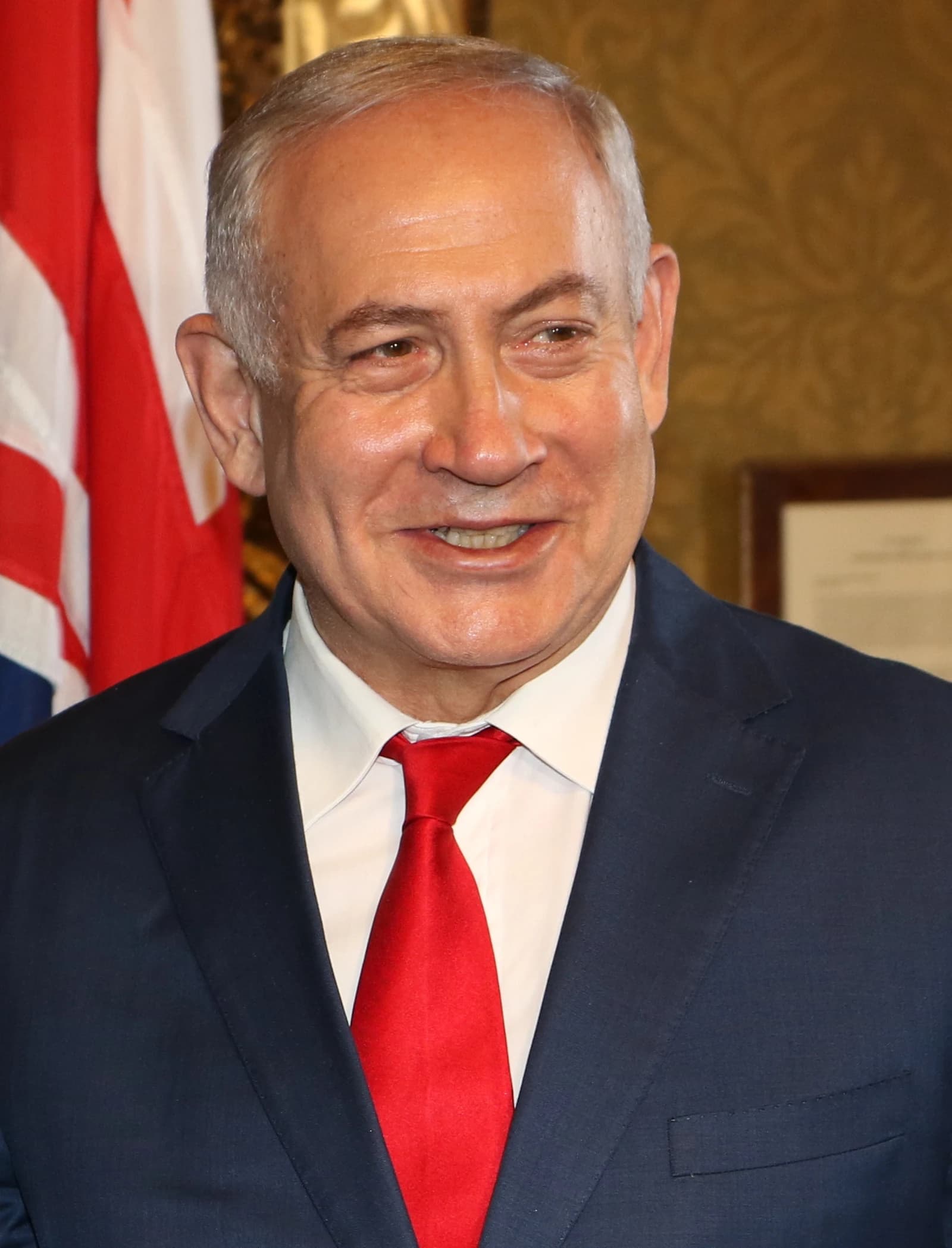
Whether Benjamin Netanyahu keeps power or former general Gadi Eisenkot helps lead a new government, the core Israeli consensus remains the same: pressure Tehran, lean on military force, and accept only limited room for diplomacy. That makes the election less a referendum on strategy than a decision on how aggressively Israel pursues a policy most of its political class already supports.
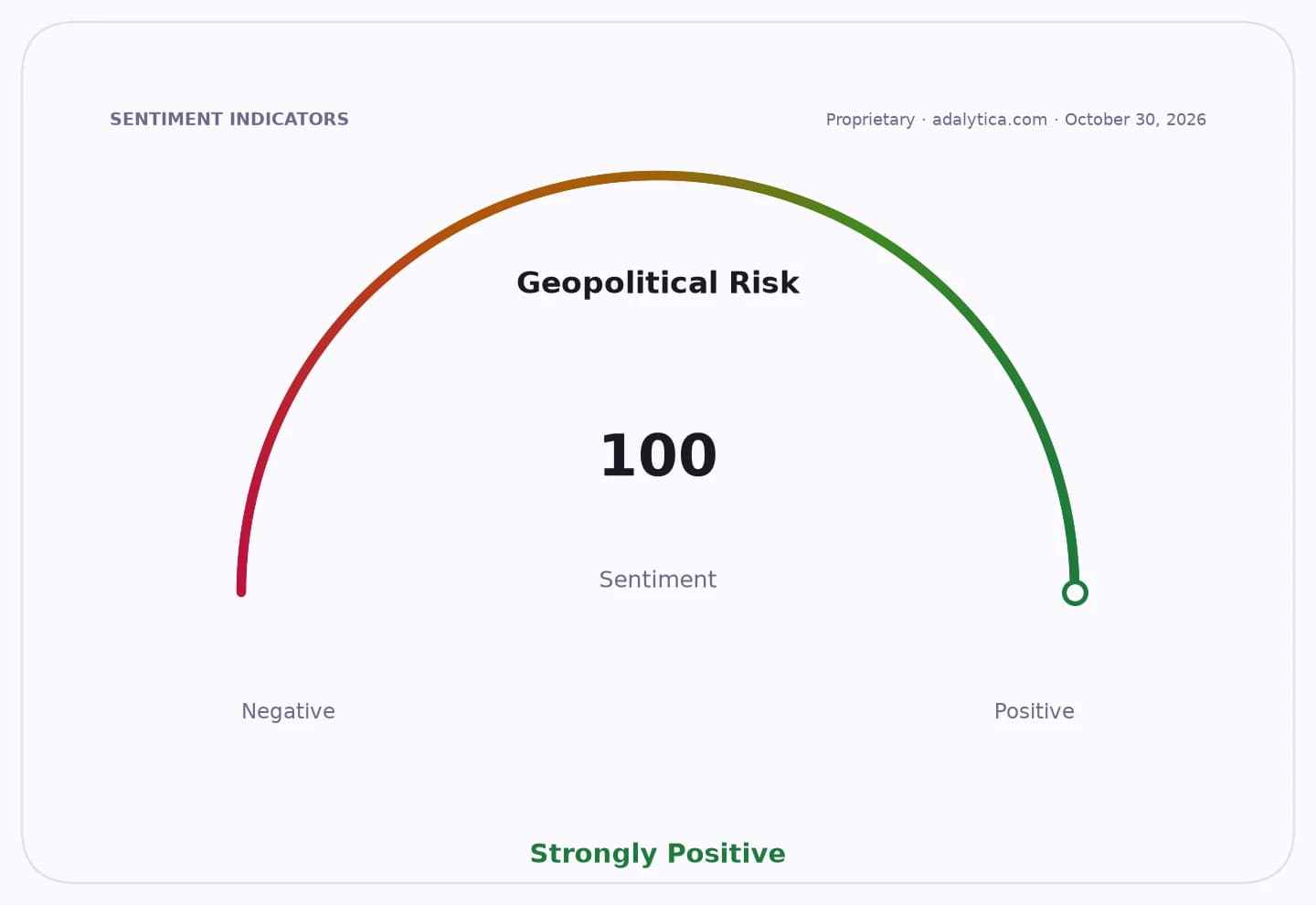
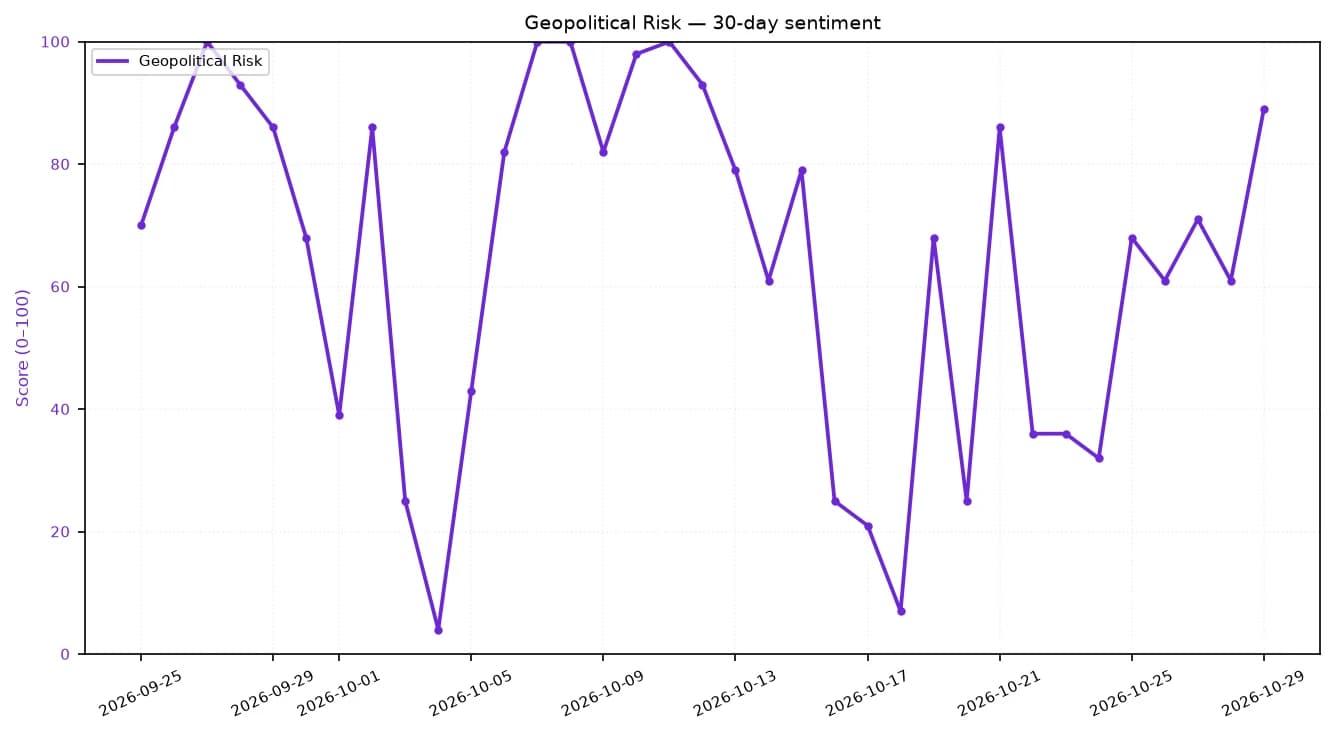
Sentiment Indicators
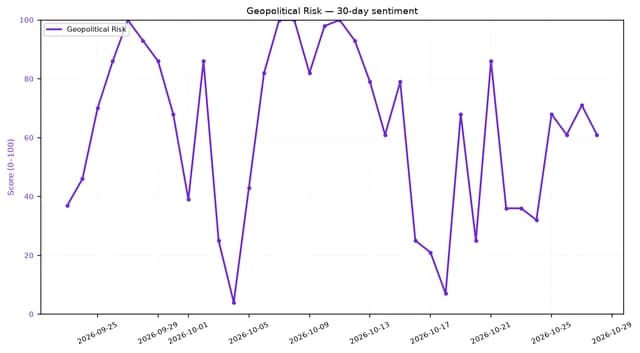
For investors, that continuity is more important than the campaign drama. If Israel's approach to Iran does not change, the market focus shifts from election results to execution risk — how far Israel escalates, how Iran and its regional allies respond, and whether the confrontation spills beyond the current contained posture. Those are the variables that can move oil, currencies, and defense shares.
Reuters' reporting makes clear that the differences between Netanyahu's bloc and the opposition are mainly about intensity, not direction. A Netanyahu victory could mean a tougher stance, more settlement expansion in the West Bank and less room for diplomacy. But even an opposition-led government would likely preserve the same broad security doctrine, with a stronger emphasis on image management and perhaps less overt settler violence rather than a true policy reset.
US Dollar
That is why the headline risk is less about a dramatic strategic pivot than about the possibility of a wider conflict. Analysts cited in the report warned that unchecked settler violence and Palestinian frustration could ignite the West Bank, while a prolonged campaign against Iran and its proxies may push Tehran to harden its own deterrence calculations, including around nuclear capability.
The United States remains part of the equation, but not in a way that suggests an easy off-ramp. Washington says it will keep pressuring Iran, while also opposing Israeli annexation of the West Bank. Arab governments, meanwhile, share concern about Iran's reach even as they distrust Netanyahu's broader regional policies. That uneasy overlap is part of the story: nearly everyone wants to contain Tehran, but few agree on the price.
For long-term investors, the takeaway is straightforward. This is not a market to try to outguess day by day. It is a geopolitical backdrop that favors companies tied to defense, cybersecurity and deterrence spending, while keeping broader risk assets on alert whenever rhetoric turns into action. Lockheed Martin, Northrop Grumman and RTX already sit in a secularly stronger defense environment, and their shares have reflected that with sharp moves and elevated technical momentum. The 50-day moving averages and RSI readings in those names show just how quickly sentiment can swing when the market prices in higher military demand.
| Entity | Gains | Losses |
|---|---|---|
| Israel's defense establishment | ▲Policy continuity | ▼Strategic uncertainty |
| Defense contractors | ▲Higher demand outlook | ▼Event-driven volatility |
| Iran and proxies | ▲Leverage from escalation risk | ▼Risk of deeper isolation |
| Broader markets | ▲Clarity on the geopolitical backdrop | ▼Higher risk premiums |