A network of billionaire-backed American conservative groups is helping build a new generation of hard-right figures inside Israel’s security and political establishment, a development that could shape the country’s policy on the West Bank for years and raise the odds of deeper conflict with Palestinians.
Israel security network and West Bank policy push

That is economically and politically significant because annexation talk is no longer just campaign rhetoric. According to the Haaretz investigation described in the podcast, a 274-page vision document presented to Prime Minister Benjamin Netanyahu earlier this year calls for encouraging what it describes as Palestinian “voluntary emigration” from the West Bank, with a goal of half a million departures in the first decade and another 250,000 in the next. For investors, the relevance is not whether the plan is immediately implemented, but that it reflects a more institutionalized push for policies that could alter Israel’s fiscal priorities, security burden, diplomatic standing and risk premium.
Sentiment Indicators
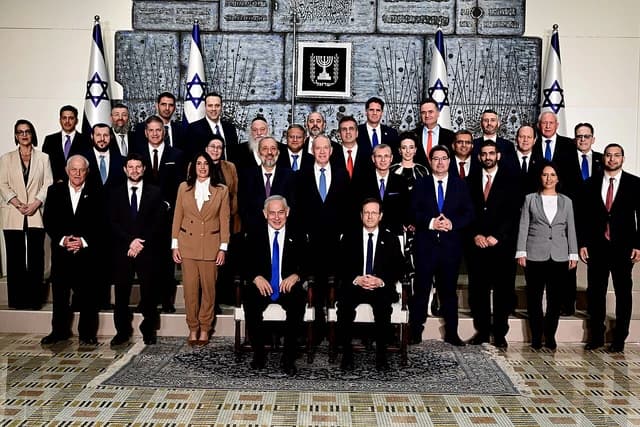
The report says many of the organizations involved helped promote the judicial overhaul that triggered mass protests across Israel, and that the same ecosystem has ties to conservative ideological movements in the U.S. That matters because it suggests this is not a one-off political campaign but a long-term effort to reshape the country’s decision-making class. In practical terms, the story is about influence: who is financing the pipeline of ideas, who is being groomed for power, and how those people then gain leverage over security and governing institutions.
Two names in particular underline that shift. The podcast says alumni of the program include Shin Bet chief David Zini and Yoram Halevi, who coordinates government activity in the West Bank, both appointed after taking part in the network’s program. When people who have passed through a politically charged training environment end up in senior roles, investors should pay attention. Security policy affects tourism, foreign investment, defense spending, borrowing costs and the broader willingness of global capital to assign a stable valuation to Israeli assets.
There is also a broader market implication around governance risk. Israel’s most important long-term economic strengths — its technology sector, access to global funding and its reputation as a rule-based economy — depend on institutional credibility. A sustained push by the far right to redraft the country’s territorial and constitutional future could keep domestic polarization high and intensify friction with Washington and Europe. That does not mean an immediate market shock, but it does mean a higher structural discount if politics continues to lean toward confrontation over compromise.
The timing is sensitive. Haaretz also notes coalition talks remain deadlocked after Israel’s election, while Netanyahu’s allies continue to challenge the legitimacy of the result with claims of foreign interference. That combination of political stalemate and ideological mobilization is exactly the kind of backdrop that can prolong uncertainty and make policy more volatile than investors would like.
For long-term investors, the lesson is straightforward: political networks can be as durable as corporations, and sometimes more consequential. If this funding model continues to embed itself in Israel’s institutions, the country’s geopolitical trajectory may become even less predictable. That is worth watching closely, especially for anyone exposed to Israeli equities, the shekel or regional assets tied to stability in the Middle East.
| Entity | Gains | Losses |
|---|---|---|
| Right-wing Israeli network | ▲Institutional influence | ▼Political consensus |
| Conservative U.S. donors | ▲Policy leverage | ▼Reputational risk |
| Netanyahu’s coalition allies | ▲Agenda momentum | ▼Governance stability |
| Israeli markets and global investors | ▲None immediately | ▼Higher risk premium |