Germany’s Chancellor Friedrich Merz is now framing Russia not just as a foreign-policy problem, but as a daily risk to the country’s stability — a hardening of rhetoric that matters because Europe’s biggest economy is trying to defend itself, fund Ukraine and keep its own political center intact at the same time.
Germany: Merz warns of Russian destabilization risk
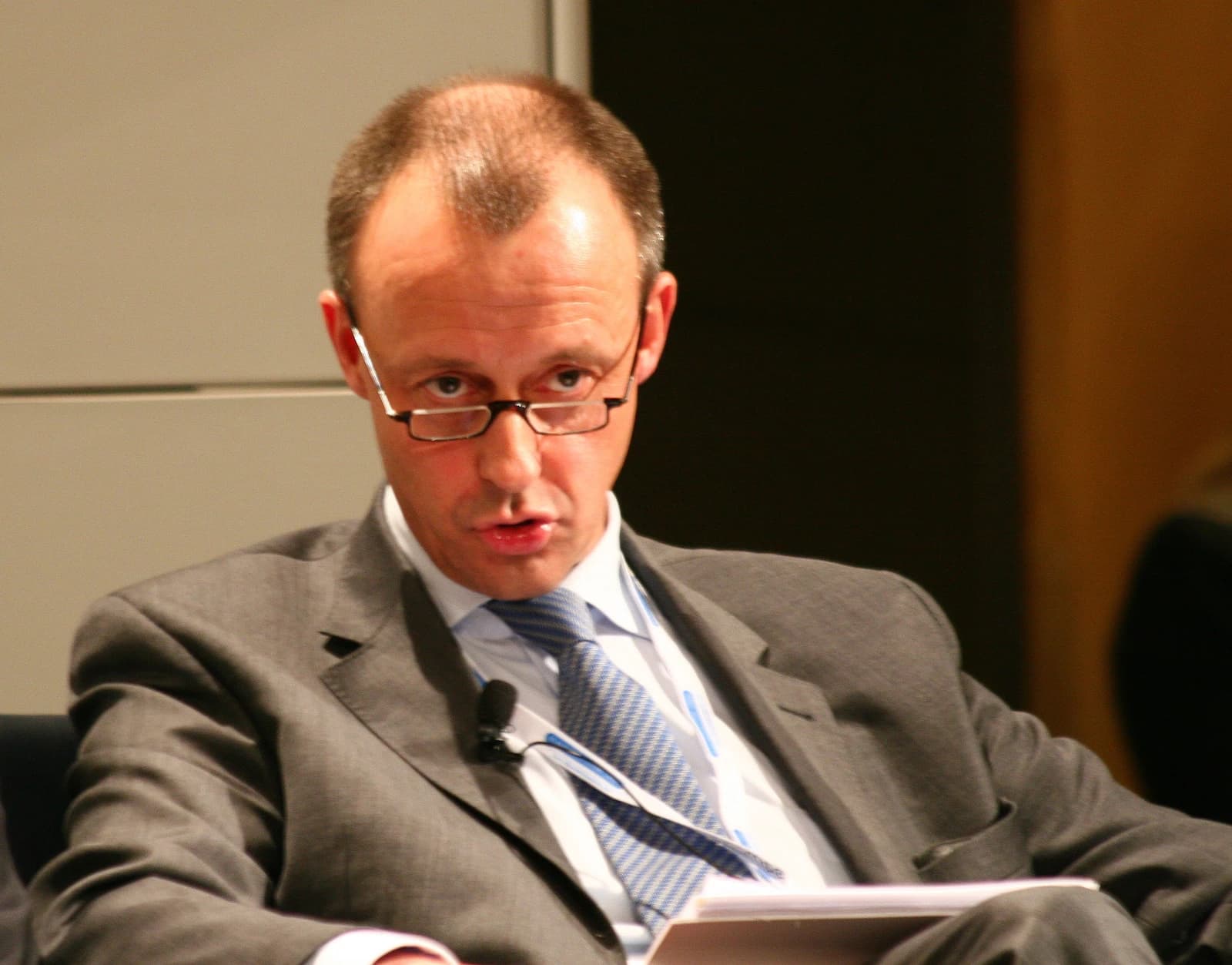
For investors, that is not just another geopolitical headline. It speaks to the premium Germany may have to pay for security, resilience and political cohesion just as the country is under pressure to revive growth, restore confidence in the governing bloc and avoid letting defense anxiety crowd out economic reform. When a chancellor says Moscow is trying to “destabilize Germany” every day, the investment question becomes whether Berlin responds with more spending, tighter security and faster industrial adaptation — or with deeper political fragmentation.
Sentiment Indicators
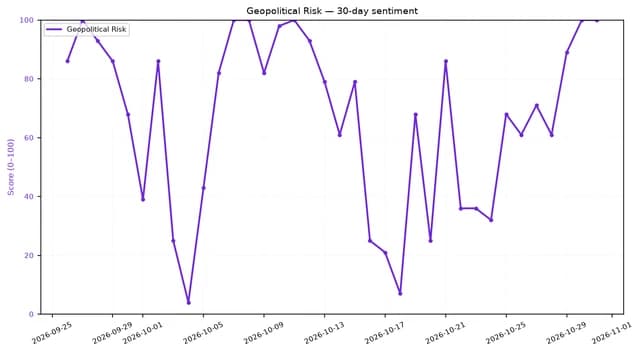
Geopolitical Risk
Merz made the remarks at a Christian Social Union meeting in Bavaria, pointing to a drone incident at Leipzig airport as an example of alleged sabotage, while Russia has denied involvement. He said the broader fight is over whether “the rule of law” or “the law of the stronger” will prevail in Europe. The comments follow similar warnings he has made for more than a year, including an October interview with Bloomberg in which he said Vladimir Putin sought not only Ukraine’s defeat but also to weaken democracy in Europe.
That message is resonating at a moment when Germany’s own domestic politics are becoming harder to manage. Merz also warned about threats from the far right and far left, urged his CDU/CSU bloc to stay united and acknowledged that it has lost its old monopoly on power. He criticized coalition talk involving the Left party and said his camp must rebuild trust through both immediate improvements and longer-term reforms.
The market relevance is easiest to see in German equities and German-focused assets, which remain sensitive to any mix of security risk, industrial uncertainty and policy drift. The iShares MSCI Germany ETF, EWG, has been trading below its 50-day moving average, a conventional technical indicator that suggests investors are still cautious even after a recent rebound. Deutsche Bank shares have also been volatile, with the stock sitting well below its 50-day average and still trying to recover from a sharp spring selloff. The DAX has held up better, but it too has been moving around its 50-day average rather than breaking decisively higher.
That matters because Germany is not facing a purely military challenge. It is facing a credibility test. If Berlin concludes that Russian covert activity is a persistent threat, the policy response likely means more defense spending, more cyber and infrastructure protection, and more pressure on industry to harden supply chains and facilities. That can support some sectors over time — defense, cybersecurity, industrial automation and utilities infrastructure — but it also raises costs for exporters and squeezes an economy that is already struggling to regain momentum.
There is also a clear market narrative around the broader European backdrop. The Adalytica Global Stability Sentiment gauge shows extreme greed even as awareness remains in fear territory, a combination that suggests investors are not pricing geopolitical risk with much caution despite the rising temperature in Europe. That disconnect can matter when headlines turn from rhetoric to policy response, especially if Germany and its NATO partners increase spending, tighten sanctions or step up counterintelligence measures.
For long-term investors, the key question is not whether this tension disappears quickly — it probably will not. It is whether Germany uses the pressure to modernize. If Merz can turn a security crisis into a catalyst for faster reform, stronger defense readiness and more durable industrial policy, Germany’s weak patch could eventually become a setup for a more resilient economy. If not, the country risks remaining stuck between external threats and internal political drift. Either way, this is a story worth watching closely, especially for investors exposed to Europe through broad ETFs and German blue chips.
| Entity | Gains | Losses |
|---|---|---|
| Germany’s defense and security sector | ▲Higher spending and demand | ▼Budget pressure elsewhere |
| German exporters and industry | ▲Stronger resilience over time | ▼Higher operating costs |
| Russia | ▲Strategic disruption leverage | ▼Further European isolation |
| EWG / DB investors | ▲Potential long-term policy support | ▼Short-term volatility and risk premium |