Farmers in Italy’s key durum wheat belt are sowing into one of the weakest profit environments in years, and that matters because it is likely to trim planted area, squeeze rural incomes and keep pressure on a crop central to the country’s pasta supply chain.
Italy Durum Wheat Acreage May Fall in Foggia
In the Foggia area of Puglia, planting began in mid-November after early rains delayed the start, but growers are now focusing on their best land and leaving marginal fields fallow or switching them to easier crops such as barley. Industry estimates suggest the durum wheat area under cultivation could fall by almost 5% from the previous campaign’s 240,000 hectares, a sign that high diesel and fertilizer costs are outrunning stagnant farmgate prices.
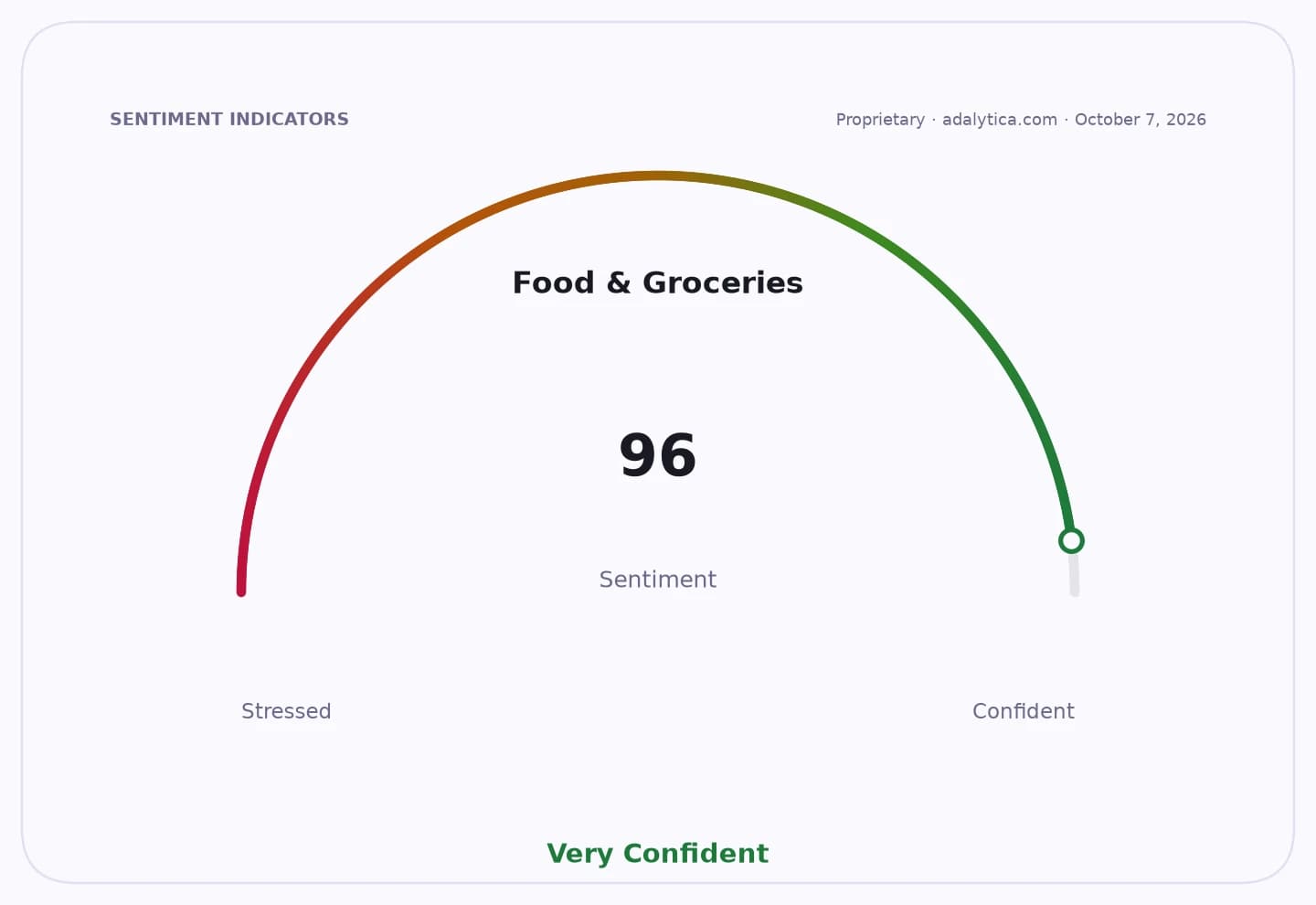
Sentiment Indicators
The economics are brutal. Local quotations are still around 30 euros a quintal, according to producers, and Ismea puts production costs at about 1,200 euros per hectare. With average yields of 30 quintals per hectare, revenue comes to roughly 900 euros before subsidies, leaving farmers at best at break-even once the coupled aid and title payments are included. That leaves little room for profit, and even less incentive to keep planting low-yield land.
For investors, this is another reminder that agricultural markets do not move only on futures prices — they move on incentives. If Italian growers pull back from marginal acreage, the supply response could eventually tighten durum availability in a market already shaped by weak global demand and volatile wheat prices. It also reinforces the longer-term case for companies exposed to farm inputs, grain handling and food processing, where small changes in acreage can ripple through margins, inventories and procurement costs.
The bigger story is that southern Italy still has few practical alternatives. That is why producers say they will continue sowing durum wheat, but only where they can hope for 40 to 50 quintals per hectare and spread fixed costs over better output. The risk, in other words, is not that the crop disappears — it is that it becomes increasingly concentrated on the best land, with weaker fields abandoned to economics.
For long-term investors, that is the kind of supply discipline that can matter over several seasons. It is worth watching whether the acreage decline deepens, whether fertilizer and fuel costs ease, and whether wheat prices recover enough to restore profitability for growers. Until then, durum wheat remains a watchlist story for anyone tracking food inflation, Mediterranean agriculture and the resilience of Europe’s grain supply.
| Entity | Gains | Losses |
|---|---|---|
| Efficient durum growers | ▲Better use of productive land | ▼Marginal-field producers |
| Barley growers | ▲More acreage opportunity | ▼Durum wheat acreage |
| Grain buyers/pasta makers | ▲Potentially cheaper procurement near term | ▼Longer-term supply tightness |
| Farmers in Foggia | ▲Higher yields on best plots | ▼Profit margins on low-yield land |