Italy’s energy minister has put solidarity back at the center of Europe’s gas market just as winter demand is set to test a still-fragile supply system. Gilberto Pichetto Fratin said Italy can cover its own households this winter, but if other European countries ask for help, “those who have it must give something,” underscoring how quickly gas security can become a political and economic issue across the bloc.
Italy energy minister backs EU gas solidarity
That matters because gas is not just a heating fuel — it is still a key input for power, industry and inflation. When governments start talking about sharing supplies, it usually means storage levels, cross-border flows and emergency coordination are moving from theory to practice. For Europe, that raises the stakes for this winter and for the next round of policy decisions on reserves, interconnectors and market rules.
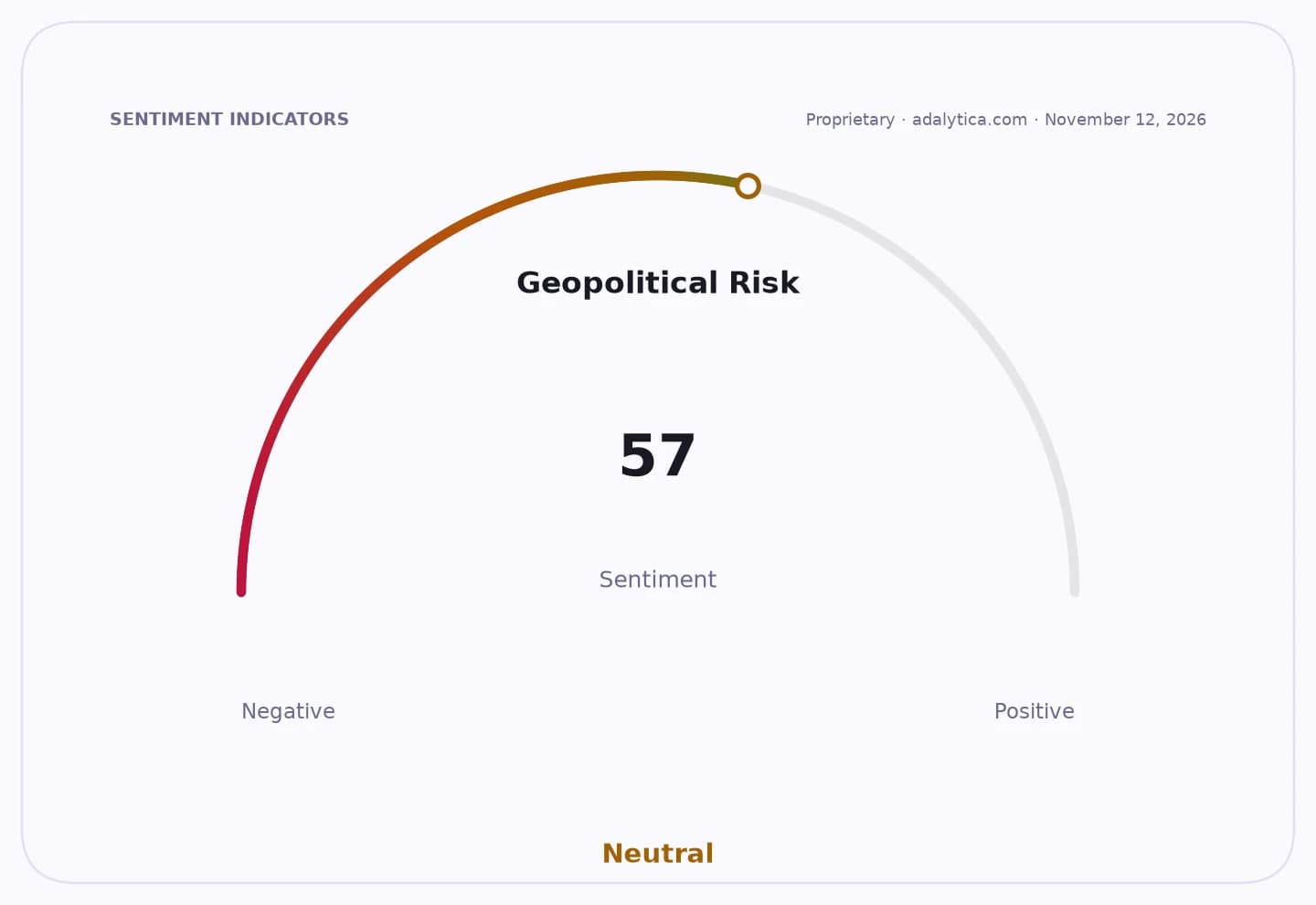
Sentiment Indicators
Germany is the obvious pressure point in Pichetto Fratin’s comments. Europe’s largest economy has already faced repeated warnings about storage and supply resilience, and any shortfall there would ripple through factories, utilities and consumers far beyond its borders. Italy’s message is that no country can fully insulate itself if a regional shock hits, especially when gas prices remain sensitive to any sign of tighter availability.
For investors, the implication is straightforward: energy security is still a trading theme, but it is also a long-term capital allocation story. Companies involved in liquefied natural gas, storage, pipelines and utility infrastructure stand to benefit from a Europe that wants more redundancy, not less. By contrast, import-dependent industrial firms remain exposed to price spikes, even if headline gas prices have eased from earlier extremes.
The market backdrop is a reminder that sentiment can turn quickly when policy and geopolitics collide. Natural gas prices have already been volatile, and technical indicators on U.S. gas futures show a market that has swung sharply lower from earlier highs, with the 50-day moving average and RSI suggesting recent weakness. That does not remove the risk of a winter squeeze; it simply shows how fast expectations can reset when supply concerns fade or return.
The larger narrative here is not about one minister’s comment. It is about Europe moving further into a world where energy security, not just energy cost, shapes policy. For long-term investors, that keeps the case alive for diversified exposure to the companies and assets that move, store and secure gas — and for staying patient when volatility makes the sector look cyclical, because the underlying need for reliable supply is not going away.
| Entity | Gains | Losses |
|---|---|---|
| Italy | ▲Regional leverage | ▼Some export flexibility |
| Germany | ▲Potential emergency support | ▼Energy security confidence |
| LNG suppliers | ▲Stronger demand for cargoes | ▼Price volatility risk |
| Industrial gas users | ▲Longer-term supply planning | ▼Winter price spikes |