Italy’s benchmark gas index inched higher to 77.78 euros per megawatt hour on Oct. 6, a small move that still matters because Europe is heading into winter with fragile inventories, elevated LNG costs and limited room for supply shocks.
Italy Gas Index Rises to 77.78 Euros/MWh
The Italian Gas Index, or IGI, rose from 77.37 euros/MWh the day before, according to the Gestore dei Mercati Energetici, underscoring a market that remains tight even without a dramatic daily spike. For households and industry, that means energy costs are still being set by a scarcity premium rather than by comfort. For investors, it keeps the focus on gas producers, LNG exporters, pipeline operators and utility names with exposure to volatile wholesale prices.
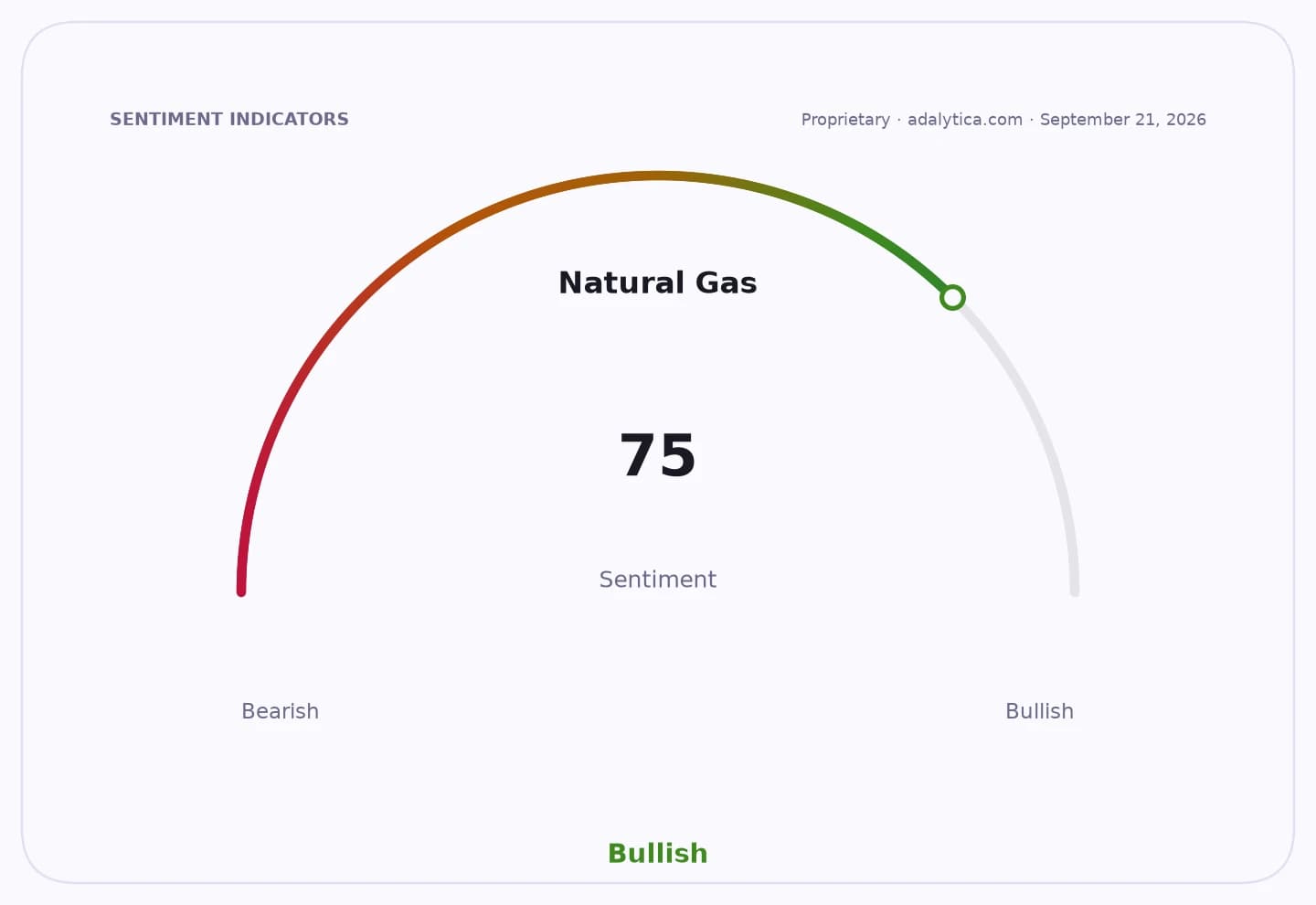
Sentiment IndicatorsⓘProprietary · adalytica.com · October 6, 2026
This is a snapshot — live sentiment, awareness and momentum for 130+ markets update continuously in the dashboard.Open AlphaPulse
The broader backdrop is what gives this move weight. Global LNG markets are already under pressure as Europe enters the heating season with low storage buffers and strong competition for cargoes. Petronas has warned of a dangerous winter setup, while deepwater gas prices have climbed to $9.89 per MMBtu, a sign that marginal supply is still expensive. In that kind of environment, even a modest rise in Italy’s spot benchmark points to a market that has not loosened enough to remove upside risk.
That matters economically because gas is still a key input for power, industrial production and heating across Europe. A firm IGI reading can filter through to electricity prices, fertilizer margins, chemicals and other gas-intensive sectors. It also complicates the policy path for governments that have spent the past two years trying to shield consumers and manufacturers from energy shocks.
For investors, the message is that volatility itself is the opportunity. The market underestimates how persistent the winter gas trade can be when inventories are thin and LNG supply is contested. That creates a favorable setup for companies with pricing power, midstream infrastructure and export leverage, while pressuring energy-intensive users and import-dependent utilities. U.S. gas vehicles such as the UNG ETF and producers tied to the Henry Hub export chain remain sensitive to any sustained tightening in Europe, while European utility margins can swing quickly if the cold-weather premium deepens.
The key catalyst now is not whether the IGI moved a fraction of a euro higher, but whether cold weather or supply disruption turns a tight market into a squeeze. If that happens, wholesale gas in Italy could reprice quickly, and the investors positioned early in the gas complex will have the advantage. The thesis is simple: in a winter market defined by scarcity, gas remains a trade on duration, discipline and geopolitical risk.
| Entity | Gains | Losses |
|---|---|---|
| LNG exporters | ▲Higher realized prices | ▼Demand rationing risk |
| Gas producers | ▲Pricing power | ▼Policy scrutiny |
| European utilities | ▲Hedging opportunity | ▼Margin pressure |
| Energy-intensive industry | ▲None | ▼Higher input costs |