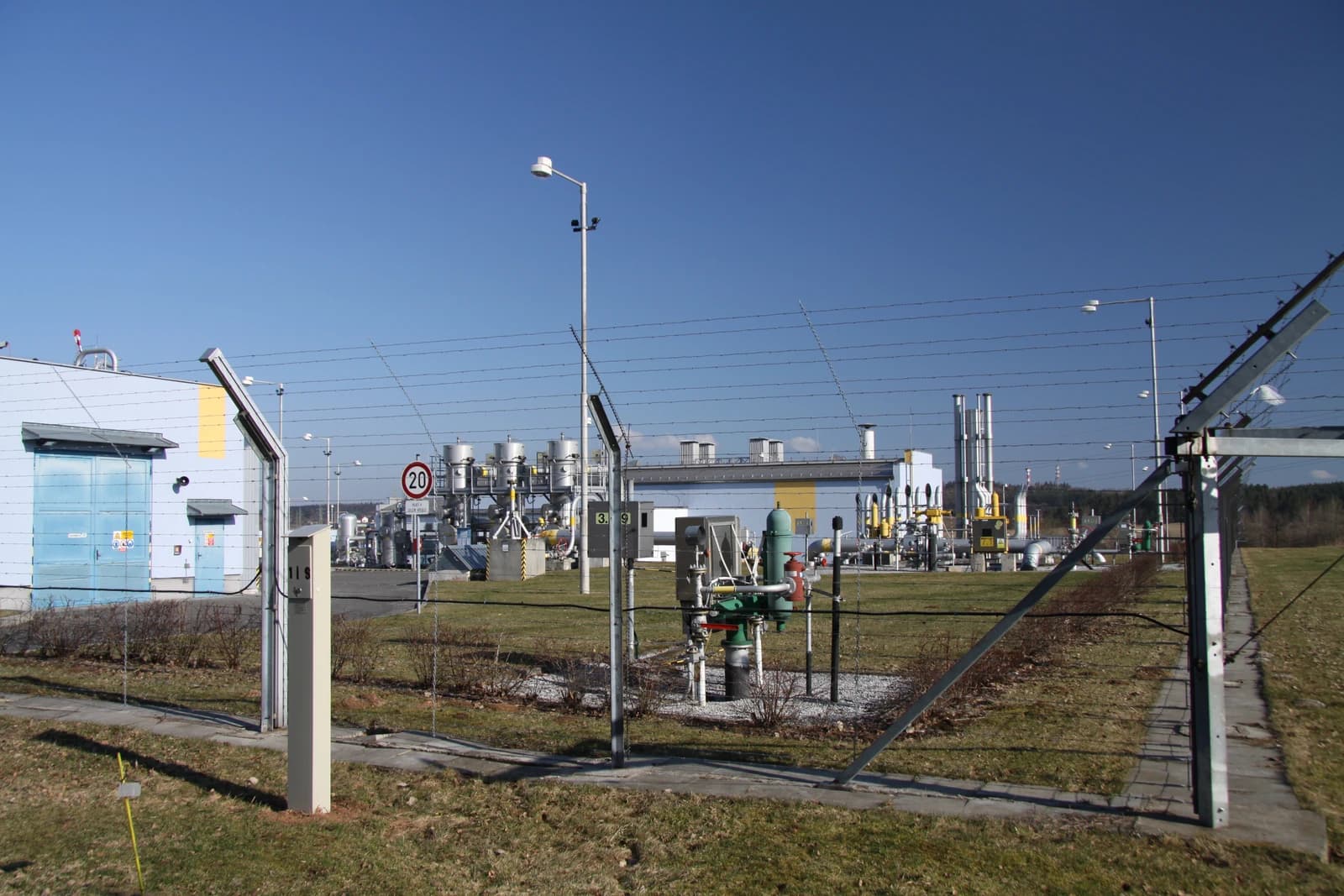
Czech natural gas storage is 75% full, down from more than 90% in September a year ago, underscoring how quickly Europe’s cushion can erode ahead of winter and why governments are moving to secure supplies before cold-weather demand peaks.
Czech Gas Storage Falls to 75% Before Winter
The issue matters economically because gas storage levels help set the floor under heating costs, industrial fuel bills and power prices across the region. When inventories run lower than normal, utilities and traders must bid more aggressively for LNG cargoes and pipeline gas, tightening the market just as households and factories start drawing more fuel.
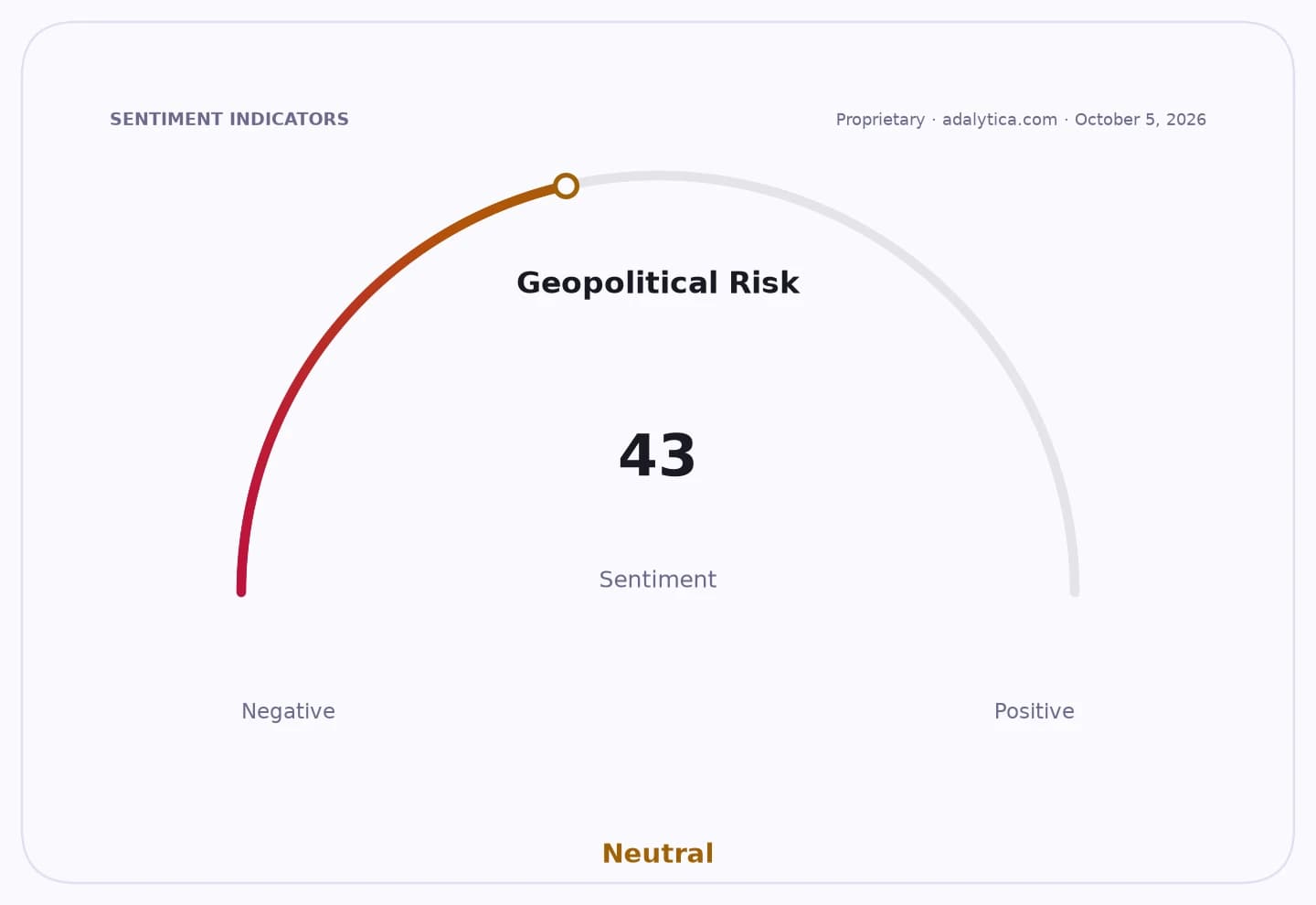
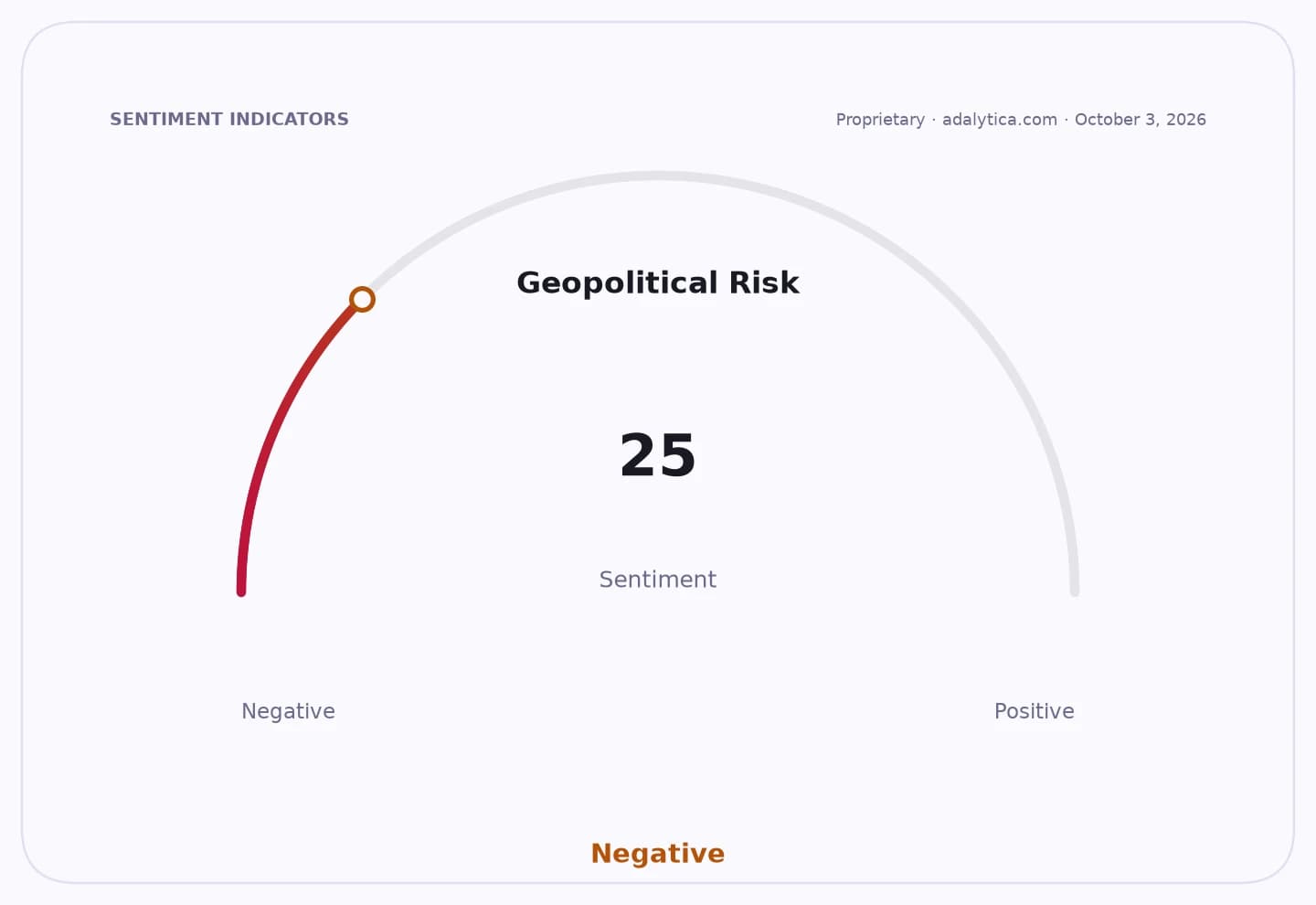
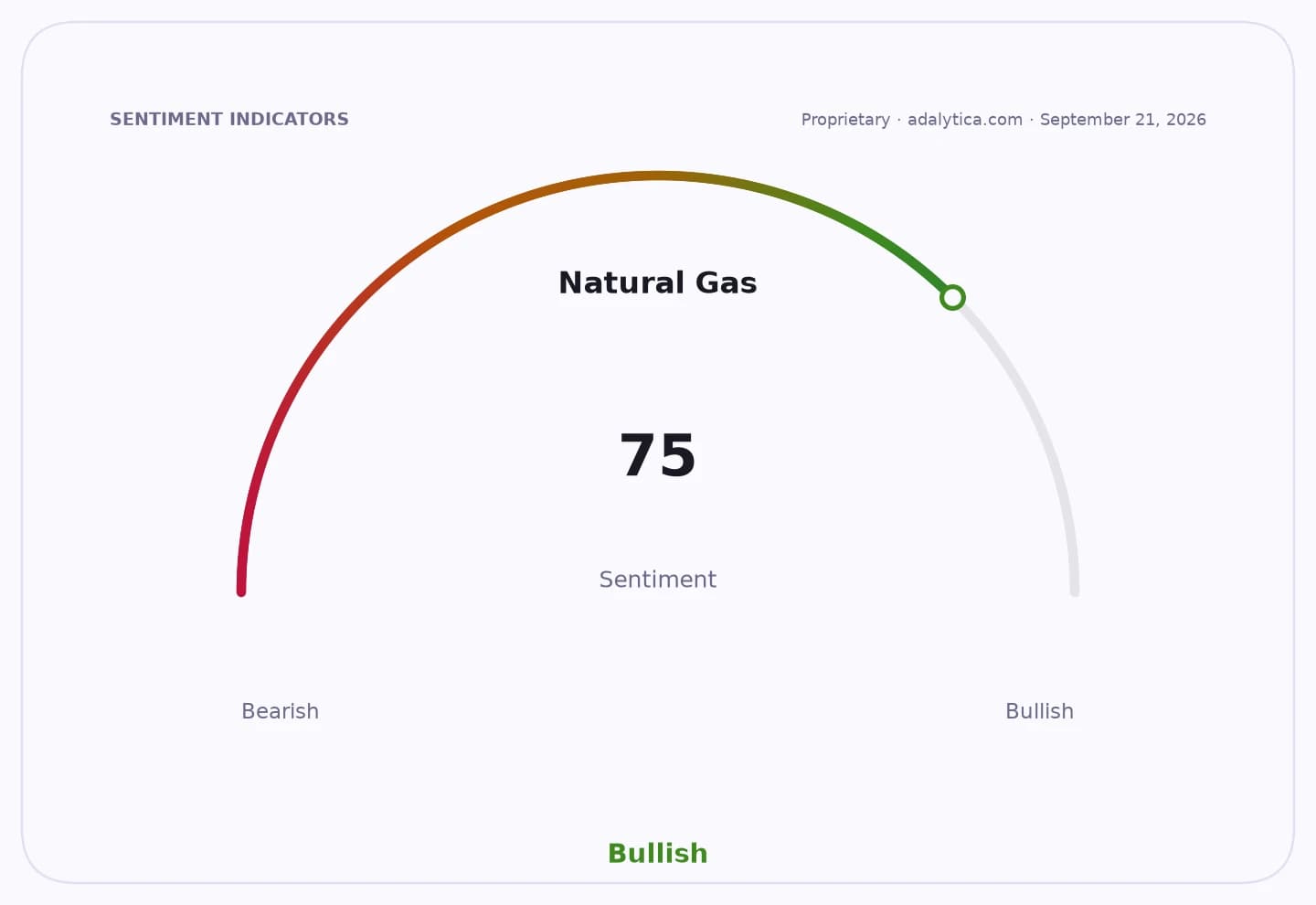
Sentiment IndicatorsⓘProprietary · adalytica.com · October 7, 2026
This is a snapshot — live sentiment, awareness and momentum for 130+ markets update continuously in the dashboard.Open AlphaPulse
The Czech Republic remains better supplied than several neighbors, with the EU average at 68%, Germany at 57% and Slovakia at 53%. Poland, by contrast, is above 98%, while some Nordic countries are also more than nine-tenths full, showing how uneven Europe’s gas security has become heading into the heating season.
That unevenness matters for investors because it can widen regional price spreads, lift volatility in gas-linked equities and support energy names if winter weather turns harsh. The broader market has already been sensitive to the storage backdrop, with Europe’s gas balances watched closely for signs that a colder-than-expected season could force more spot buying.
The situation is less fragile than in 2021, when Moscow began restricting flows and the region was far more exposed. Since then, the EU has added about 10 LNG terminals and expanded reverse-flow capability on pipelines, giving traders and governments more ways to move gas across borders if one market comes under stress.
Germany’s latest move to order state-owned Sefe to fill storage facilities shows how seriously officials are treating the risk. For investors, the next catalyst is simple: colder weather or further supply disruptions could quickly turn today’s comfortable enough levels into a scramble for cargoes, while milder conditions would ease pressure on prices and energy stocks.
| Entity | Gains | Losses |
|---|---|---|
| LNG suppliers | ▲Stronger winter demand | ▼ |
| European utilities | ▲More storage security | ▼Higher procurement costs |
| Gas consumers | ▲Better supply reliability | ▼Higher heating bills |
| Energy traders | ▲More volatility and spreads | ▼Short sellers in gas-linked assets |