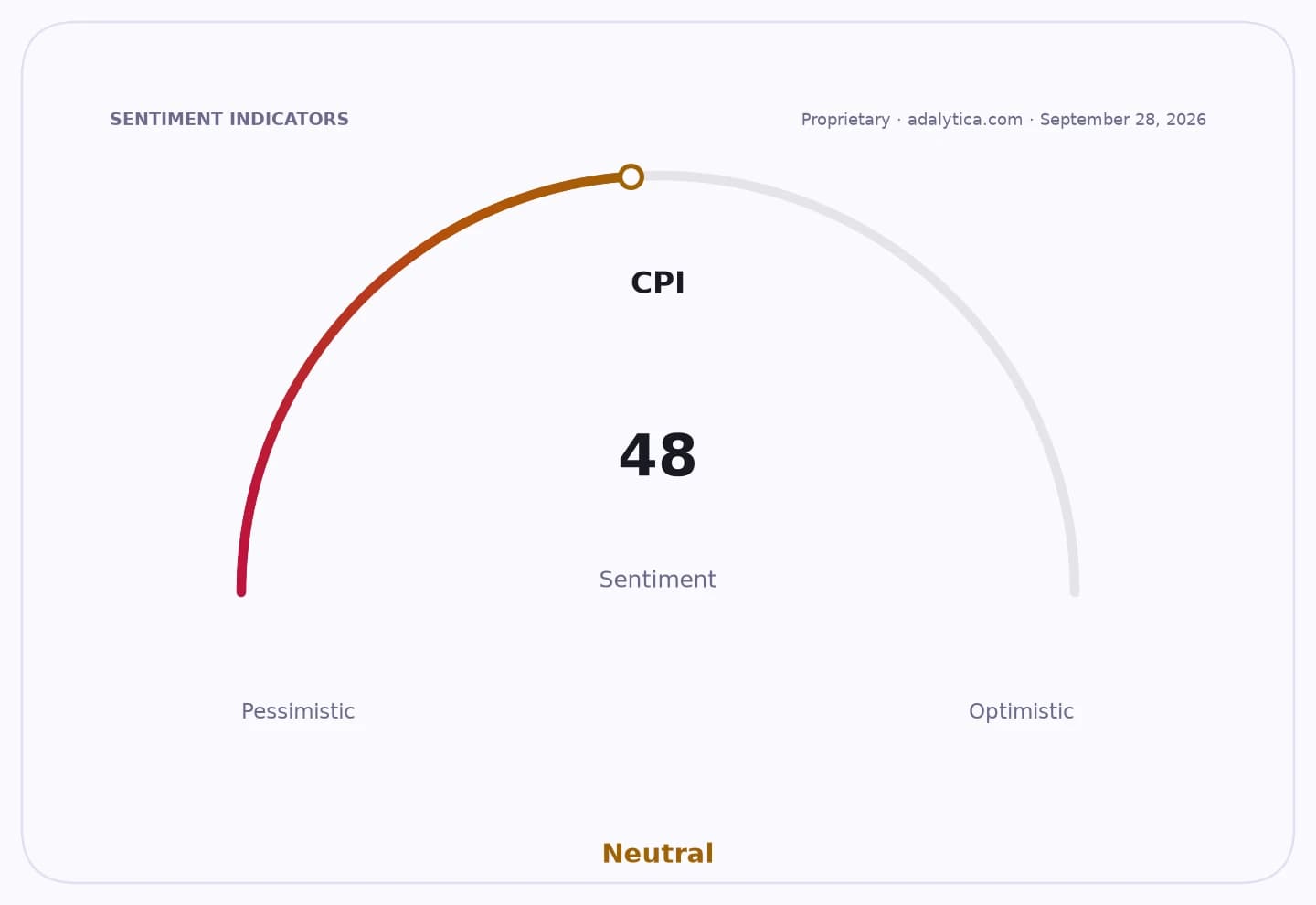
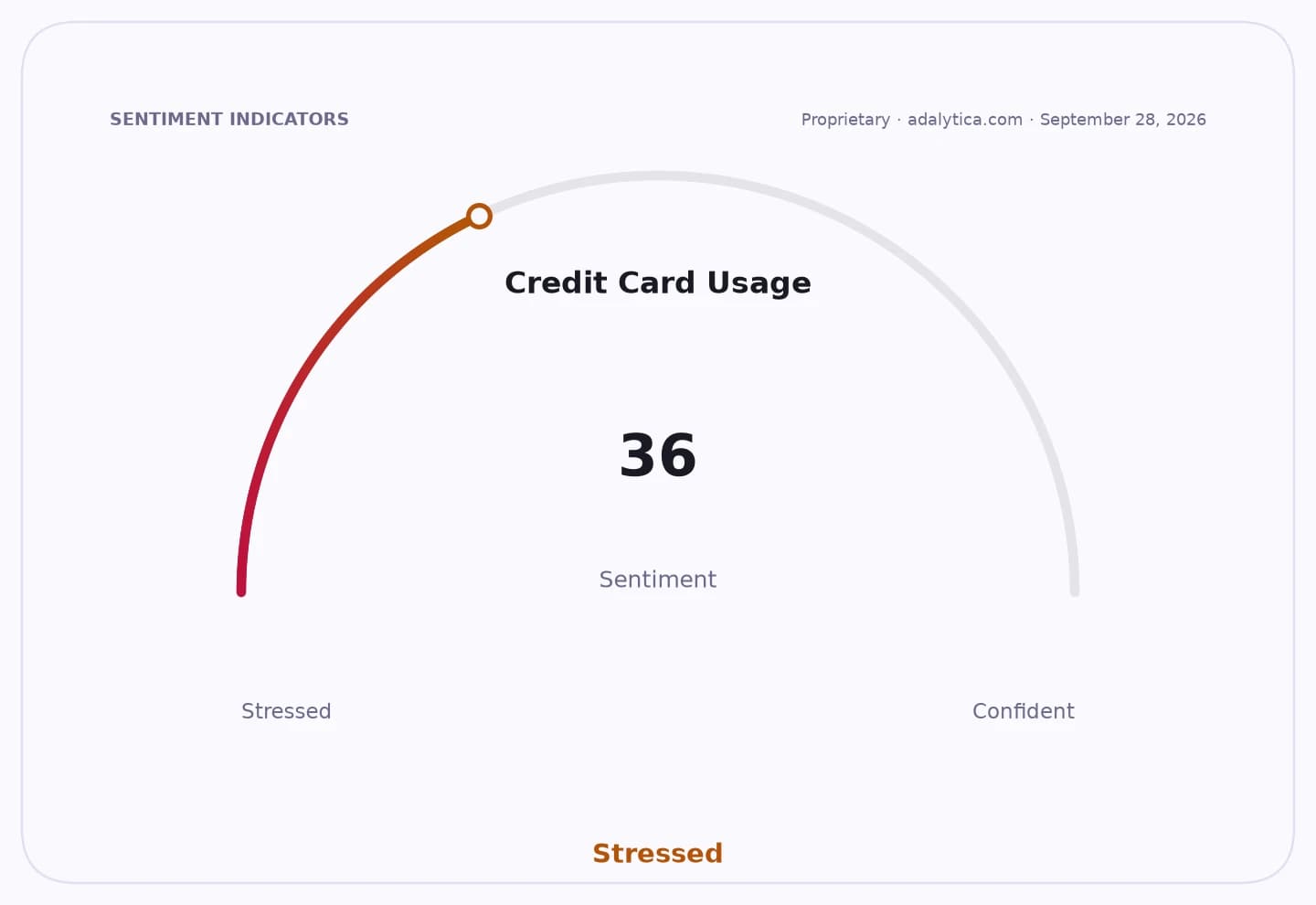
Italy’s growth outlook has improved, but the recovery is still being held back by a hit to household purchasing power that threatens to keep consumption weak and leave the country lagging its eurozone peers.
Italy growth forecast raised as real wages stay weak
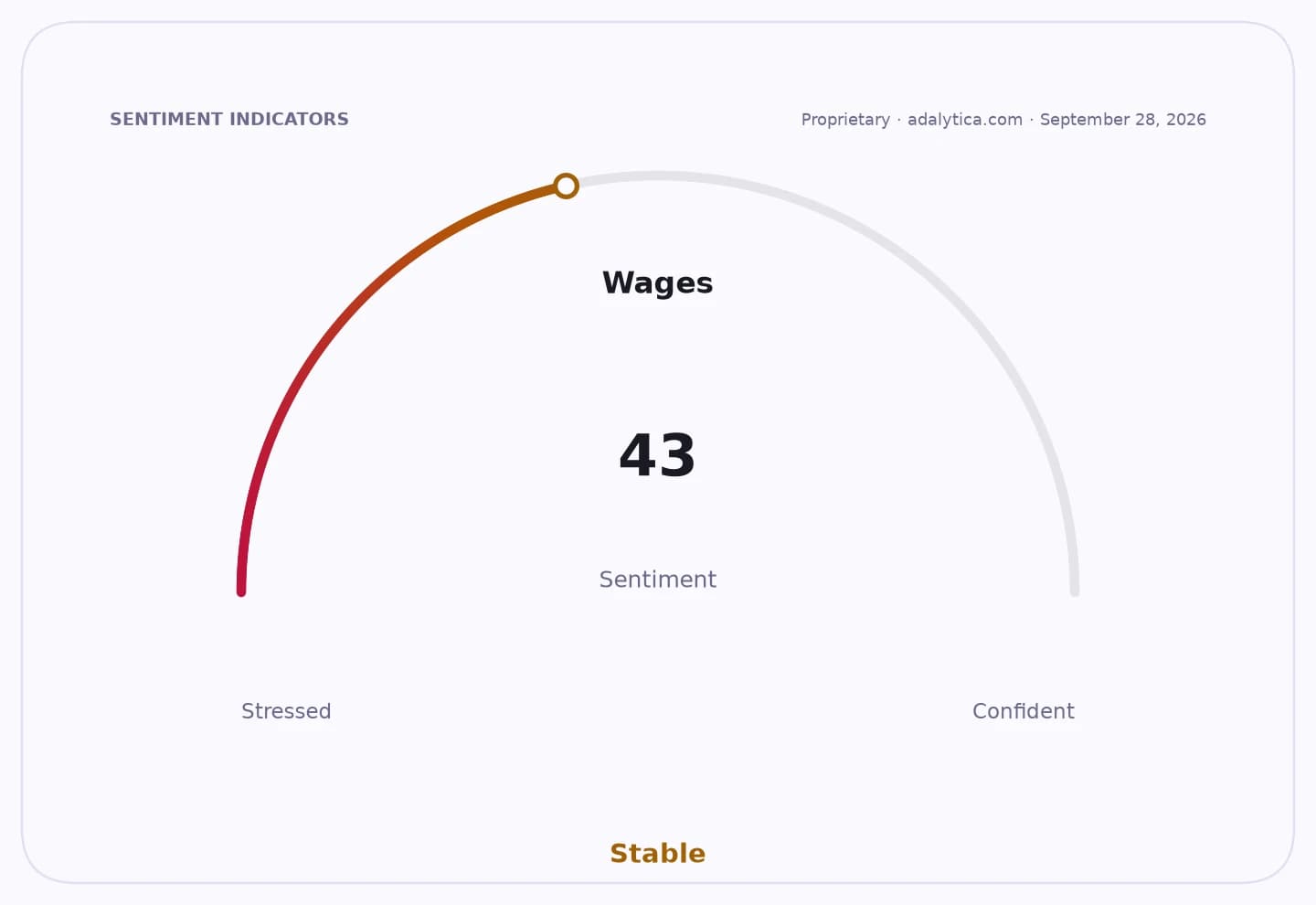
The OECD said Italy’s economy will expand 0.9% in 2026, up from a June estimate and the biggest upward revision among the major euro area economies alongside Germany. But the upgrade does little to change the broader picture: Italy is still expected to grow just 0.6% in 2027, below the eurozone’s 1% pace, while real wages remain 6.1% below their first-quarter 2021 level — the worst showing among the main economies tracked by the Paris-based body.
Sentiment IndicatorsⓘProprietary · adalytica.com · September 28, 2026
This is a snapshot — live sentiment, awareness and momentum for 130+ markets update continuously in the dashboard.Open AlphaPulse
That gap between output and incomes is the central economic story. The OECD said the improvement in Italy’s 2026 forecast was driven largely by a stronger first half than expected, with domestic demand, consumption and public investment doing most of the work. A key support remains the recovery impulse from the EU-funded recovery plan, even though the programme formally ended on June 30. In other words, Italy is still getting a lift from fiscal and investment flows that are fading rather than from a self-sustaining private-sector expansion.
For investors, that matters because growth built on public spending and a temporary statistical rebound is less durable than a private-demand led cycle. The OECD’s numbers suggest Italy can continue to avoid recession, but not that it is escaping its structural underperformance versus Germany, France or Spain. The 2027 forecast of 0.6% leaves Italy last among the major euro area economies cited, reinforcing a long-running pattern of weak productivity, sluggish household demand and limited upside for corporate earnings tied to domestic spending.
The inflation backdrop makes that problem more acute. The OECD kept Italy’s 2026 inflation forecast at 3%, then raised its 2027 projection to 2.6% from 2.2%, citing a new energy shock linked to Middle East tensions. Higher fuel prices and the risk of more expensive utility bills could further erode household real incomes just as wages are still struggling to recover. That combination is especially important in Italy, where consumers are more sensitive to energy costs and where the wage gap from the post-pandemic period remains unusually wide.
The OECD also warned that global risks remain tilted to the upside for inflation and the downside for growth, with energy markets, trade tensions and weather-related disruptions all in play. A potential severe El Niño could add pressure to food prices, while long-term government borrowing costs have risen to multi-year highs across many advanced economies. For Italy, that creates a difficult policy mix: slower nominal relief for households, higher financing costs for the state and less room to lean on debt-fuelled support if growth softens again.
There is a modest bull case in the OECD data. If energy prices ease in line with futures pricing in 2027, inflation could moderate and allow real incomes to improve. Public investment tied to the recovery fund could continue to support activity in the near term, and the upgraded 2026 forecast implies the economy has more momentum than previously thought. But the bear case is stronger for now: unless wage growth catches up with prices, the recovery will remain narrow, consumption will stay fragile and Italy’s equities and sovereign debt will remain hostage to a cycle of weak domestic demand and elevated energy exposure.
The message for markets is straightforward: Italy’s near-term growth has been revised up, but the underlying investment case still depends on whether households can regain spending power faster than inflation can take it away.
| Entity | Gains | Losses |
|---|---|---|
| Italy’s government | ▲Higher 2026 growth forecast | ▼Higher borrowing-pressure risk |
| Italian households | ▲Some growth support from spending/investment | ▼Real wages still 6.1% below 2021 |
| Domestic retailers and consumer firms | ▲Slightly firmer demand outlook | ▼Energy-driven squeeze on spending |
| Eurozone peers, especially Spain and Germany | ▲Relative growth leadership | ▼Italy remains a weak link |