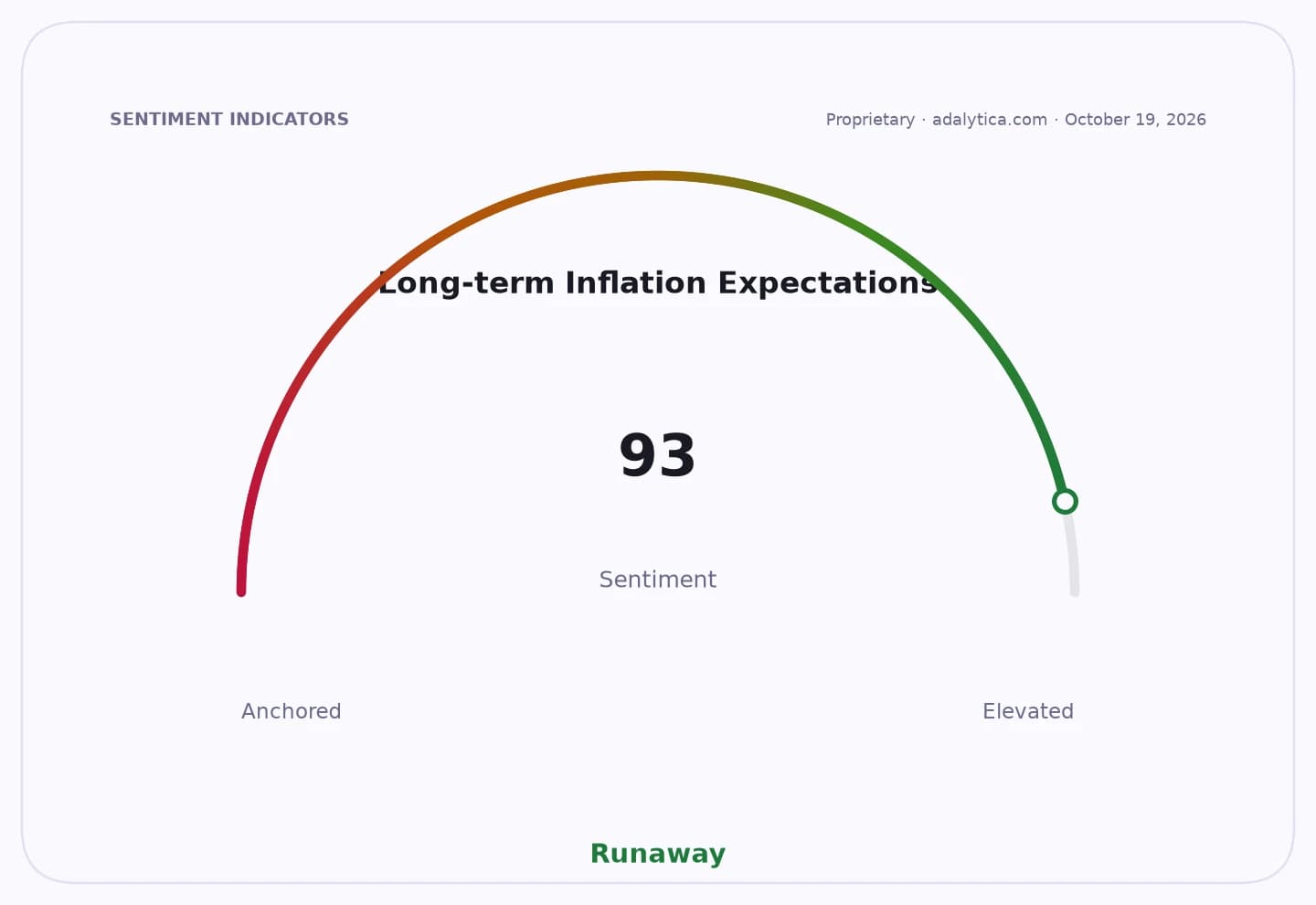
Italy’s inflation accelerated to 4.2% in September, and the more important development for policymakers and investors is that price pressures are no longer confined to energy. The parliamentary budget office said pressures are intensifying upstream in the production chain, while households’ and firms’ expectations are moving higher, raising the risk that the current shock spreads into broader consumer prices.
Italy Inflation Rises to 4.2% in September

That matters because inflation transmission is what turns a temporary energy shock into a more persistent macro problem. The Upb said pass-through into non-energy components has so far been more contained than during the 2021-22 energy crisis, but it is now seeing early signs of diffusion. For the euro zone’s third-largest economy, that suggests the disinflation process is becoming more fragile just as the European Central Bank is trying to judge how quickly price growth can settle back toward target.
Sentiment Indicators
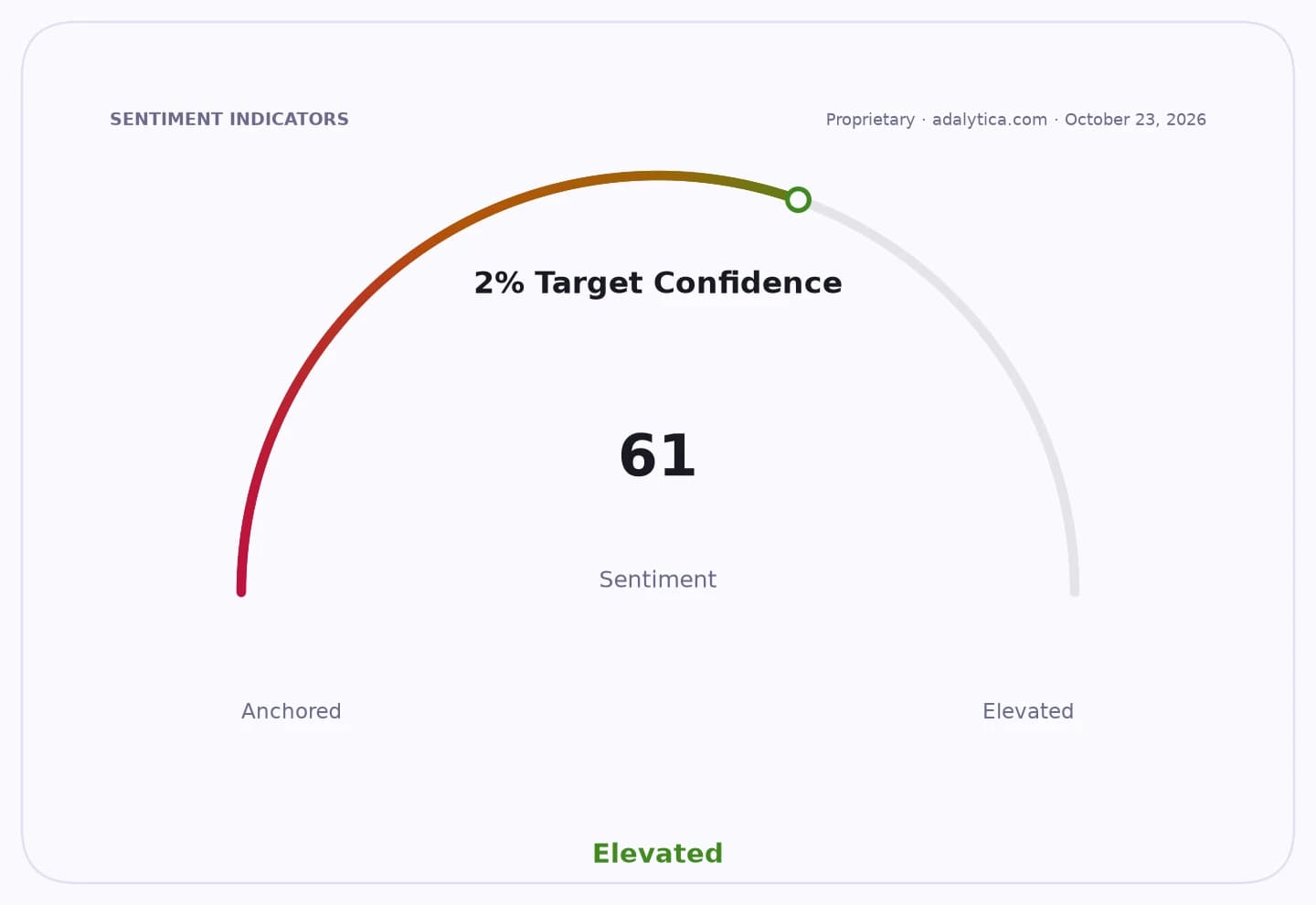
2% Target Confidence
The composition of the shock is significant. Energy prices are rising faster than in the broader euro area, which squeezes household purchasing power and adds cost pressure to businesses that are already facing weaker demand. When higher input costs begin to seep through the supply chain, firms face a choice between absorbing margins or passing costs on to consumers. Either outcome is negative for growth: the first hurts profitability, the second risks keeping inflation sticky.
The market implication is that investors should pay closer attention to the balance between inflation persistence and growth weakness in Italy and, by extension, the euro area. Higher inflation expectations can lift nominal yields and keep policy rates elevated for longer, but they also erode real incomes and dampen consumption. That combination is particularly challenging for cyclically exposed companies, retailers and domestically focused lenders if households cut spending and credit quality weakens.
2% Target Confidence
The latest reading also fits a broader pattern in which energy is again doing the heavy lifting on inflation, but the key question is whether second-round effects follow. The Upb’s warning on expectations is crucial here: once households and businesses start to anticipate higher prices, wage demands and pricing behavior can reinforce the process even if the initial energy impulse fades. That is why investors will be watching October data, wage trends and ECB communication closely for signs that Italy’s inflation pulse is broadening rather than peaking.
For bond investors, the immediate effect is potentially less room for complacency on duration. For equity investors, the stakes are more sector-specific: energy producers and inflation hedges may benefit, while consumer-facing companies and rate-sensitive assets could remain under pressure if inflation proves stickier than expected.
| Entity | Gains | Losses |
|---|---|---|
| Energy producers | ▲Higher pricing power | ▼Consumer backlash |
| Italian households | ▲None | ▼Lower real incomes |
| Consumer-facing companies | ▲Some pass-through ability | ▼Margin pressure |
| Bond investors | ▲Clearer policy guidance if inflation eases | ▼Longer-for-higher rates if it persists |