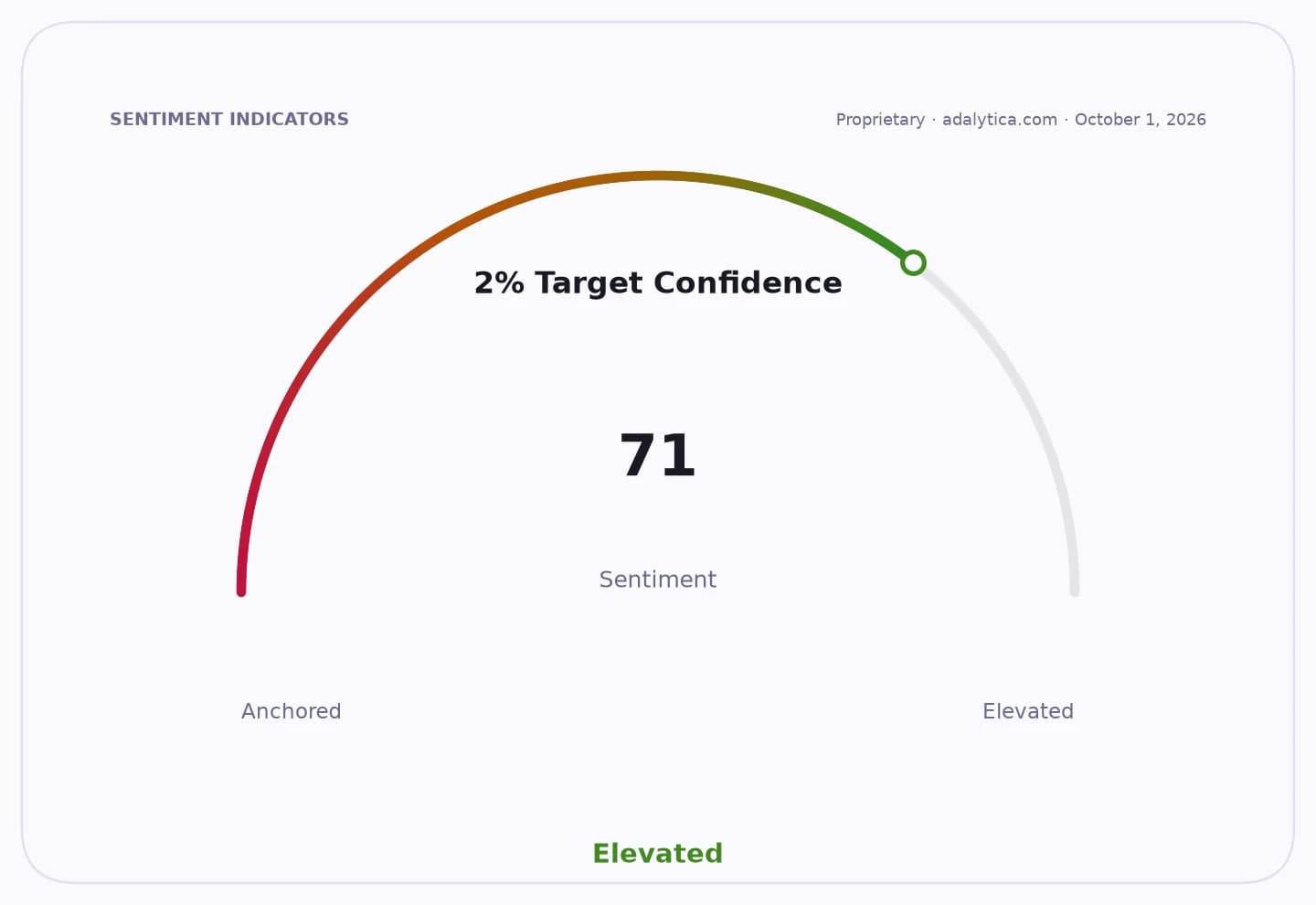
Greece’s inflation rate of 5.1% in the latest Eurostat reading has turned the country’s cost-of-living squeeze back into a political and economic flashpoint, with households paying more than the eurozone average and the government under pressure to show that its targeted relief measures are working.
Greece Inflation Rises to 5.1% in Eurostat Reading

The gap with the broader monetary union matters because it leaves Greek consumers facing faster erosion in purchasing power just as energy, transport and food costs remain elevated. Eurostat put inflation across the euro area at 3.8%, already a level that keeps pressure on the European Central Bank, but Greece’s higher reading reinforces the view that domestic price pressures remain stickier than in much of Europe. For a country still sensitive to fuel and food shocks, that difference feeds directly into real incomes, consumption and the political mood.
Sentiment IndicatorsⓘProprietary · adalytica.com · October 3, 2026
This is a snapshot — live sentiment, awareness and momentum for 130+ markets update continuously in the dashboard.Open AlphaPulse
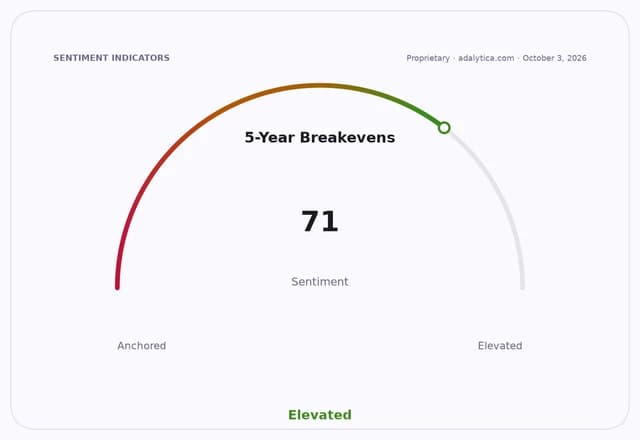
Markets are not reacting to a single corporate or asset move here, but investors in Greek assets will read the data as a reminder that inflation is still a constraint on policy flexibility. If price pressures remain above the eurozone average, the government has less room to lean on the argument that inflation is purely imported, and more reason to keep using fiscal space on subsidies and tax relief. That can support household demand in the short term, but it also narrows budget options if the relief becomes more persistent.
The government is trying to frame the issue as one of targeted intervention rather than structural failure. Deputy finance minister Dimitris Markopoulos said Greece is using its fiscal headroom to cushion citizens and businesses, pointing to an already announced rebate on diesel and another measure expected on Oct. 14, just before heating oil sales begin. The focus on fuel is economically important because diesel affects transport, production and, eventually, food prices, making it a transmission channel for broader inflation.
Opposition parties are seizing on the Eurostat figures to argue that the relief is too small and too late. PASOK says the government has been inactive, while the Communist Party and other groups argue that the problem is tied to the energy market’s structure and costs linked to the green transition. That critique matters because it shifts the debate from temporary aid to the durability of Greece’s inflation model: whether the country can truly bring down the price level without deeper changes in energy costs, competition and taxation.
For investors, the key question is whether inflation stays high enough to keep real wages under pressure and consumer spending subdued, or whether the forthcoming fuel measures buy enough time to ease headline prices into year-end. A persistent gap with the euro area would likely keep domestic demand uneven and sustain pressure on the government to spend, even as policymakers try to preserve fiscal credibility.
The next data prints will show whether the spike was mainly an energy-led burst or the start of a broader acceleration in Greek prices. Until then, the inflation debate is likely to remain as much about purchasing power as politics, with households, retailers and the state all caught between higher costs and limited room for manoeuvre.
| Entity | Gains | Losses |
|---|---|---|
| Greek households | ▲Short-term fuel relief | ▼Real purchasing power |
| Greek government | ▲Political room from targeted aid | ▼Credibility on inflation control |
| Opposition parties | ▲Stronger attack line | ▼Little policy leverage |
| Retailers and transport firms | ▲Some demand support if relief works | ▼Higher input and energy costs |