A Christmas bonus for Italy’s lowest-paid pensioners still worth 154.94 euros has quietly lost about a third of its purchasing power since it was created 25 years ago, underscoring how inflation steadily erodes fixed benefits when they are not indexed.
Italy pension Christmas bonus loses purchasing power

The payment, introduced in 2001 as 300,000 lire, was meant to help retirees cover year-end costs. It has never been revalued. Adjusted for inflation, it would need to be worth at least 240 euros today to buy what it did at the start, meaning the bonus has lost 35.5% of its real value even as consumer prices have climbed 55.1% over the period, according to calculations based on official Italian statistical coefficients.
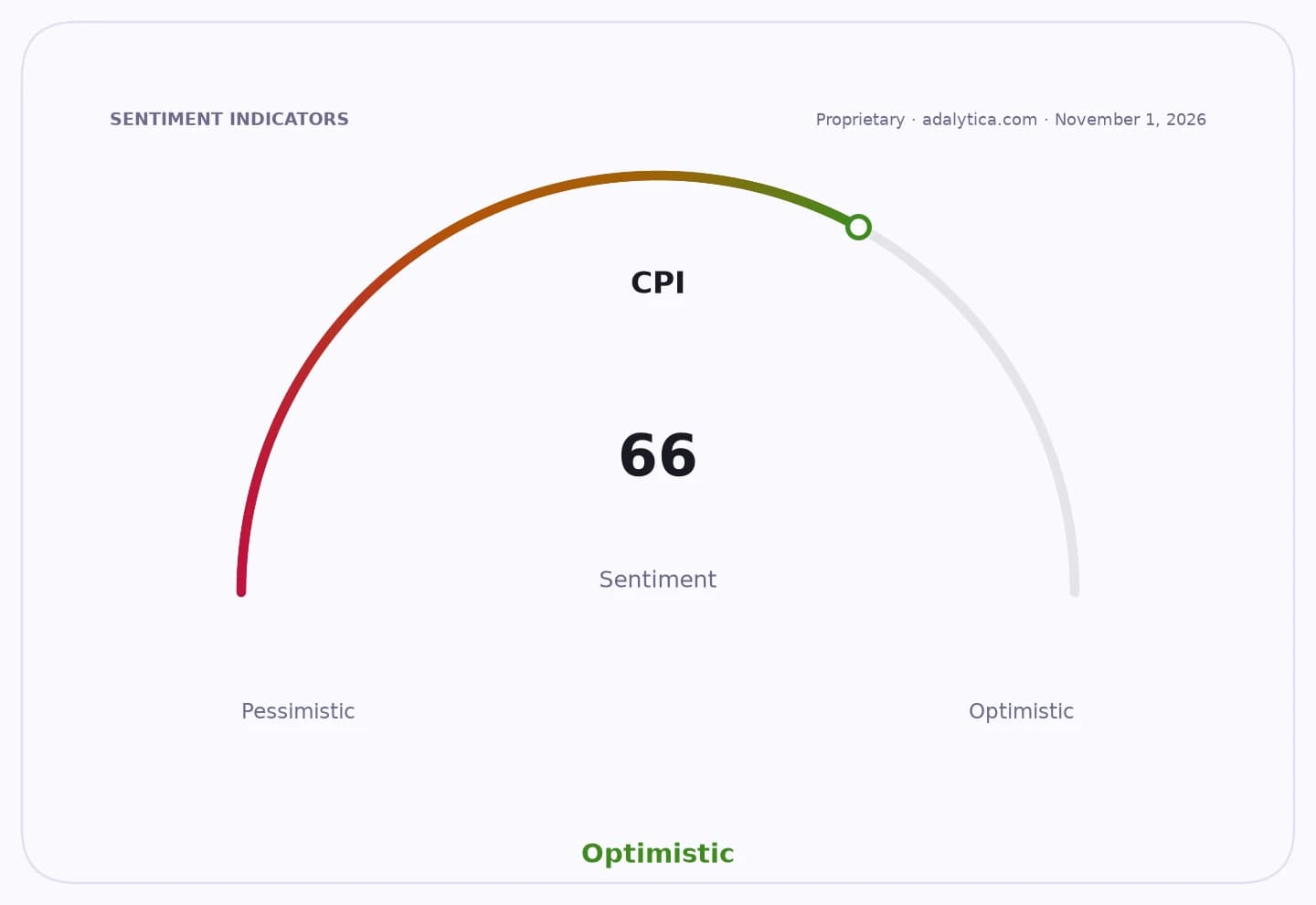
Sentiment Indicators
CPI
That gap matters because it shows a familiar problem for savers, retirees and investors alike: nominal amounts can look stable while real income shrinks. For pensioners on tight budgets, the difference between 154.94 euros and 240 euros is not abstract. It is the difference between a modest cushion and a benefit that covers noticeably less holiday spending, utility bills or medicines than it once did.
The contrast with Italy’s minimum pension is stark. The minimum payment has risen from 382.36 euros a month at the end of 2001 to 611.85 euros in 2026, helped by regular indexation to inflation. The Christmas bonus, by contrast, has been frozen. That means its role as a support for low-income retirees has weakened over time, even though the state still delivers it automatically with the December pension and 13th-month payment.
Eligibility remains tightly limited. Full payment goes to pensioners whose total annual pension income does not exceed 7,954.05 euros in 2026, with a sliding scale above that threshold and no benefit once annual pension income tops 8,108.99 euros. Additional income caps also apply, and some categories — including social pensions and disability-linked benefits — are excluded. Those rules make the bonus targeted, but they also ensure its total fiscal cost stays relatively small.
For investors, the broader lesson is bigger than one Italian benefit. Inflation does not just hit central-bank policy and bond yields; it reshapes the real value of every fixed payment in the economy, from wages to pensions to annuities. That is why the recent inflation backdrop matters so much. When price growth accelerates, as it has again in the latest data, the pressure on households rises and the need for inflation protection becomes more obvious.
The same dynamic helps explain why markets pay such close attention to inflation expectations and policy responses from the European Central Bank and the Federal Reserve. A stronger dollar, firmer US inflation and the prospect of higher borrowing costs all feed into the cost of capital and the appeal of real assets, inflation-linked bonds and companies with pricing power.
For long-term investors, the takeaway is straightforward: fixed nominal income streams lose value when they are not adjusted. Whether you are planning for retirement or building wealth, the best defense against inflation is not a single government payment but a diversified portfolio of assets that can grow in real terms over many years. This is a reminder to keep watching inflation, and to think in purchasing power, not just euros.
| Entity | Gains | Losses |
|---|---|---|
| Low-income retirees with indexation-linked income | ▲Better preserved purchasing power | ▼Smaller real erosion |
| Holders of fixed nominal payments | ▲Predictable cash amount | ▼Inflation-adjusted value |
| Italian state budget | ▲Limited fiscal outlay | ▼Pressure to raise benefits |
| Inflation-linked assets and pricing-power companies | ▲Greater appeal in real terms | ▼Less from fixed-income exposure |