Retirees in their 60s are still spending more each month than many Social Security checks cover, underscoring how housing, food and health care costs continue to outpace fixed retirement income.
Retiree Spending Outpaces Social Security Checks

That gap matters because it leaves millions of older Americans relying on savings, pensions or part-time work to make ends meet just as inflation remains elevated. The Consumer Price Index stands at 337.476 in October, up from 333.979 in May, while personal consumption expenditures have climbed to 22,452.8 in September from 20,458.7 in December 2024, showing that even after the post-pandemic surge, the cost of living is still rising.
Sentiment Indicators
For retirees, the pressure is especially acute in the largest budget items. Housing remains the biggest monthly expense, followed by food and medical care, making retirement spending less discretionary than many households assume. Those costs are sticky even when overall inflation cools, because rent, utilities, groceries and premiums do not reset quickly for older households on fixed incomes.
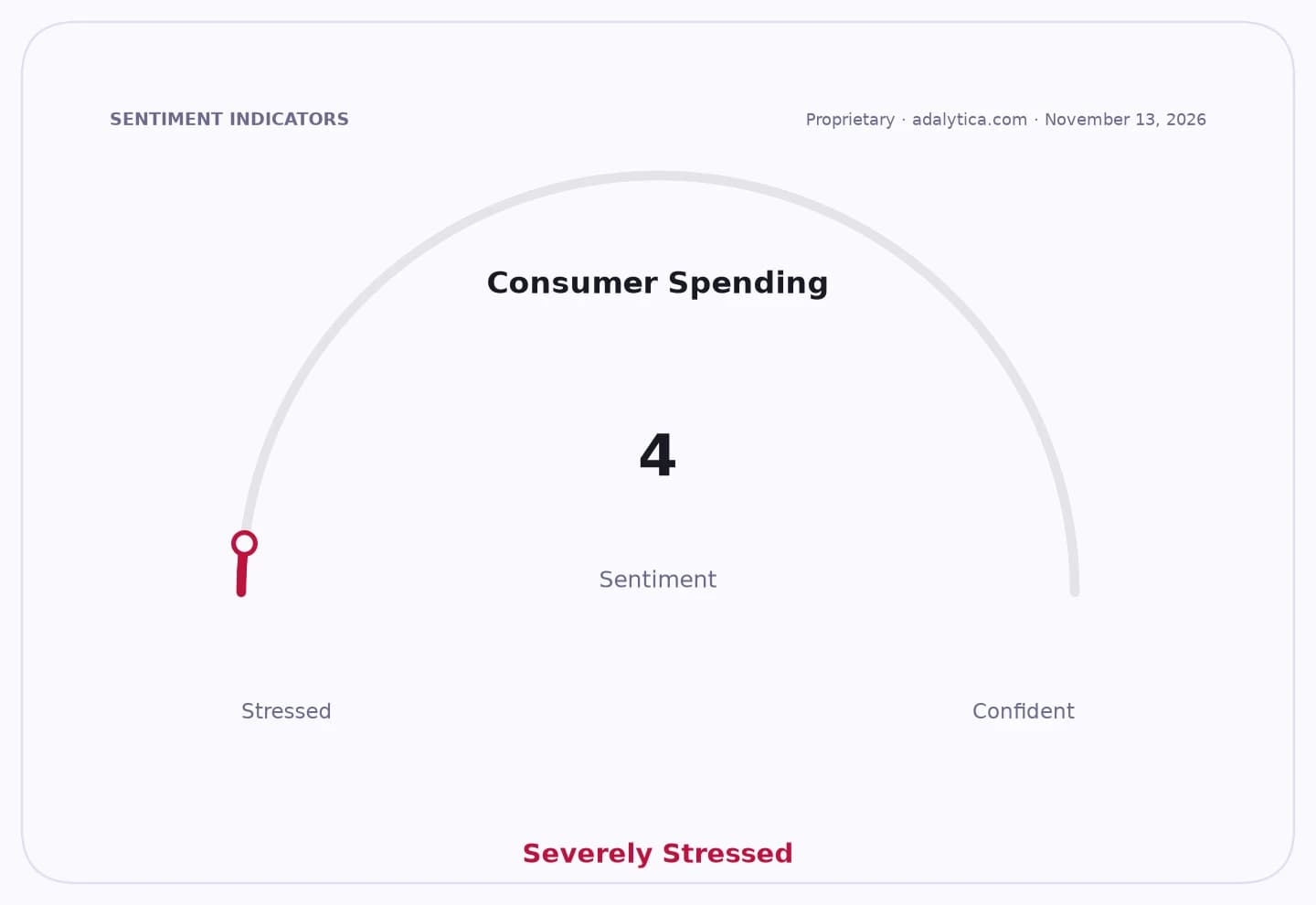
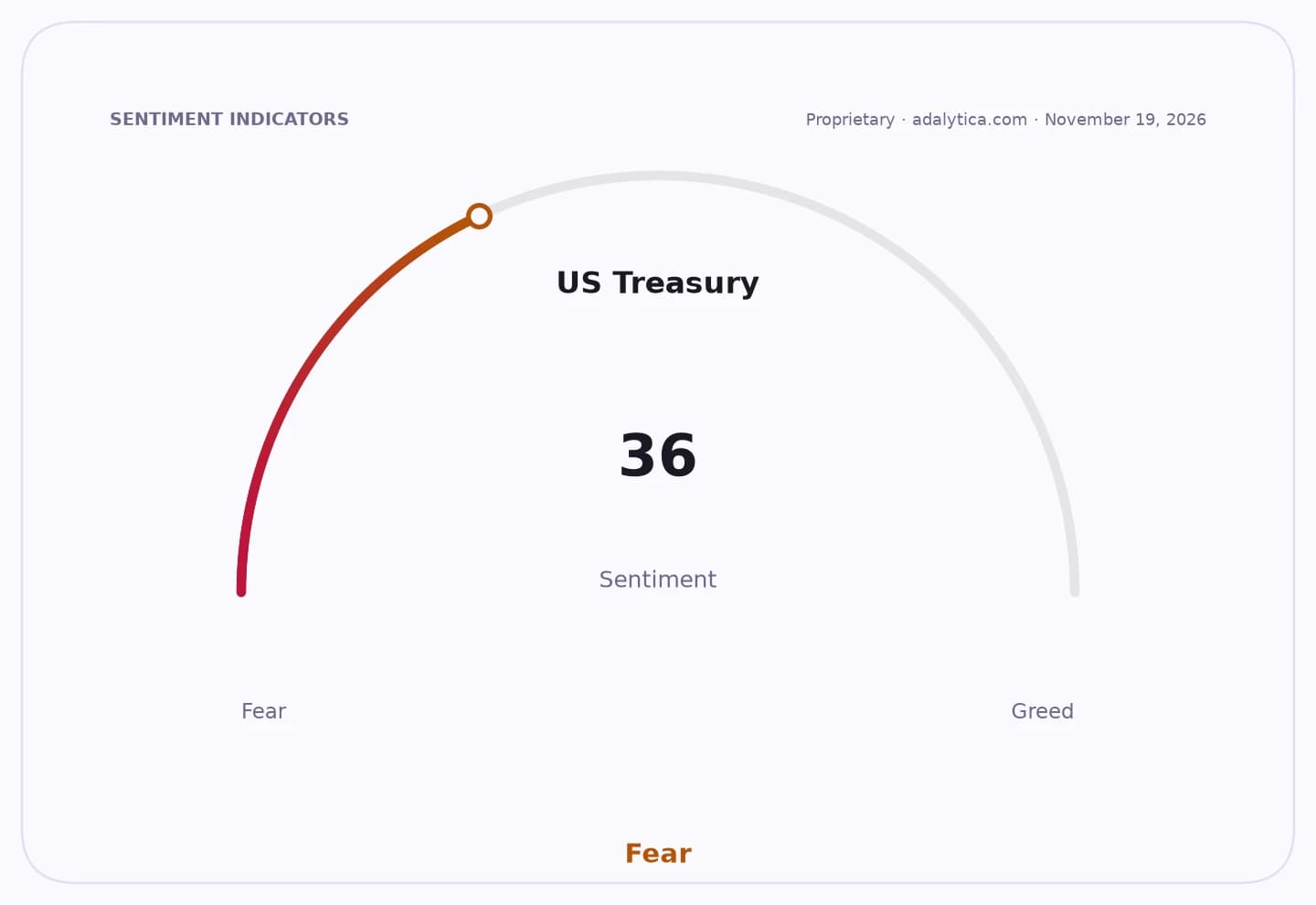
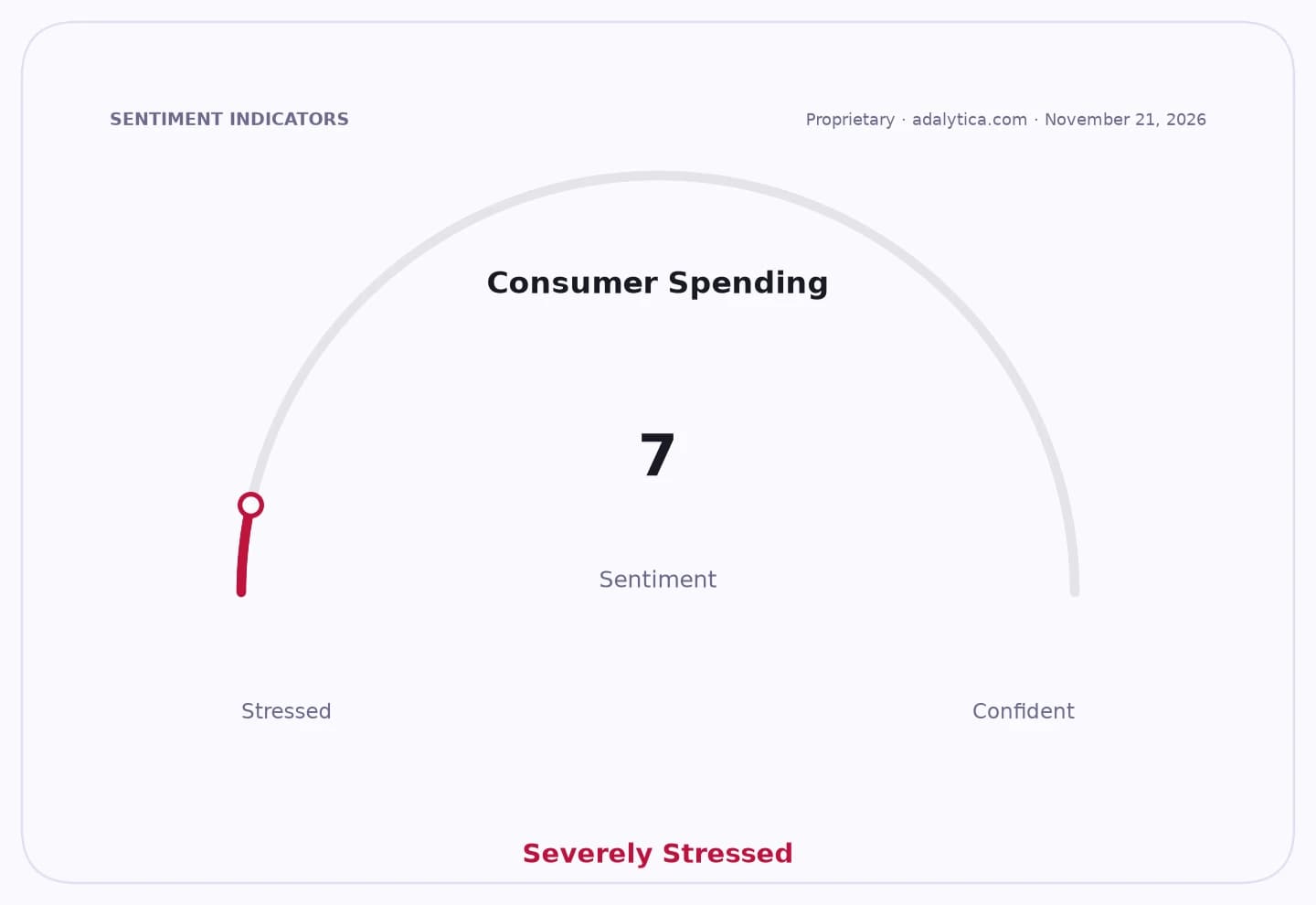
The macro backdrop is mixed but not benign. The U.S. unemployment rate is 4.1% in October, suggesting labor markets are holding up, but that offers little direct relief to retirees who no longer depend on wages. Markets are also signaling caution: the SPY has fallen to 689.81 from 766.81 earlier this month, with the 50-day moving average now below the 200-day average and RSI readings near oversold levels, while Adalytica’s consumer spending and confidence gauges show fear rather than comfort.
That combination helps explain why retirement budgeting remains a central financial issue even when headlines focus on stocks and Fed policy. Higher costs force households to delay spending, draw down assets faster or delay retirement altogether, which in turn affects everything from consumer demand to demand for health insurance, annuities and Treasury bonds.
The lesson for investors is that retirement affordability is not just a personal finance story. It is a broad consumer demand story, a health-care cost story and, increasingly, a defensive-sector story as older households favor essentials over discretionary purchases. The next key catalyst is the November CPI update and any fresh Social Security cost-of-living adjustments, both of which will determine how much real spending power retirees have into year-end.
| Entity | Gains | Losses |
|---|---|---|
| Retirees with savings | ▲More flexibility | ▼Less dependence on checks |
| Fixed-income retirees | ▲Inflation protection if indexed | ▼Purchasing power erosion |
| Consumer staples and health care | ▲Steady demand | ▼Less discretionary spending elsewhere |
| Social Security recipients without extra income | ▲COLA support | ▼Budget shortfalls from higher costs |