Americans can’t go back to 1995 prices, but the household budget comparison shows why inflation remains such a powerful force for markets, consumers and the Federal Reserve: the same basket of everyday necessities now eats far more of income, and the biggest pressure points are the ones investors care about most — housing, energy, healthcare and services.
US household costs rise in 1995 to 2025 comparison
The latest Bureau of Labor Statistics spending data underscore how the cost of living has been remade over three decades. The average consumer unit spent $32,264 in 1995, or about $2,689 a month, versus $81,905 in 2025, or $6,825 a month. That gap is not just nostalgia. It is the backdrop for a U.S. economy where inflation-adjusted household budgets are still under strain, even after the post-pandemic surge has eased.
Housing remains the heaviest burden. Average annual housing spending rose from $10,458 in 1995 to $27,790 in 2025, while its share of total spending held roughly steady at 32.4% and 33.9%. That is exactly why shelter inflation matters so much: even when the percentage share looks stable, the dollar burden keeps rising, locking in higher rent, mortgage, insurance and utility costs. For investors, that keeps focus on landlords, homebuilders, insurers and utility companies — and on the consumers who have less room to spend elsewhere.
Food tells a similar story. Household spending on food climbed from $4,505 a year to $10,633, though its share of the budget stayed close to 13% to 14%. That tells you grocery inflation is less about a dramatic change in habits than a simple repricing of daily life. The same is true in transportation, where costs jumped from $6,014 to $13,492 annually. Gasoline may not command the same psychological shock it once did, but vehicle purchases, insurance and repairs have turned commuting into a much larger line item.
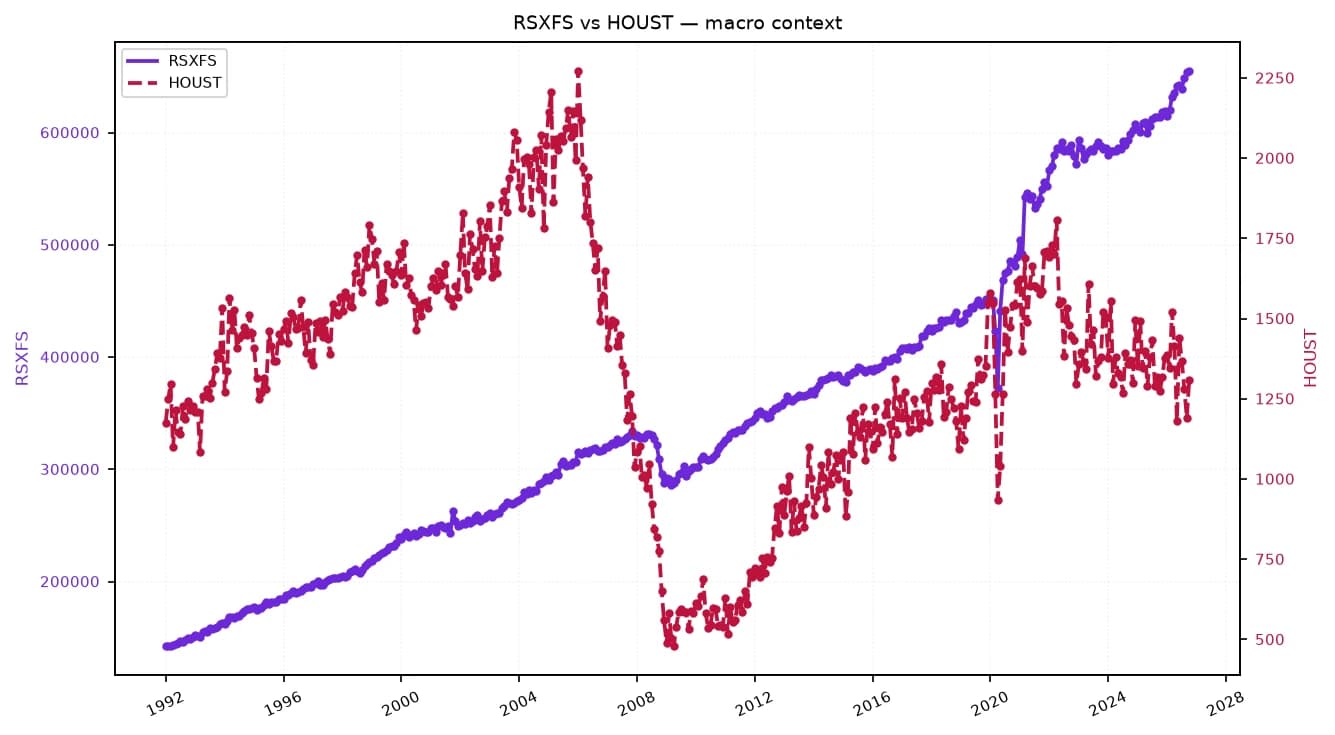
CPIAUCSL vs CPILFESL — macro contextadalytica.com
Explore this data interactively — full history, time series and cross-market comparisons.
Energy adds another layer. The national average residential electricity rate has risen from about 8.4 cents per kilowatt-hour in 1995 to 17.3 cents in 2025, more than doubling in nominal terms. For a household using 900 kilowatt-hours a month, that is the difference between roughly $75.60 and $155.70 before fees. That is not just a bill problem; it is a capital-allocation problem. Rising power costs strengthen the case for energy efficiency, grid upgrades, insulation, smart meters and distributed power systems — the kind of infrastructure themes that tend to benefit over long cycles.
The inflation picture in the data aligns with the broader macro backdrop. The CPI series shows consumer prices at 337.476 in October 2026, while core CPI stood at 339.9, with both still trending higher. The PCE price index — the Fed’s preferred inflation gauge — reached 132.257 in September 2026. That persistence helps explain why central banks are not ready to declare victory, and why the market keeps repricing the path of rates. When household bills stay sticky, monetary policy stays tighter for longer.
That matters directly for investors because the winners and losers are becoming clearer. Businesses tied to necessity spending and pricing power can keep passing through costs. Firms dependent on discretionary demand, low rates or cheap financing face more pressure. And for consumers, the real question is no longer whether life is more expensive than 1995 — it is where the next inflationary shock will show up, and who will have to absorb it.
The market underestimates how durable this theme is. Inflation may no longer be surging in a straight line, but the household budget comparison shows the deeper problem: the baseline cost of modern life has been reset higher. That makes the next phase of the cycle less about chasing the hottest consumer trend and more about owning the toll roads, the utilities, the grid, the insurance balance sheets and the efficiency enablers that profit when every household dollar has to work harder.
| Entity | Gains | Losses |
|---|---|---|
| Utilities & grid operators | ▲Higher billing base | ▼Cost-sensitive households |
| Grocery and food retailers | ▲Pricing power | ▼Value-seeking shoppers |
| Landlords & home insurers | ▲Sticky housing costs | ▼First-time buyers, renters |
| Discretionary retailers | ▲Less pricing flexibility | ▼Consumers with squeezed budgets |