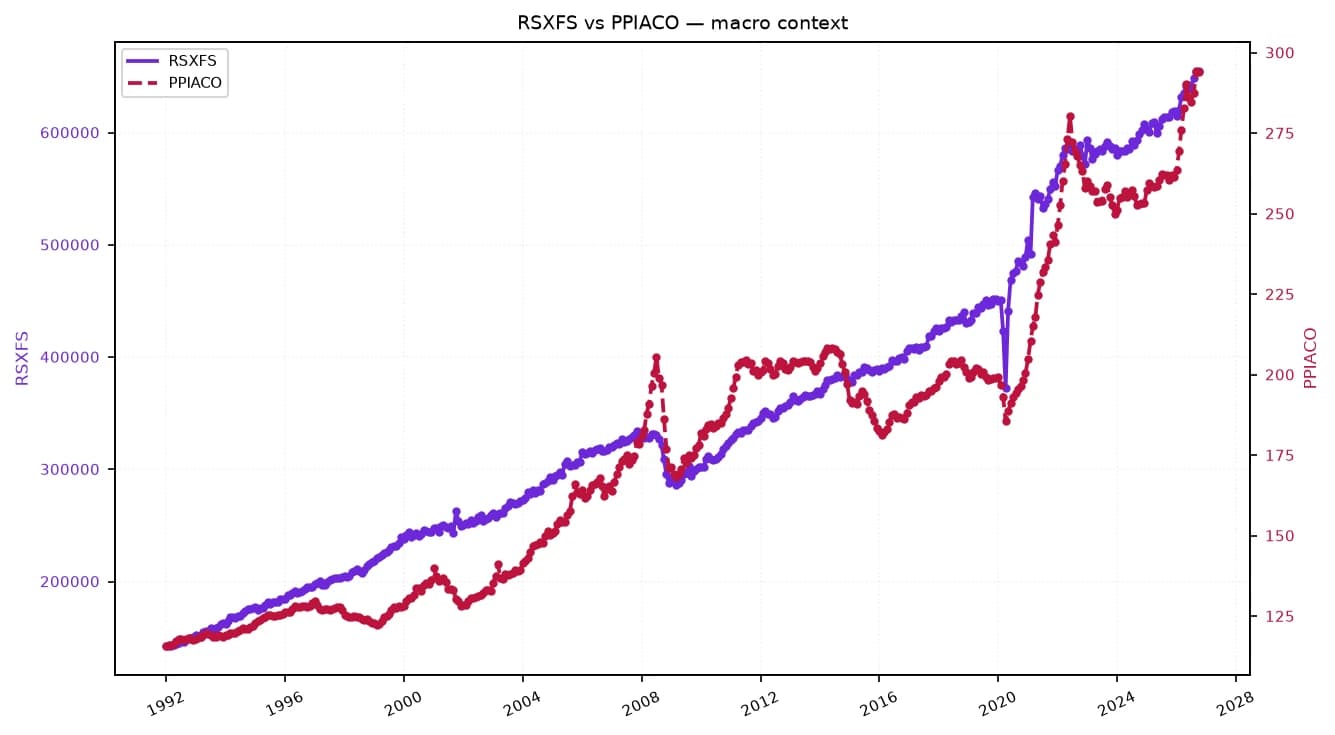
U.S. consumers are still spending, but the housing market is slowing enough to keep one of the economy’s biggest cyclical engines in the penalty box.
U.S. Consumers Spend as Housing Slows
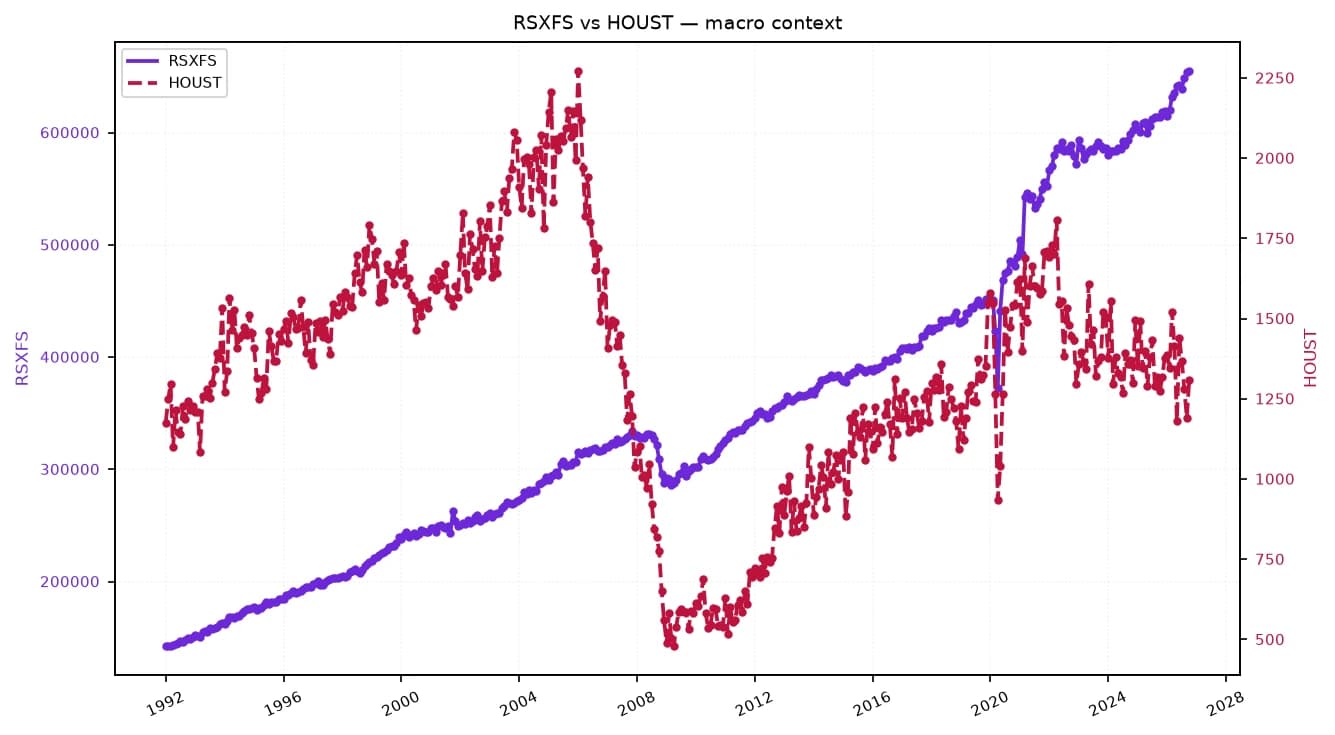
That split matters because it tells investors where growth is holding up and where higher borrowing costs are finally biting. Retail demand remains resilient, especially in categories tied to everyday spending, while home improvement and housing-related activity are lagging under the weight of elevated mortgage rates and tighter financing conditions.
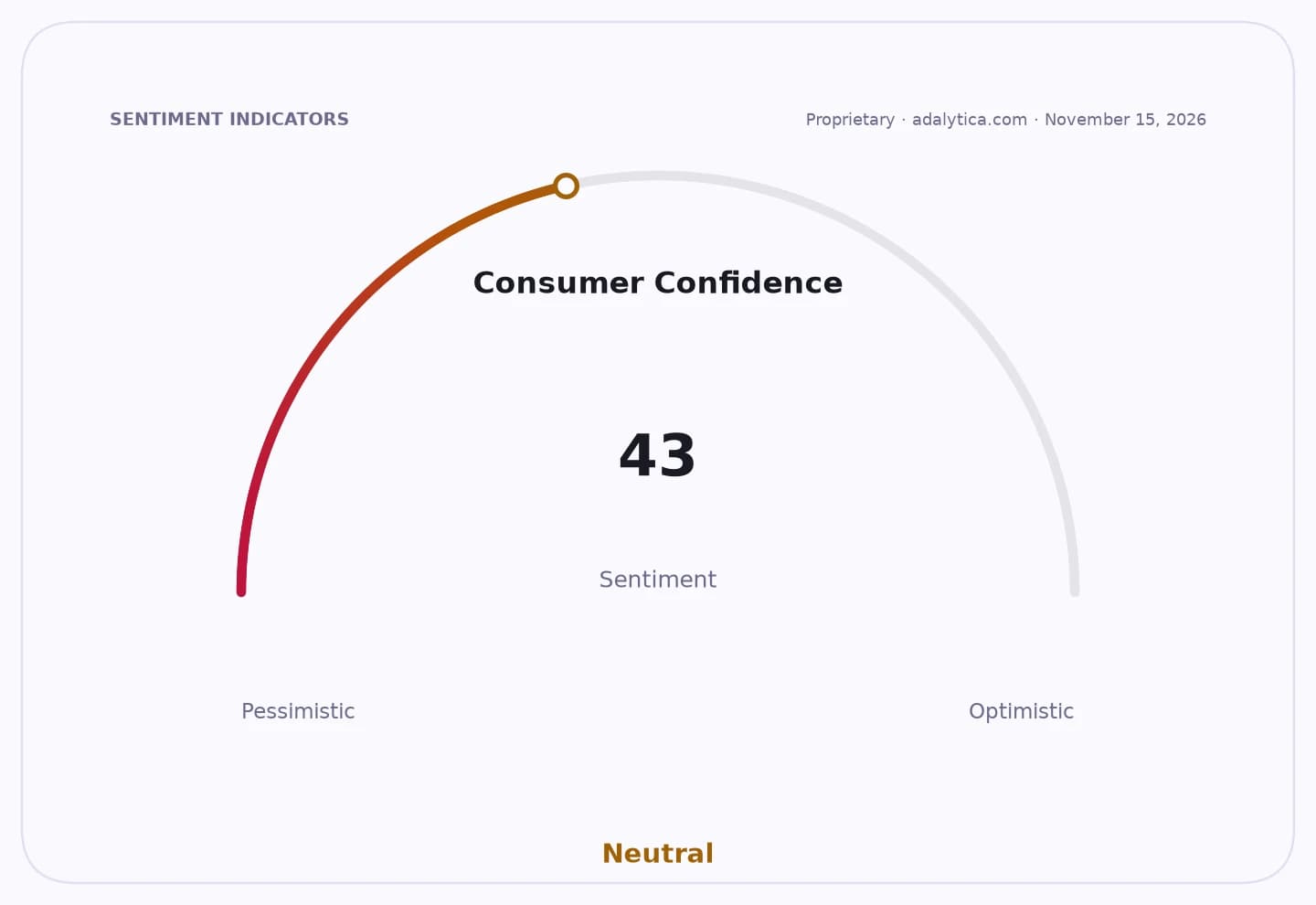
Sentiment Indicators
Over the latest three months, core U.S. retail sales have been running at an annualized pace of 11%, and restaurant spending has been growing at a 10% clip, according to Carson Group’s Sonu Varghese. That is not the profile of an economy in immediate distress. It suggests households are still drawing support from a labor market that remains relatively healthy, with unemployment around 4.1% and layoffs near historic lows.
But housing is telling a different story. Varghese pointed to the gap between Target’s 5.6% comparable sales gain and Lowe’s 1.8% rise as a sign that discretionary spending is rotating away from home improvement and toward more general retail categories. That fits with mortgage rates still hovering around 7.5%, a level that keeps potential buyers on the sidelines and limits homeowners’ ability to tap equity for spending.
For investors, the implication is straightforward: this is not a broad-based consumer slowdown, but a selective one. Companies tied to essentials, value-oriented shopping and services are likely to fare better than names exposed to housing turnover and renovation activity. That favors retailers with strong traffic and pricing power, while homebuilders, mortgage lenders and home-improvement chains face a tougher backdrop if borrowing costs stay high.
It also helps explain the market rotation under way. As technology stocks have fallen nearly 19% since Oct. 6, health care and financials have gained, suggesting investors are leaning into sectors that can withstand tighter financing and a more uneven growth picture. That shift is important because it says the market is not just reacting to AI financing stress; it is also reassessing where the consumer cycle still has room to run.
The risk for bulls is that a December rate hike or persistently high long-term yields could eventually spill beyond housing and into broader spending. For now, though, the evidence says consumers remain surprisingly durable. Housing is the weak link, not the entire economy.
For long-term investors, that makes this a time to stay selective rather than defensive across the board. The stronger message from the data is not that spending is collapsing, but that the economy is becoming more two-speed — and that creates clear winners and losers worth watching for years, not days.
| Entity | Gains | Losses |
|---|---|---|
| Everyday retailers | ▲Strong household spending | ▼— |
| Home improvement chains | ▲— | ▼Housing slowdown |
| Financials and health care | ▲Portfolio rotation inflows | ▼Tech-heavy portfolios |
| U.S. consumers | ▲Resilient incomes and spending | ▼Higher borrowing costs |