He plans to take Social Security at 62 and invest each monthly check in 10-year Treasurys yielding about 5.1%, but the math is not as straightforward as a headline bond rate suggests. The real comparison is between a permanent, inflation-indexed government benefit and a fixed coupon that can lose purchasing power as prices rise.
Social Security at 62 vs 10-Year Treasurys
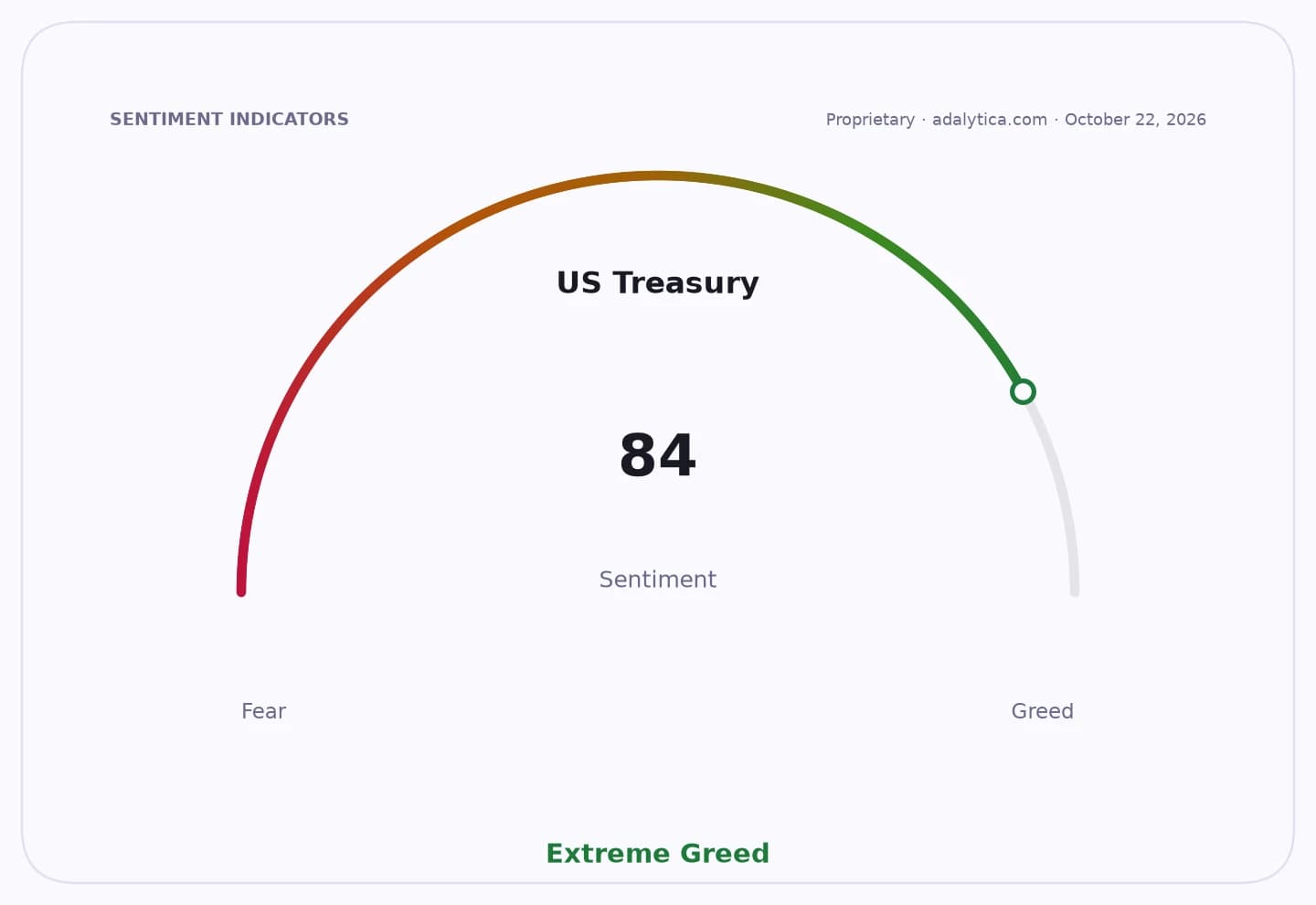
US Treasury
At current rates, the appeal of locking in Treasury income is obvious. Ten-year yields above 5% are far richer than the sub-2% real returns many savers saw for years, and that has made the case for early claiming sound more convincing to households trying to maximize cash flow. Yet the benefit from waiting on Social Security is also unusually powerful: claiming at 62 can cut a check by as much as 30% versus full retirement age, while waiting until 70 can lift it by about 77% from an age-62 level, before cost-of-living adjustments.
Sentiment Indicators
That difference matters because Social Security is not just income, but inflation-protected income for life. A retiree with a $2,000 monthly benefit at full retirement age would get roughly $1,400 at 62 and about $2,480 at 70. The later claim starts from a much higher base and then receives annual COLAs on top, which is a meaningful hedge if inflation stays sticky.
Treasury yields do not offer that same protection. With the 10-year note around 5.1%, and consumer prices still rising, the after-inflation buffer is only about 1.5% if inflation tracks recent readings. For older households, that gap is critical because retirement spending does not stop when the bond matures. On the provided data, the Consumer Price Index is still running at a mid-3% annual pace, while prices for households 62 and older rose 3.9% over the past year, meaning the real return on a Treasury ladder can be thinner than it appears.
The break-even question is therefore less about yield and more about lifespan, taxes and survivor protection. If the retiree lives into his 80s or beyond, waiting to claim can outweigh the foregone early checks, especially once COLAs compound on the larger base. The seed scenario’s claim that early checks can run out around age 82 assumes a bond return that looks attractive now but is still exposed to inflation risk and taxation.
Taxation is another overlooked drag. Treasury interest can make up to 85% of Social Security benefits taxable once other income is included, which can erode the advantage of pairing early benefits with bond income. For married households, the decision can also affect survivor benefits: claiming early permanently lowers the check available to the higher-earning spouse’s survivor, a risk that often matters more than maximizing cash flow in the first few years.
Markets are reinforcing the same tension. Long-duration Treasurys have been volatile, with TLT trading near 80.28 after a recent slide below both its 50-day and 200-day moving averages, and its relative strength index near 38.5, suggesting weak momentum rather than a clean trend. Adalytica’s Treasury-bond trade signal sits at neutral, but awareness is flagged at “extreme fear,” underscoring how quickly bond enthusiasm can swing when yields move.
The broader macro backdrop is mixed rather than decisive. The 10-year yield forecast in the data edges slightly higher to 5.168%, while the federal funds rate is near 3.89%, leaving term premium and inflation expectations as the real battleground. Confidence in the Fed’s 2% inflation target remains only neutral in the supplied signals, which argues for caution in assuming that today’s real yield will persist.
For investors, the takeaway is not that one choice is always better, but that the trade-off has become more balanced than it was when Treasury yields were near zero. High yields improve the case for early claiming, but only if inflation cools, the retiree does not live long, and taxes are manageable. If not, Social Security’s inflation-linked, lifetime payout still looks like the stronger annuity.
| Entity | Gains | Losses |
|---|---|---|
| Early Social Security claimers | ▲Near-term cash flow | ▼Lifetime monthly benefit |
| Delayed claimers to age 70 | ▲Larger inflation-adjusted check | ▼Years of forgone income |
| Treasury buyers | ▲Current high nominal yield | ▼Inflation erosion |
| Higher-earning spouses/survivors | ▲Larger protected survivor benefit from delay | ▼Permanently reduced survivor income |