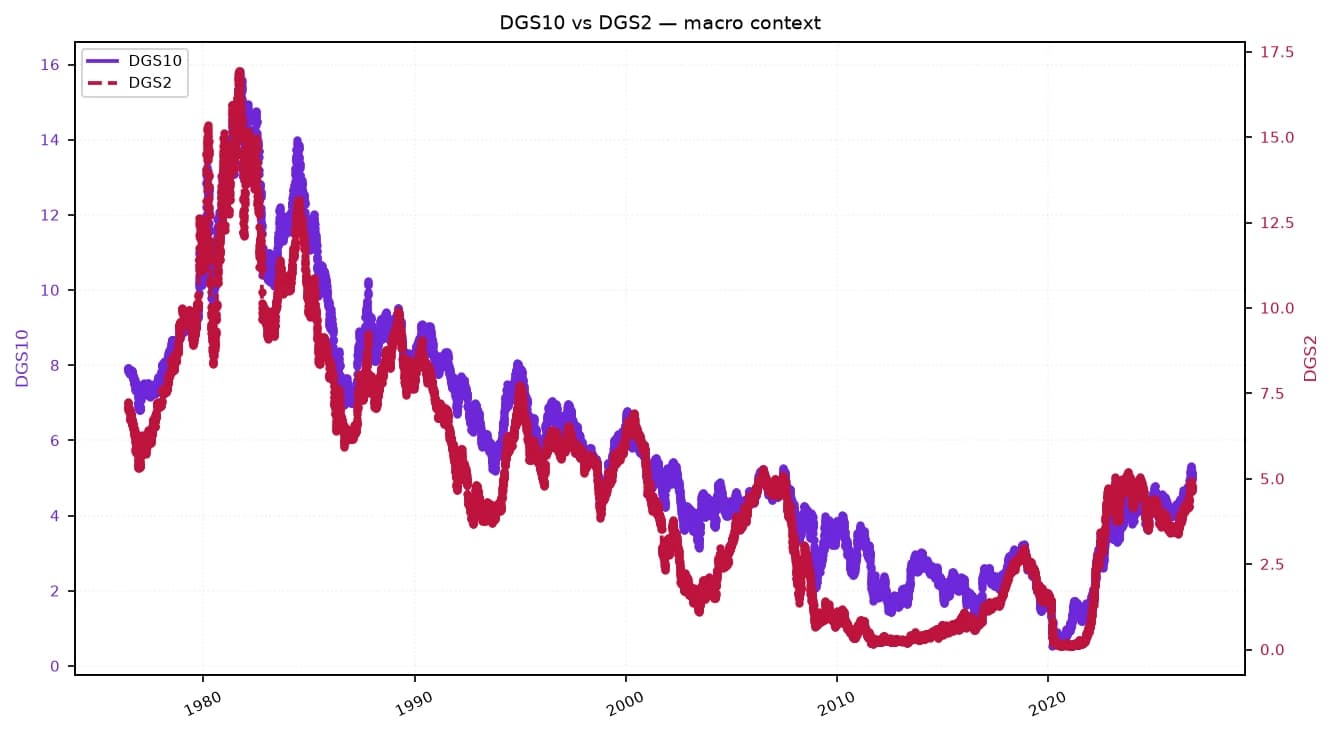
A 71-year-old investor’s urge to sell every stock and live off 10-year Treasuries is understandable with the benchmark yield above 5%, but the arithmetic weakens once taxes, inflation and future withdrawals are folded in.
Treasuries vs stocks in retirement income planning
US Treasury
The appeal is straightforward: Treasury yields have moved back into territory that has not been common for much of the past two decades, and retirees who lived through years of near-zero rates are rediscovering the comfort of government-backed income. With the 10-year note around 5.1%, $1.1 million could generate roughly $56,000 a year before tax, which, combined with $3,100 a month in Social Security, gets the household close to its current spending level of about $93,600 a year.
Sentiment Indicators
That is the case for the all-bond pivot. The stronger argument against it is that the income is not as clean as it looks. Selling the taxable brokerage account would realize about $150,000 of gains, creating a roughly $22,500 federal capital-gains bill at a 15% rate, before factoring in the 3.8% net investment income tax and the knock-on effect of higher Medicare premiums. Treasury coupons are exempt from state tax, but they are still taxed as ordinary income by the IRS, and the added interest can push more Social Security into the taxable column.
Inflation is the other leak in the plan. A fixed 5% coupon sounds attractive today, but if prices rise at even a modest pace, the real value of that income erodes over time. By year ten, the purchasing power of a $56,000 annual coupon stream would be materially lower, while spending needs are likely to keep climbing. Reinvestment risk also matters: in a decade, those bonds mature into whatever rate environment exists then, and current market moves show how quickly yields can reset.
DGS10 vs T10Y2Y — macro contextadalytica.com
Explore this data interactively — full history, time series and cross-market comparisons.
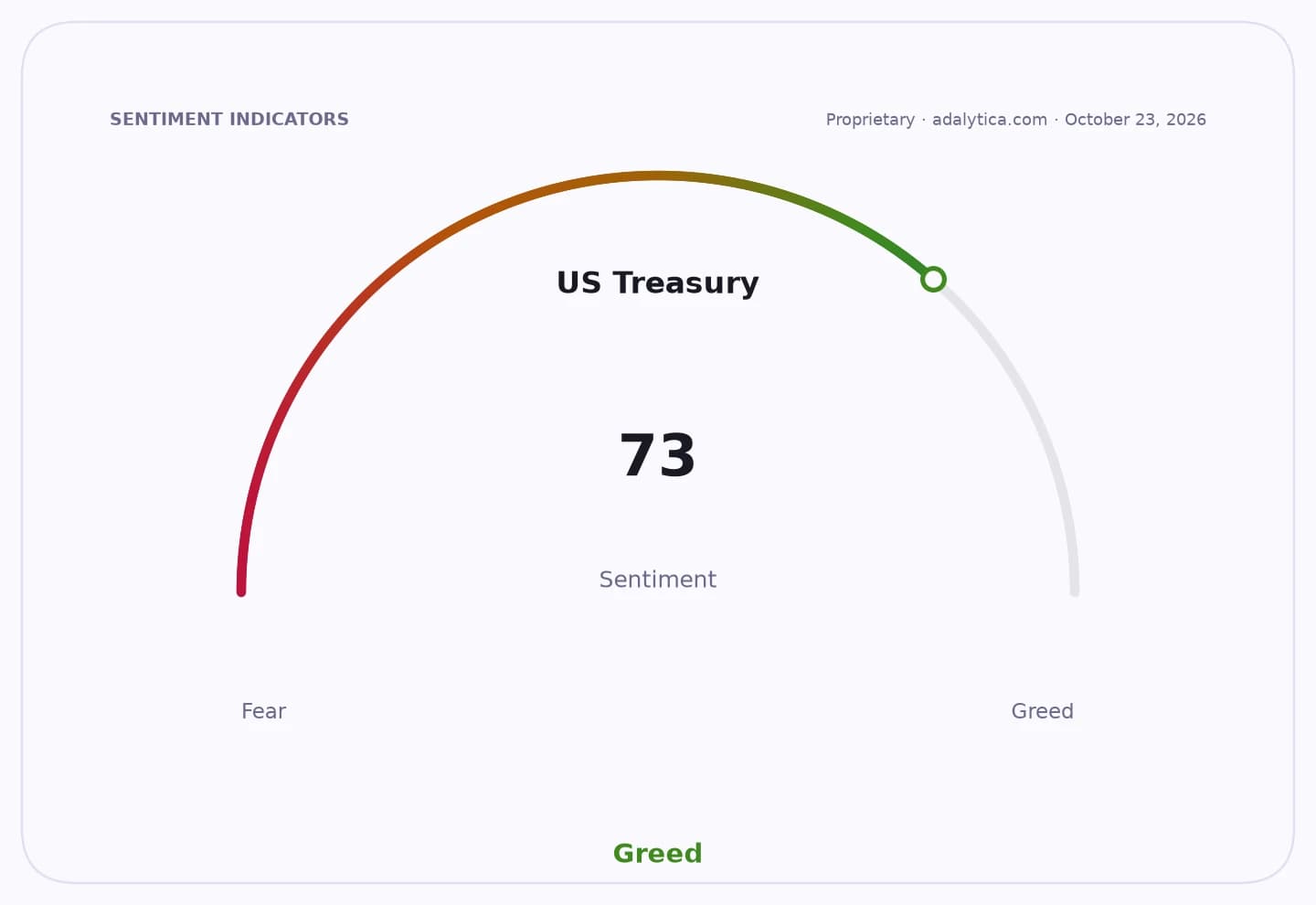
The broader point is that the “sell everything and buy Treasuries” instinct is often a reaction to market fear, not a complete retirement plan. The recent drop in Treasury yields has reinforced the safe-haven appeal of government debt, while Adalytica’s US Treasury bond trading signals show sentiment in greed territory even as awareness remains depressed, suggesting investors are crowding into the trade without fully appreciating the risks. A more durable approach is usually to keep appreciated stocks in the taxable account, place bonds and TIPS in tax-advantaged accounts, and preserve flexibility for required minimum distributions that begin at 73.
For investors, the story is not that Treasuries have stopped being attractive; it is that the yield on offer still has to survive the tax code, inflation and retirement distribution rules. That leaves the current income opportunity compelling, but not compelling enough to justify treating government bonds as a substitute for every other part of a retirement portfolio.
| Entity | Gains | Losses |
|---|---|---|
| Retiree in question | ▲Higher current income | ▼Taxes, inflation, RMDs |
| Treasury buyers | ▲Locked-in nominal yield | ▼Future reinvestment risk |
| Equity holders | ▲Possible step-up in basis | ▼Lower immediate certainty |
| IRS and Medicare system | ▲More taxable income | ▼— |