Some Italian pensioners will receive up to 154.94 euros extra in their December payment, a tax-free supplement that can materially lift household income for retirees on modest benefits but comes with strict earnings and pension limits.
Italy Pensioners Get Up to 154.94 Euro December Bonus
Consumer Spending
The so-called bonus tredicesima is paid automatically by Italy’s social security agency, INPS, alongside the December pension and year-end thirteenth-month installment, but only to recipients of contributory pensions that meet both income and benefit thresholds. For low-income retirees, the payment is small in absolute terms yet economically meaningful at a time when inflation has eroded purchasing power and household budgets remain under pressure.
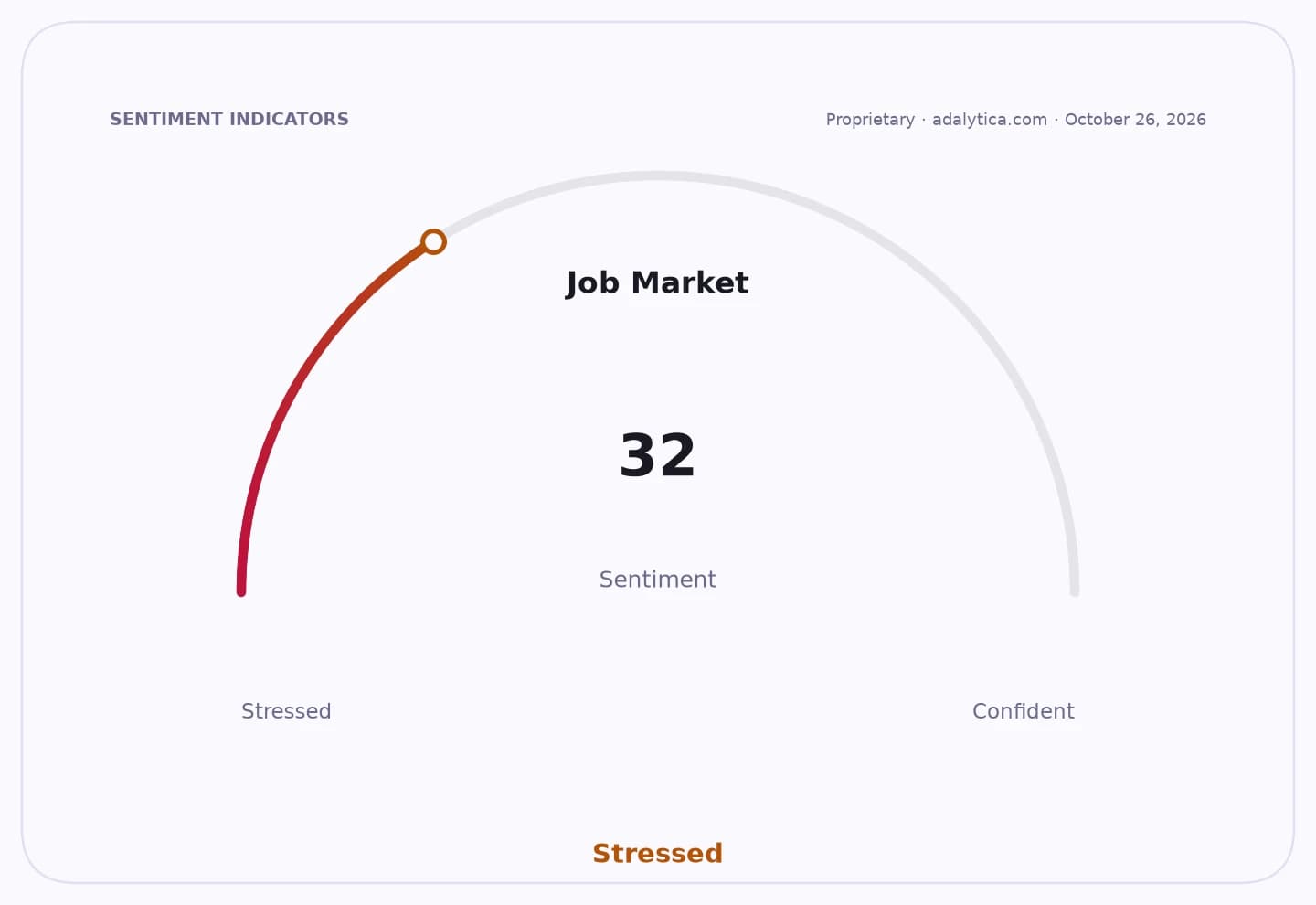
Sentiment Indicators
The rules are narrowly drawn. To qualify for the full 154.94 euros, annual pension income must not exceed 7,954.05 euros. The bonus then declines progressively until it disappears at 8,108.99 euros. Individual taxable income must stay below 11,931.08 euros, while married or civil-union households face a joint cap of 23,862.15 euros. All conditions must be met simultaneously, meaning a low pension alone does not guarantee eligibility.
That design matters because it channels aid toward the poorest pensioners while limiting leakage to higher-income households. INPS also checks whether beneficiaries receive contributory pensions such as old-age, early retirement, survivors’ and disability pensions, excluding social assistance benefits including the assegno sociale and civil invalidity payments. In practice, the measure is a targeted income transfer rather than a broad pension top-up.
For investors and policymakers, the bonus is not a market-moving fiscal event on its own, but it does speak to Italy’s wider distributional pressures and the government’s approach to protecting vulnerable consumers without materially widening spending. Any increase in disposable income for lower-income retirees can support year-end consumption, though the macro effect is limited by the narrow eligibility pool and modest payment size.
There is also an administrative angle. Because the supplement is awarded automatically from INPS records, incomplete or outdated income data can lead to missed payments, while later audits can trigger clawbacks if recipients were not entitled. That creates both a compliance burden and a reminder that even small welfare transfers are tightly monitored in a country where pension spending is already one of the largest items in the public budget.
For markets, the story is mainly about household cash flow rather than asset prices: the beneficiaries gain immediate purchasing power, while the fiscal cost remains contained. The broader takeaway is that Italy is still relying on highly targeted pension supplements to support the most fragile retirees, a pattern that should keep consumer spending at the low end of the income distribution resilient into the year-end period.
| Entity | Gains | Losses |
|---|---|---|
| Low-income pensioners | ▲Extra December cash | ▼None if eligible |
| INPS / state budget | ▲Targeted spending control | ▼Administrative complexity |
| Retailers serving retirees | ▲Slight year-end demand boost | ▼Limited impact elsewhere |
| Higher-income pensioners | ▲None | ▼No bonus eligibility |