Italy’s retail sector barely moved in September, underscoring how fragile household demand remains even as nominal sales held up on price effects and online spending.
Italy Retail Sales Flat in September
Istat said retail sales rose just 0.1% in value from August and were flat in volume, a sign that inflation is still cushioning turnover while physical quantities sold are not growing. The data matter because consumer spending is the largest pillar of domestic demand, and a stagnant retail backdrop can quickly feed through to weaker third-quarter growth, softer company revenues and a less supportive environment for Italy’s recovery.
Sentiment Indicators
The split between nominal and real sales was the key takeaway. Food sales were unchanged in value and fell 0.3% in volume, while non-food sales rose 0.3% in value and 0.1% in volume. Over the third quarter, however, retail sales fell 0.3% in value and 0.5% in volume, showing that September’s stabilization was not enough to reverse a broader quarterly slowdown.
That matters for investors because it points to a consumer that is still trading carefully rather than spending broadly. The biggest gain inside non-food came from IT, telecommunications and phone equipment, up 5.7% in value year on year, while online sales remained the clear outperformer, rising 8.5% in value and 7.1% in volume from a year earlier. By contrast, clothing and fur goods declined 0.6% in value, suggesting discretionary categories remain under pressure.
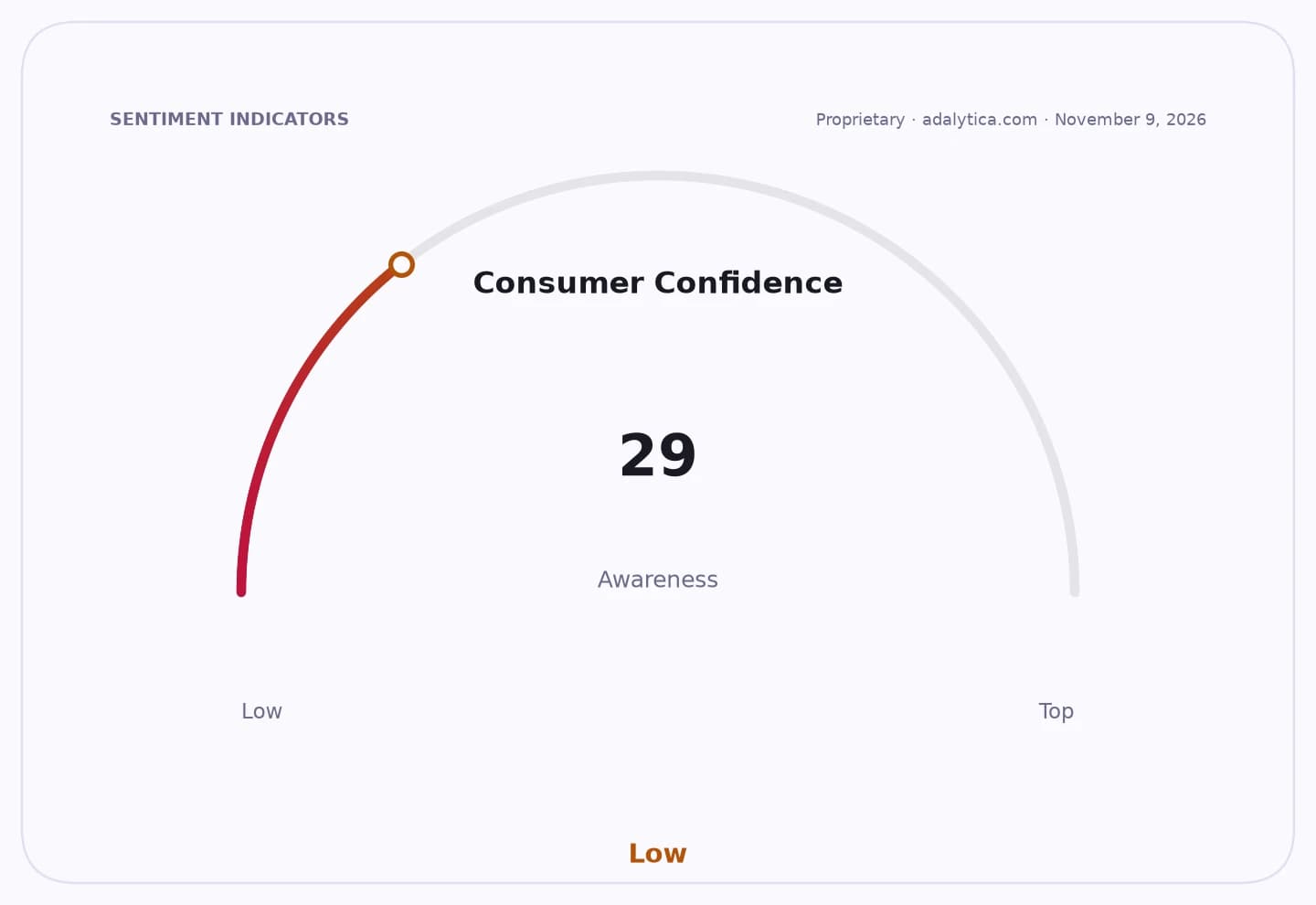
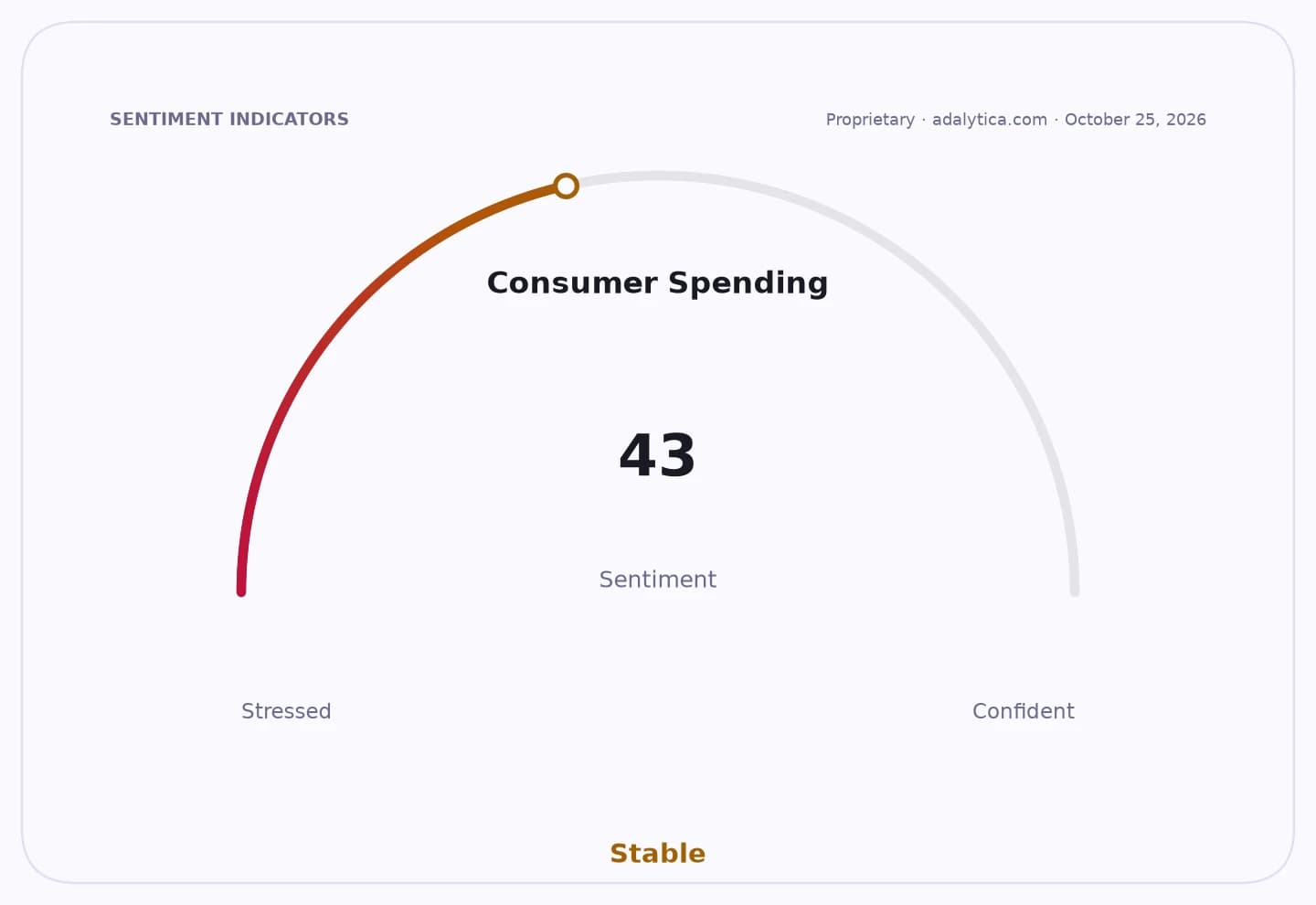
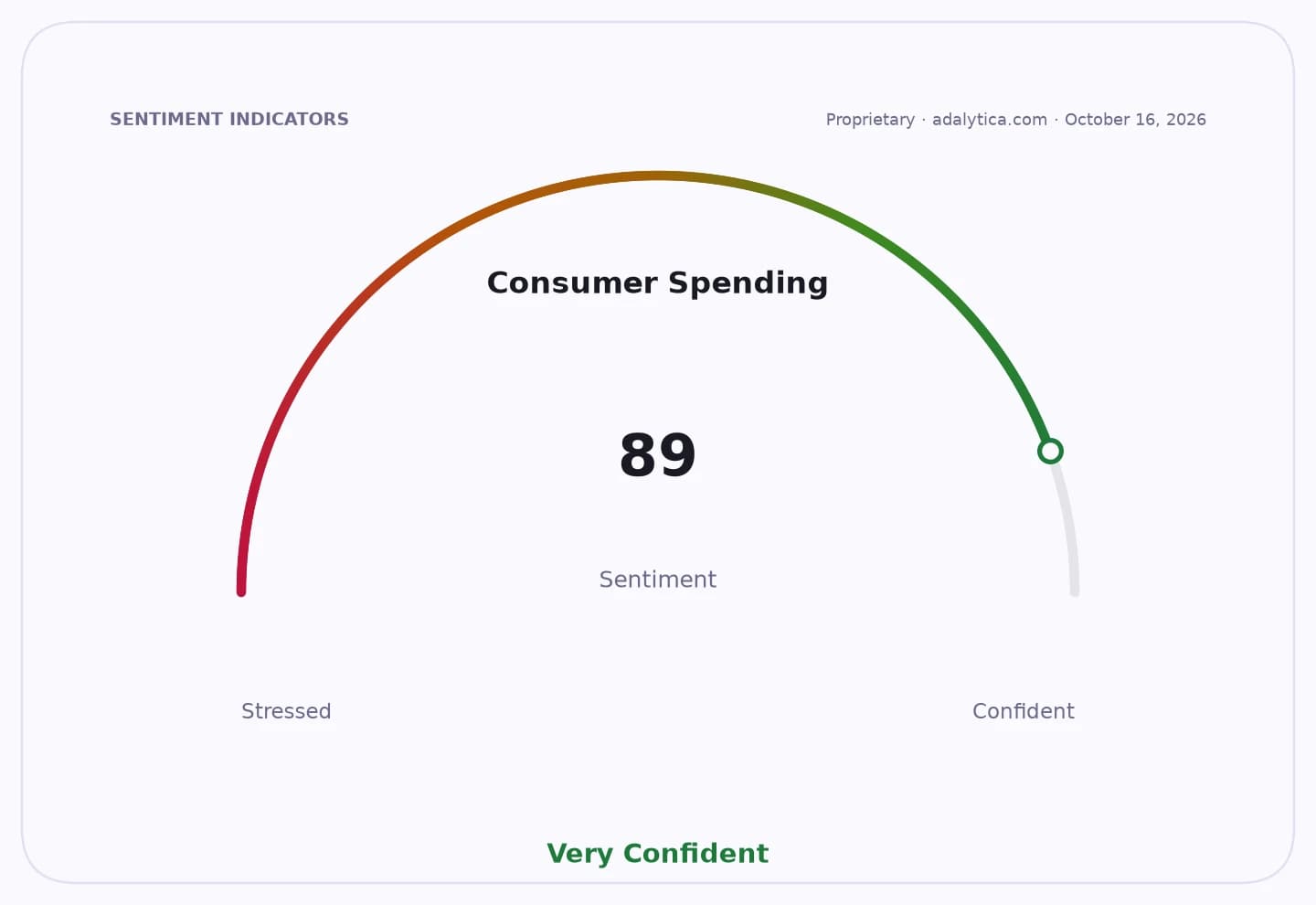
For retailers, the message is mixed. E-commerce and higher-ticket electronics continue to capture demand, but the weakness in food volumes and the quarterly decline across both food and non-food indicate that traffic is not improving enough to support a broad-based rebound. That aligns with a more cautious consumer backdrop reflected in proprietary Adalytica consumer spending sentiment, which shows extreme fear in recession-related confidence readings.
The data also fit a wider Italian growth picture in which industrial and household demand are not yet firing on all cylinders. As long as volume growth stays negative, retailers will struggle to expand margins through higher unit sales alone, leaving them reliant on mix, promotions and online channels. The next read-through will be whether autumn spending and the holiday season can lift volumes, or whether September proves to be another pause in a still-soft consumer cycle.
| Entity | Gains | Losses |
|---|---|---|
| Online retailers | ▲Stronger sales growth | ▼Bricks-and-mortar traffic |
| Electronics sellers | ▲Higher demand for IT and telecom goods | ▼Clothing retailers |
| Italian consumers | ▲Some price support from nominal stability | ▼Real purchasing power |
| Domestic retailers | ▲Limited value growth | ▼Volume-driven expansion |