Italy’s Treasury has taken a meaningful step to smooth its funding profile, buying back nearly 5 billion euros of BTPs due in 2029 in a move that trims near-term rollover pressure and signals a willingness to use market operations to shape the sovereign curve.
Italy Treasury buys back 2029 BTPs
That matters because 2029 is a heavy maturity year for Italian debt, and reducing outstanding supply in that bucket can help stabilize financing conditions for the state while supporting the market value of the remaining bonds. In a higher-yield world, sovereign debt management is not just housekeeping: it is a tool for limiting refinancing risk, preserving flexibility and lowering the chance that investors demand a bigger risk premium.
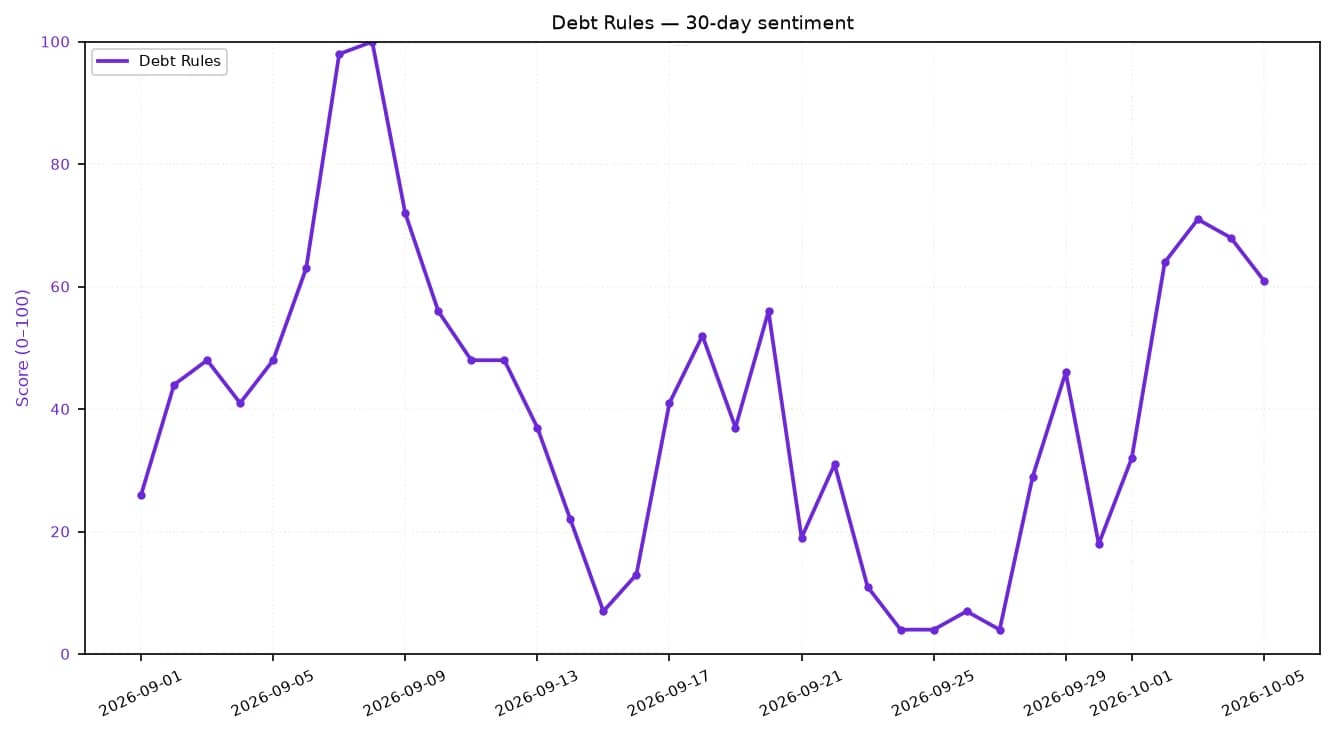
Sentiment IndicatorsⓘProprietary · adalytica.com · October 6, 2026
This is a snapshot — live sentiment, awareness and momentum for 130+ markets update continuously in the dashboard.Open AlphaPulse
The Treasury said it repurchased three 2029 issues through a competitive auction reserved for specialists, with the maximum envelope set at 5 billion euros. It bought 1.519 billion euros of the January 15, 2029 bond, 1.727 billion euros of the February 15, 2029 bond and 1.754 billion euros of the March 15, 2029 bond. Combined, that brings the total close to the authorized ceiling and leaves less paper outstanding in a maturity cluster that investors will continue to watch closely.
The bid-to-cover ratios show there was still ample supply available from dealers and holders willing to tender paper, with coverage of 2.25 times for the January line, 1.74 times for the February bond and 2.09 times for the March issue. That suggests the operation was executed efficiently, without signs of stress or forced liquidation.
For investors, the message is straightforward: Italy is actively managing its liability structure at a time when sovereign borrowers must compete for capital in a market still shaped by elevated global yields. The 10-year U.S. Treasury yield has hovered around 5.3%, keeping the global funding backdrop tight and making duration management more valuable. In Europe, that kind of backdrop tends to reward issuers that can reduce future supply, especially in concentrated maturity buckets.
The buyback also fits a broader pattern across Europe, where governments are using secondary-market operations, syndications and liability management to fine-tune borrowing costs and improve market liquidity. For BTP holders, this can be supportive for the bonds not included in the buyback, while potentially compressing liquidity in the specific lines the Treasury just reduced.
The tradeable implication is clear: sovereign debt investors should watch whether Rome follows this operation with more liability management around other clustered maturities. If it does, the Treasury can make the debt curve easier to finance and less vulnerable to abrupt swings in investor sentiment. In a market still sensitive to fiscal credibility, that is exactly the kind of step that can matter more than the headline size suggests.
| Entity | Gains | Losses |
|---|---|---|
| Italian Treasury | ▲Lower rollover pressure | ▼Less cash flexibility |
| Holders of remaining BTPs | ▲Scarcer supply, firmer prices | ▼Lower liquidity |
| Dealer specialists | ▲Fee-generating auction flow | ▼Inventory risk |
| Investors needing 2029 paper | ▲Cleaner maturity profile | ▼Fewer bonds available |