Russia remains embedded in the world’s biggest fusion experiment even as the European Union tries to harden its economic and technological defenses against Moscow, underscoring how strategic science projects can outlast sanctions politics and shape the next phase of energy investment.
ITER Russia role in EU fusion strategy
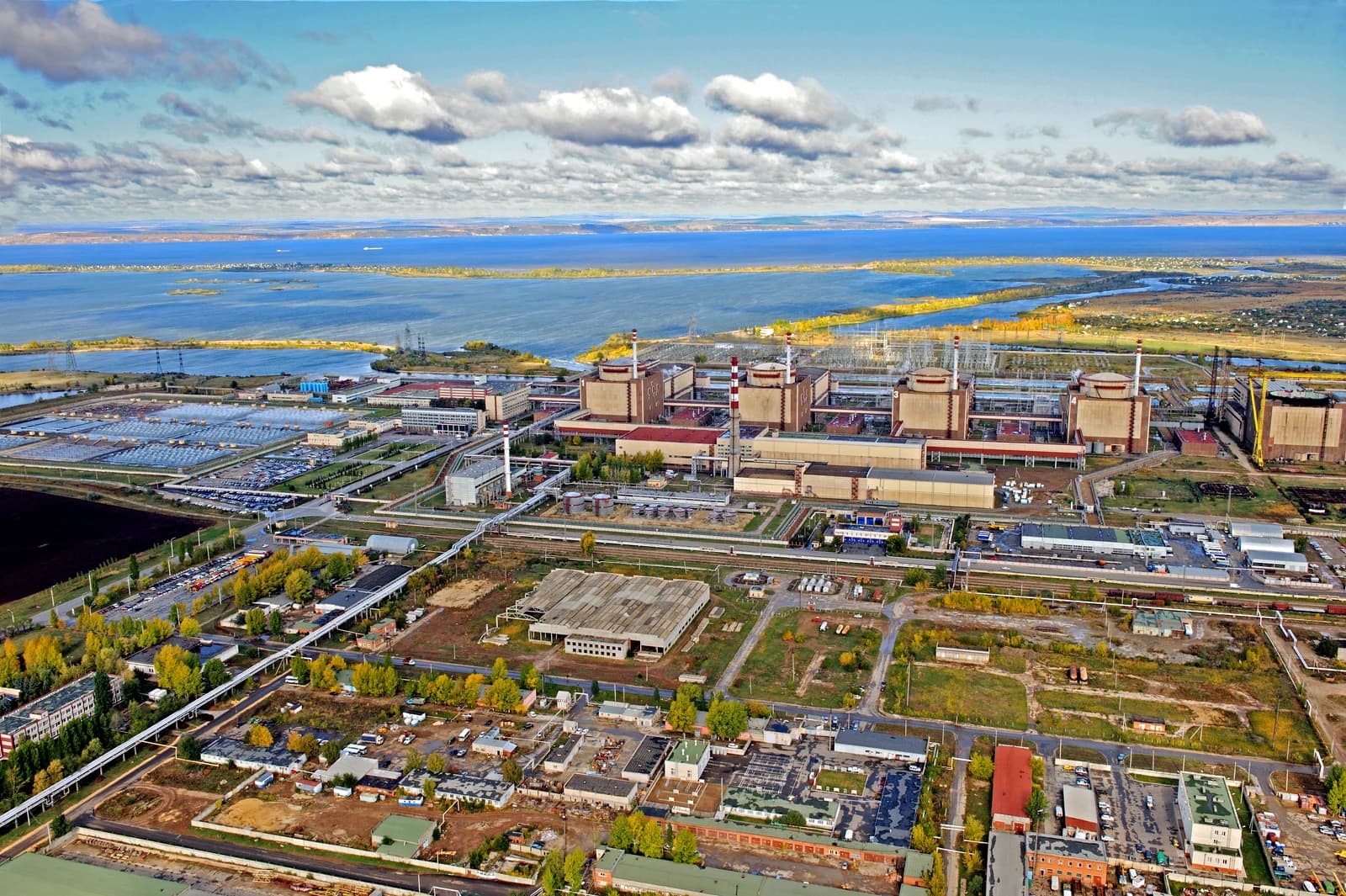
The issue matters because ITER is no symbolic research club. It is the flagship international effort to prove fusion can become a viable low-carbon power source, and Europe has already committed the largest share of construction funding at 45.6%. With Brussels preparing a new fusion strategy and setting aside 330 million euros to accelerate the sector, the bloc is effectively trying to build an industrial future around a project that still depends on Russian participation, parts and know-how.
Russia contributes 9.1% to ITER and continues to supply highly specialized equipment, including the PF1 poloidal field coil and gyrotrons used to heat plasma. That makes Moscow not just a financial participant but a technology counterpart in a system where components from Europe, Russia and China have to fit into a single machine. ITER officials say all activities are proceeding within applicable legal and regulatory requirements, and the project’s rules do not allow members to be expelled.
For policymakers, that creates a difficult trade-off. The EU has suspended Russia from major research schemes such as Horizon Europe, Euratom and Erasmus+ and cut back wider scientific ties since the invasion of Ukraine. Yet ITER sits outside that clean break. The European Commission’s own language, reflected in a July Council document, pointed only to continued collaboration with the ITER organization and partners, while avoiding any direct reference to Russia.
That tension is now becoming a strategic question for Brussels rather than a diplomatic footnote. EU lawmakers have pressed Energy Commissioner Dan Jørgensen on whether the bloc should phase out dependence on Russian involvement in ITER. Jørgensen’s reply — that the founding rules prevent exclusion and only allow voluntary withdrawal — leaves Europe managing a contradiction at the heart of its fusion push: a technology it wants to turn into an engine of energy independence still relies on an adversary for critical inputs.
For investors, the near-term market impact is indirect but real. The fusion sector is moving from pure science toward a policy-backed industrial race, and that should support demand for specialized engineering, nuclear systems, cryogenics, power electronics and fuel-cycle services. Companies exposed to advanced nuclear supply chains may benefit if Brussels turns its new strategy into procurement, grants and demonstration funding. But the Russia factor also adds execution and governance risk, especially if geopolitical friction disrupts supply chains or forces redesigns of components already tied into ITER’s multinational architecture.
The bull case for ITER is that the project’s long horizon and technical complexity make continuity more important than political symbolism. Supporters argue that decades of sunk costs, embedded supply chains and scientific expertise would be difficult to replace, and that keeping the project intact preserves Europe’s chance to lead a future fusion industry. The bear case is that continued reliance on Russian technology weakens the EU’s claim to strategic autonomy and could delay cleaner industrial choices if policymakers hesitate to confront the dependency.
The wider narrative is that fusion is no longer just a laboratory ambition. It is becoming part of Europe’s energy-security agenda, and that puts ITER at the intersection of climate policy, industrial strategy and geopolitics. As Brussels finalizes its fusion roadmap, investors will be watching whether the bloc doubles down on the existing multinational model or starts building a more politically controlled supply chain for the next generation of nuclear technology.
| Entity | Gains | Losses |
|---|---|---|
| EU fusion backers | ▲Long-term decarbonization agenda | ▼Near-term strategic autonomy |
| Russia / ITER scientists | ▲Continued project access | ▼Sanctions isolation in research |
| Fusion suppliers | ▲New funding and procurement | ▼Supply-chain redesign risk |
| Investors in advanced nuclear | ▲Policy support for sector | ▼Geopolitical execution risk |