One year after Prime Minister Sanae Takaichi told parliament that a Taiwan contingency could amount to a “survival-threatening situation,” Japan and China are still locked in a sharper geopolitical standoff that is testing trade, diplomacy and regional security.
Japan-China Standoff Hits EWJ, FXI and TWN
The anniversary lands as Beijing keeps pressure on Tokyo through economic and security channels, while Japan leans more heavily on U.S. backing to deter further Chinese coercion. That matters for investors because the dispute reaches well beyond rhetoric: it can disrupt tourism, tighten access to critical minerals and add another layer of risk to Asia supply chains already exposed to export controls and trade fragmentation.
Sentiment Indicators
China responded to Takaichi’s remarks with travel curbs and stronger limits on exports of rare earths and other strategic minerals, underscoring how quickly political friction can spill into commerce. Beijing has also kept up its narrative attack, accusing Japan of “new militarism” and trying to shape international opinion against Tokyo’s defense buildup.
Tokyo has pushed back while keeping channels open. Former Foreign Minister Toshimitsu Motegi, responding to comments by Chinese Foreign Minister Wang Yi in Germany in February, said Japan’s record of contributing to international peace and stability was widely known. The message reflects Japan’s balancing act: avoid a complete diplomatic rupture, but rely on the U.S. alliance as the main check on China.
Markets have been forced to price that tension into Japan-related exposure. The iShares MSCI Japan ETF, EWJ, fell to $91.47 on Nov. 12 from $97.93 on Sept. 25, while the iShares China Large-Cap ETF, FXI, slid to $33.48 from $39.17 over the same broad period, showing how geopolitical strain and weaker sentiment can hit regional risk assets at the same time. The Taiwan ETF, TWN, has also been volatile, dropping to $83.97 on Nov. 12 from $103.15 on Sept. 11 after a sharp swing in the past two months.
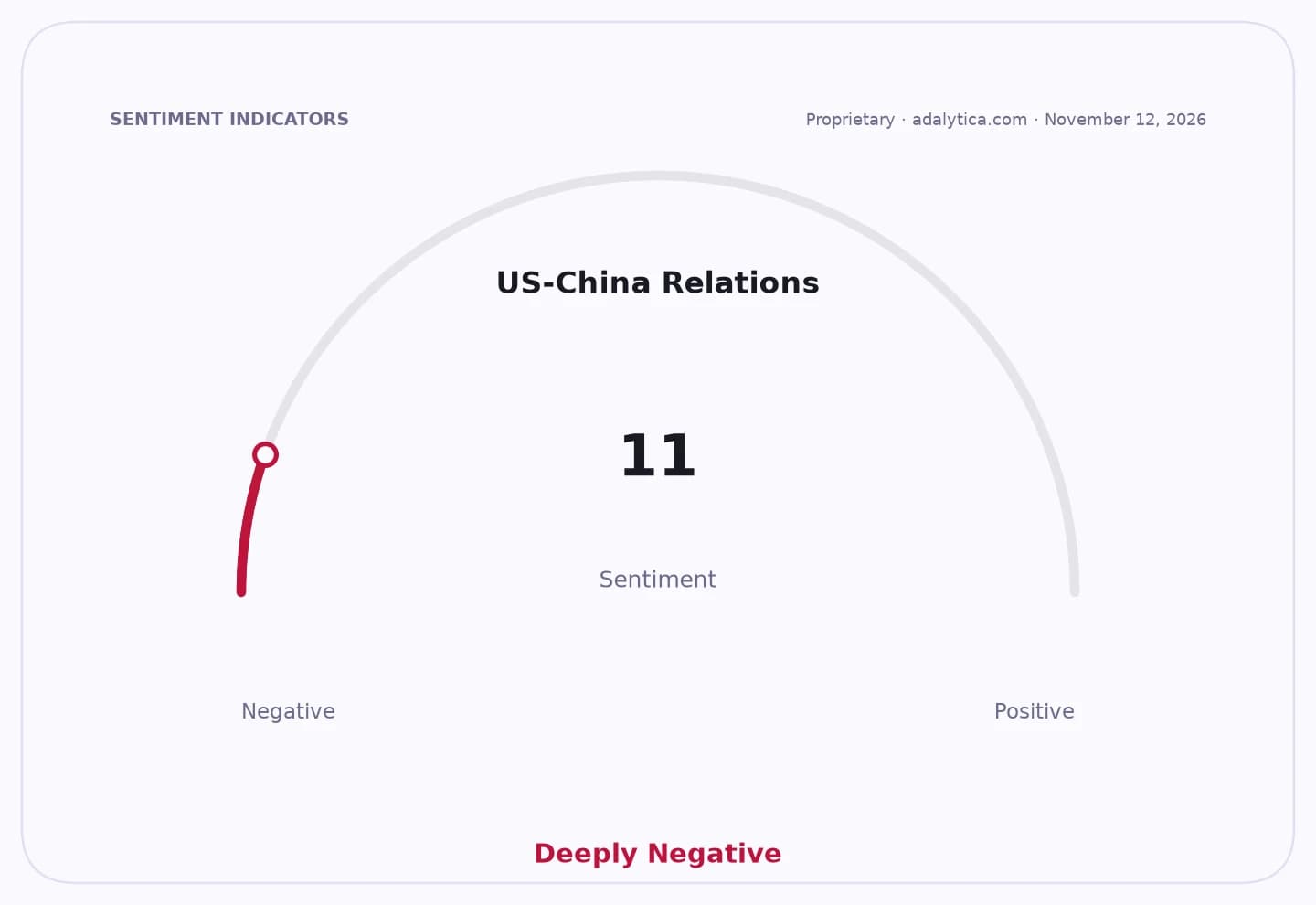
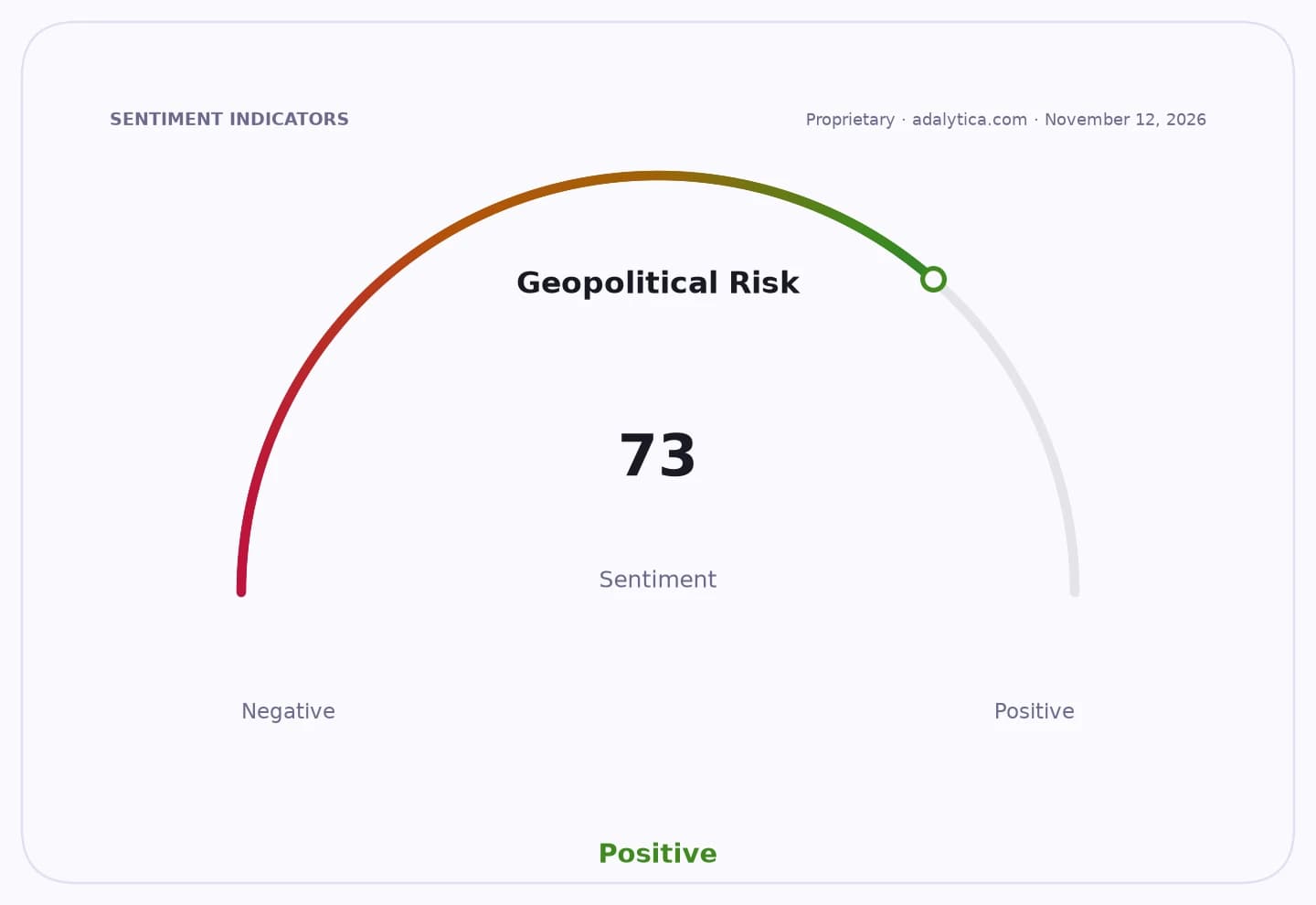
Adalytica’s US–China Relations Sentiment gauge is in “Extreme Fear” at 11, down 64 points in a week and 74 points over 30 days, while its Global Stability Sentiment sits at 73, suggesting markets remain prone to sudden swings even if headline risk briefly eases.
For investors, the key question is whether Tokyo’s security posture and Washington’s next move keep deterring Beijing—or whether a change of heart in the White House could leave Japan more exposed. The next catalyst is Takaichi’s expected engagement with China around the APEC summit, which could either reopen dialogue or deepen the standoff.
| Entity | Gains | Losses |
|---|---|---|
| Japan | ▲U.S. security backing | ▼Trade and tourism stability |
| China | ▲Leverage through coercion | ▼Regional trust and optics |
| U.S. alliance | ▲Deterrence credibility | ▼Diplomatic flexibility |
| EWJ / Japan equities | ▲Any de-escalation | ▼Prolonged bilateral strain |