One year after Sanae Takaichi’s comments on a Taiwan emergency ignited a political rupture with Beijing, the real damage is now showing up in Japan’s supply chains, and investors are underestimating how quickly that can turn into a pricing and profit problem.
Japan Supply Chains Face China Export Controls
US-China Relations
The most important development is not the rhetoric itself but the growing economic leverage China is willing to apply. Japanese analysts say the relationship has deteriorated further, with Beijing tightening rare-earth export controls and signaling it can choke off other critical inputs as well, including basic materials used in pharmaceuticals. That matters because it pushes the dispute beyond diplomacy and into the operating costs of Japanese industry, where a sudden shortage can interrupt production, raise procurement expenses and force companies to rework sourcing strategies.
Sentiment Indicators
This is exactly the kind of geopolitical friction that markets tend to misprice until it becomes unavoidable. Japan’s dependence on China for strategic inputs means the country is exposed not only to headline risk but to a structural supply-chain tax that can linger for years. The vulnerability is broader than rare earths. If China can restrict materials tied to medicines and industrial production, then the confrontation becomes a margin issue for manufacturers, a resilience issue for healthcare firms and a policy issue for Tokyo.
For investors, that creates a clear two-sided trade. Japanese companies with diversified sourcing, domestic capacity or exposure to alternative supply chains should command a premium as businesses and governments pay up for security. Companies and sectors still tied to China’s industrial ecosystem face a more fragile earnings outlook, especially if tensions escalate again around Taiwan or maritime disputes. The market is likely to keep rewarding resilience and punishing dependence.
That helps explain the uneven performance in Japan-linked funds. The iShares MSCI Japan ETF, EWJ, has held above its 200-day moving average but has slipped below its 50-day average, a sign that sentiment is softening even as the broader long-term trend remains intact. The iShares China Large-Cap ETF, FXI, is trading below both its 50-day and 200-day moving averages, reflecting persistent skepticism toward Chinese assets. Neither chart captures the full policy risk, but both show that investors are already leaning cautious as the diplomatic backdrop worsens.
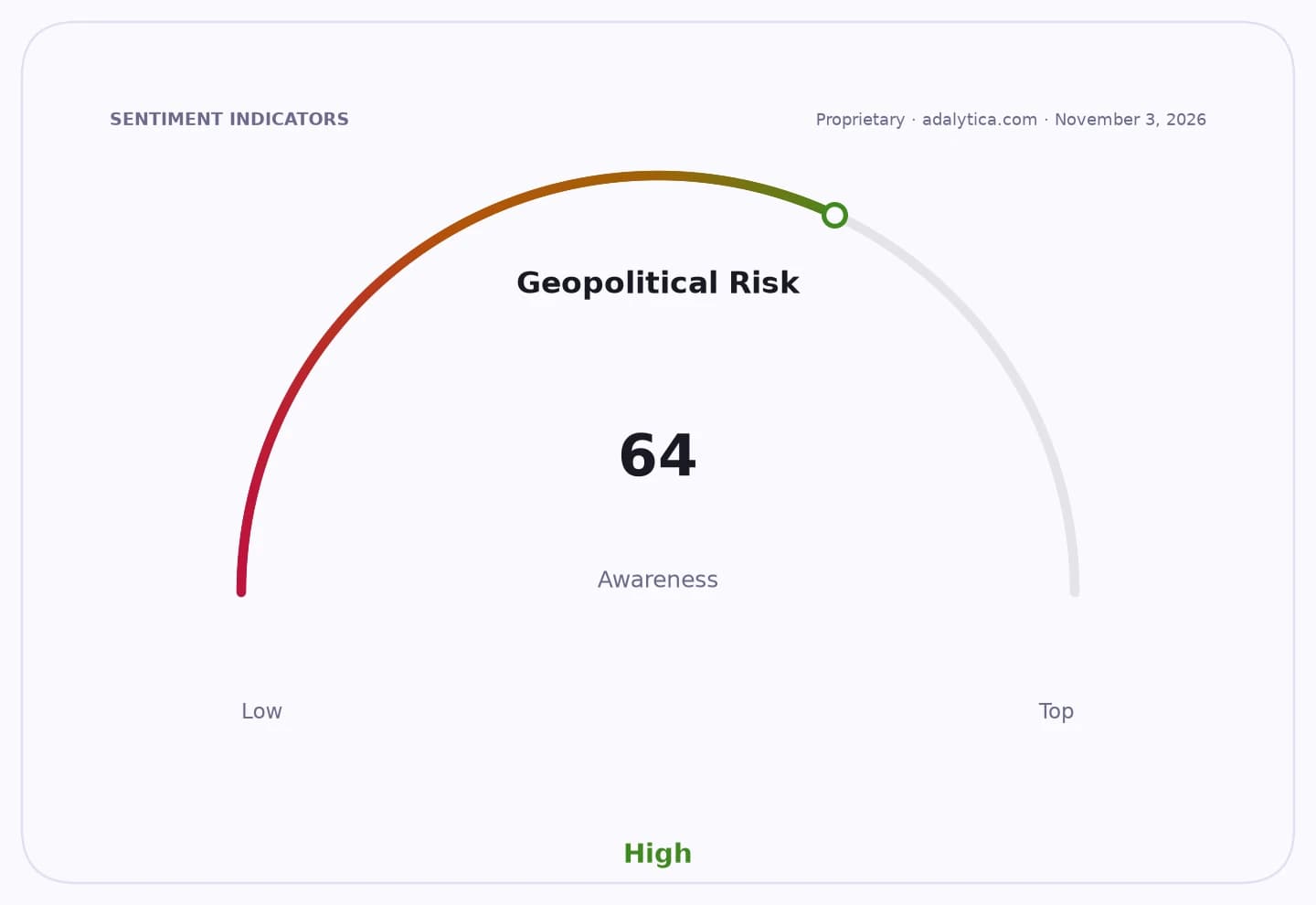
Adalytica’s US-China relations gauge also points to extreme fear, underscoring how quickly geopolitical stress can spill into cross-border markets. That should keep defense, supply-chain reshoring, critical minerals and industrial automation on investors’ radar. The companies that help Japan reduce exposure to Chinese inputs — from alternative material suppliers to logistics, recycling and domestic manufacturing enablers — may be the best way to play the next phase of this story.
The lesson is simple: this is no longer just a bilateral feud. It is a slow-moving economic decoupling with very investable consequences, and the longer Tokyo and Beijing remain locked in this posture, the more capital will flow toward supply-chain independence and away from assets vulnerable to Chinese retaliation.
| Entity | Gains | Losses |
|---|---|---|
| Japan firms with diversified supply chains | ▲Pricing power, resilience premium | ▼None from source dependence |
| Chinese exporters of strategic inputs | ▲Leverage in negotiations | ▼Lost trust, retaliation risk |
| EWJ / Japan equities | ▲Support from reshoring themes | ▼Margin pressure from supply shocks |
| FXI / China equities | ▲Short-term volatility trading | ▼Persistent geopolitical discount |