Japan’s plan to spend as much as 80 trillion yen, or about US$508 billion, on defence over five years would mark the sharpest upgrade in its postwar military posture in decades and signals to China that Tokyo is preparing for a prolonged regional security contest, not a short-term diplomatic reset.
Japan Defense Plan Could Reach 80 Trillion Yen
If approved, the build-out would nearly double the current five-year programme and give Japan a more capable force centered on drones, artificial intelligence-led battlefield management, cyber, space and long-range strike — areas that matter because they change how quickly Japan can detect, absorb and respond to pressure around Taiwan, the East China Sea and its own island chain.
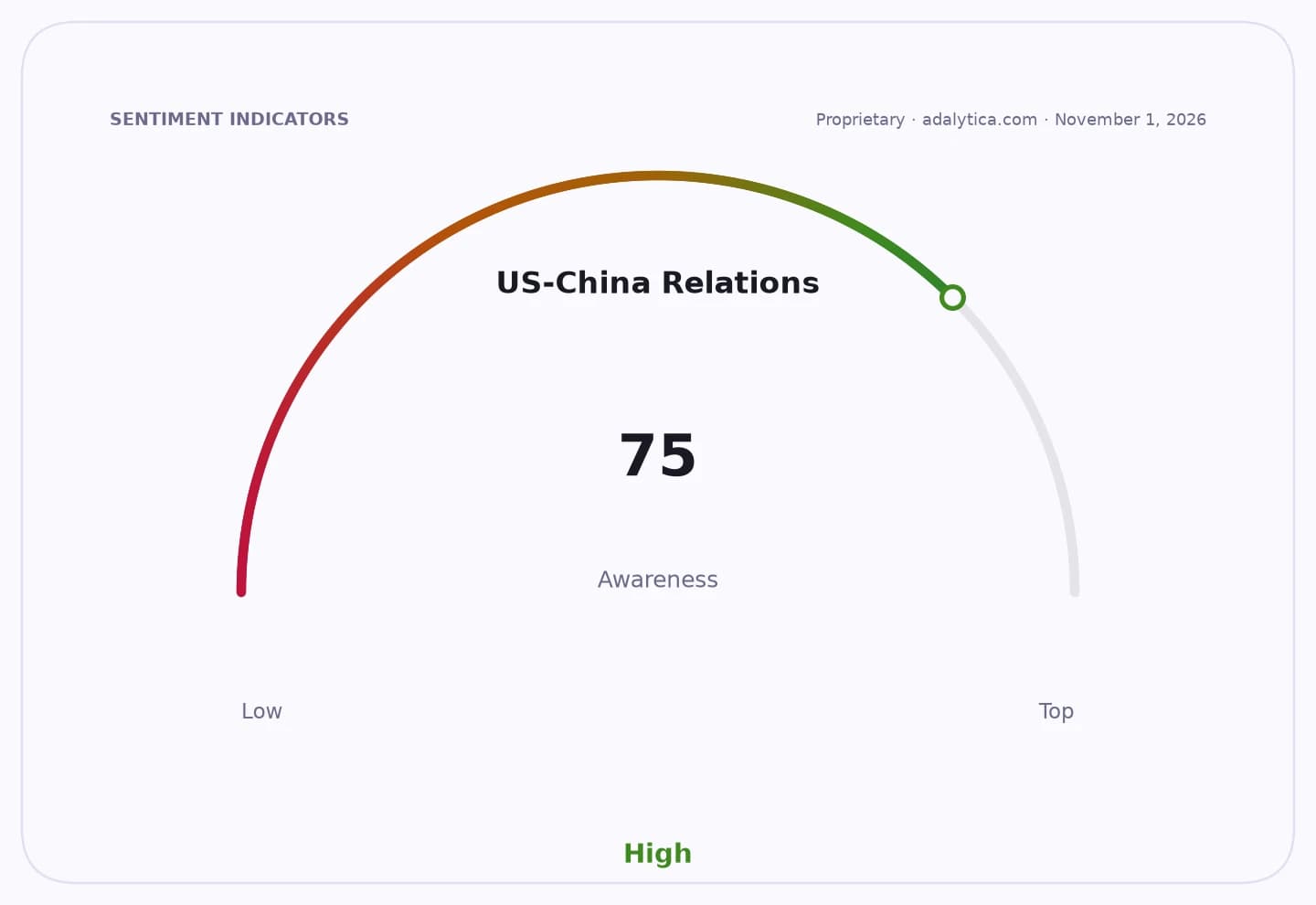
Sentiment Indicators
The economic significance is twofold. First, it would lock in a large, multi-year public spending programme at a time when Japan is already grappling with higher bond issuance and fiscal constraints. Second, it would accelerate a reallocation of industrial capacity toward advanced defence electronics, missile systems, satellites and autonomous platforms, creating domestic winners while reinforcing the broader Western security supply chain.
For investors, the implication is that Japan’s defence rearmament is becoming a structural theme rather than a one-off headline. Shares of UK-based BAE Systems, Lockheed Martin and Northrop Grumman have all shown that the market is willing to pay for long-duration defence demand when geopolitical risk rises, though recent price action also shows how quickly these stocks can pull back when expectations get ahead of orders or timing. The conventional technical indicators on some of those names have recently cooled from overbought levels, underscoring that the sector remains volatile even as the strategic backdrop improves.
The timing matters because Tokyo is revising its three core national security documents by year-end, giving the government a policy window to embed a more assertive force structure. Officials and analysts say the package is designed not just to buy more equipment, but to improve survivability in a conflict environment where satellite disruption, missile salvos and cyberattacks could determine whether Japan can sustain operations long enough for allied support to arrive.
That is the message for Beijing. A better-armed Japan does not just complicate Chinese military planning; it also raises the cost of coercion below the threshold of war by making deterrence more credible around Taiwan, the Senkaku Islands and the broader western Pacific. China’s policy direction, as captured by Adalytica’s China CCP Policy Direction Sentiment gauge, remains neutral overall, but the recent drop in awareness suggests investors are not yet pricing a full recalibration in Beijing’s response, even as the strategic stakes rise.
The bull case for Japan’s defence push is that it strengthens deterrence, deepens alliance interoperability with the United States and South Korea, and supports a domestic defence-industrial base that has long been underinvested. The bear case is that the spending plan becomes politically contentious, fiscally heavier than expected, and operationally slow if procurement, integration and manpower constraints prevent Japan from translating budget growth into real capability.
For markets, the key catalyst is whether negotiations over the five-year package turn the current reports into a formal commitment. If they do, contractors with exposure to missiles, sensors, satellite systems and command-and-control software could benefit from a longer revenue runway, while China-facing supply chains and regional risk premiums could face renewed scrutiny.
| Entity | Gains | Losses |
|---|---|---|
| Japan’s defence industry | ▲multi-year procurement boost | ▼capacity and execution pressure |
| China’s military planners | ▲— | ▼higher deterrence cost |
| Defence contractors | ▲larger order pipeline | ▼valuation volatility |
| Regional investors in Japan security themes | ▲clearer growth catalyst | ▼fiscal and policy uncertainty |