Japan is trying to prevent a diplomatic rupture with China after a senior Tokyo envoy was expelled over remarks Beijing condemned as effectively calling for a “beheading,” underscoring how quickly the dispute is now bleeding into trade, travel and investor sentiment.
Japan-China dispute raises trade and travel risks

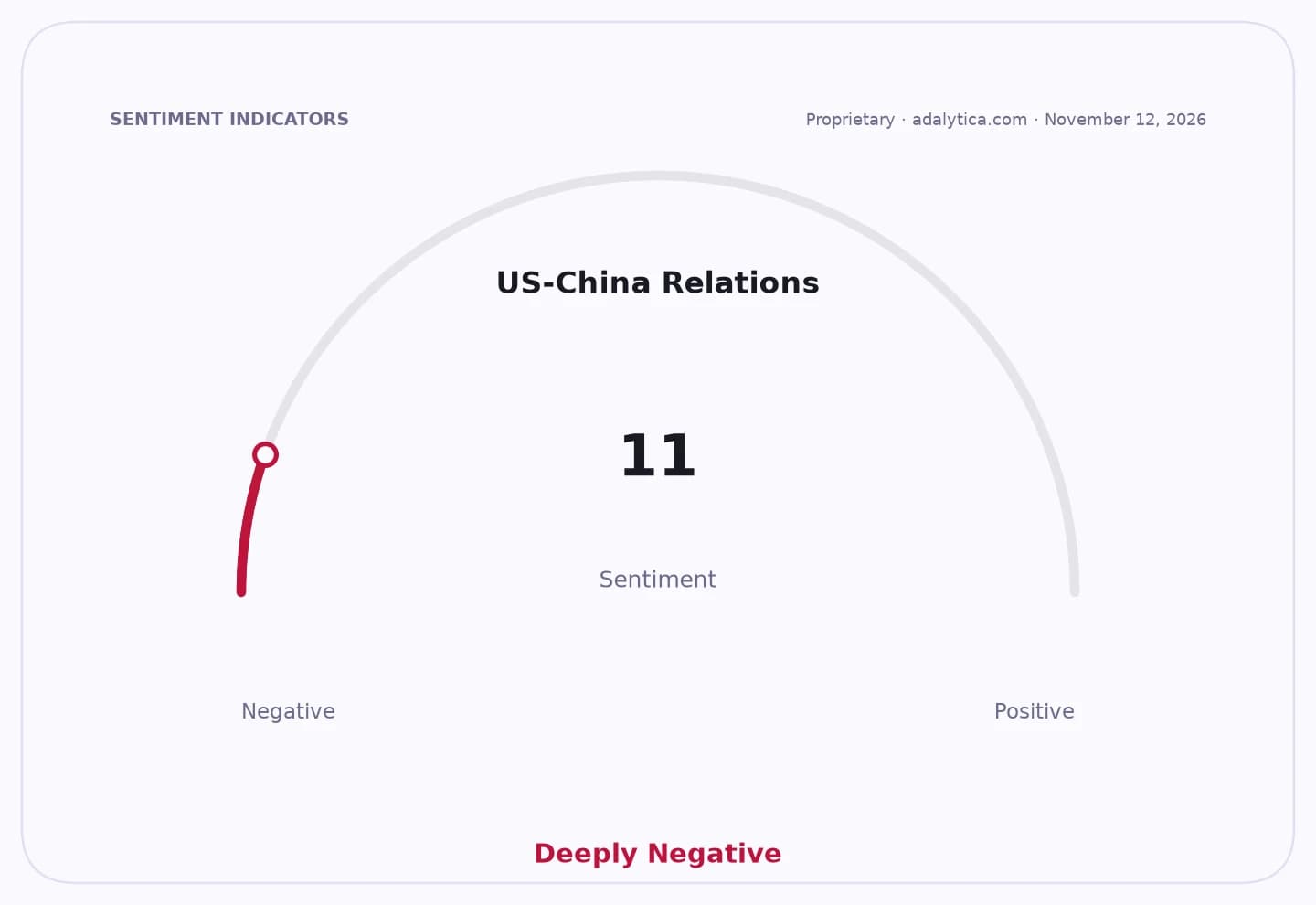
The standoff matters because Japan and China remain deeply entwined across supply chains, tourism and financial markets, and the latest escalation adds another layer of risk at a time when U.S.-China relations are already under heavy strain. Adalytica’s US–China Relations Sentiment gauge is at 4.0, or “Extreme Fear,” while its awareness reading is still elevated at 71, suggesting the confrontation is commanding attention even as sentiment deteriorates sharply.
Sentiment Indicators
Geopolitical Risk
Tokyo has been pushing for dialogue, but Beijing has rejected the overture, keeping the episode alive and raising the chance of further retaliatory measures. Such exchanges tend to spill beyond diplomacy, often affecting Japanese companies with China exposure, inbound tourism, consumer demand and broader regional risk appetite.
That is showing up in market proxies for Japan-linked geopolitical stress. The yen-focused iShares Currency Hedged MSCI Japan ETF, ticker FXY, has been choppy, last trading at 57.26 after slipping below its 50-day moving average of 58.23 and 200-day moving average of 57.85, with RSI readings around 28.7 signaling the fund has moved into technically oversold territory.
Investors are watching whether the dispute remains confined to rhetoric or widens into concrete economic measures. A prolonged freeze could hit Japanese exporters, pressure hospitality and retail names reliant on Chinese demand, and reinforce the broader risk-off tone already hanging over Asia.
The near-term catalyst is whether both governments keep the channel open or let the row deepen into another round of sanctions, visa restrictions or trade friction.
| Entity | Gains | Losses |
|---|---|---|
| Japan hardliners | ▲Domestic support | ▼Trade stability |
| China leadership | ▲Nationalist leverage | ▼Bilateral trust |
| Japanese exporters | ▲None | ▼China demand |
| Investors in Asia risk assets | ▲Volatility trades | ▼Risk appetite |