A majority of Japanese voters say Prime Minister Sanae Takaichi should make improving relations with China a priority, a sign that public pressure is building for Tokyo to dial down tensions just as investors assess the economic cost of a prolonged freeze between Asia’s two biggest powers.
Japan Voters Want Better China Ties
That matters because Japan’s relationship with China is not just a diplomatic issue — it is a trade, tourism and supply-chain issue that can move corporate earnings, the yen and foreign investor sentiment. If Tokyo and Beijing stay locked in confrontation, Japanese exporters, consumer brands and travel-related companies face a harder operating backdrop, while any thaw could ease some of the geopolitical discount hanging over Japanese assets.
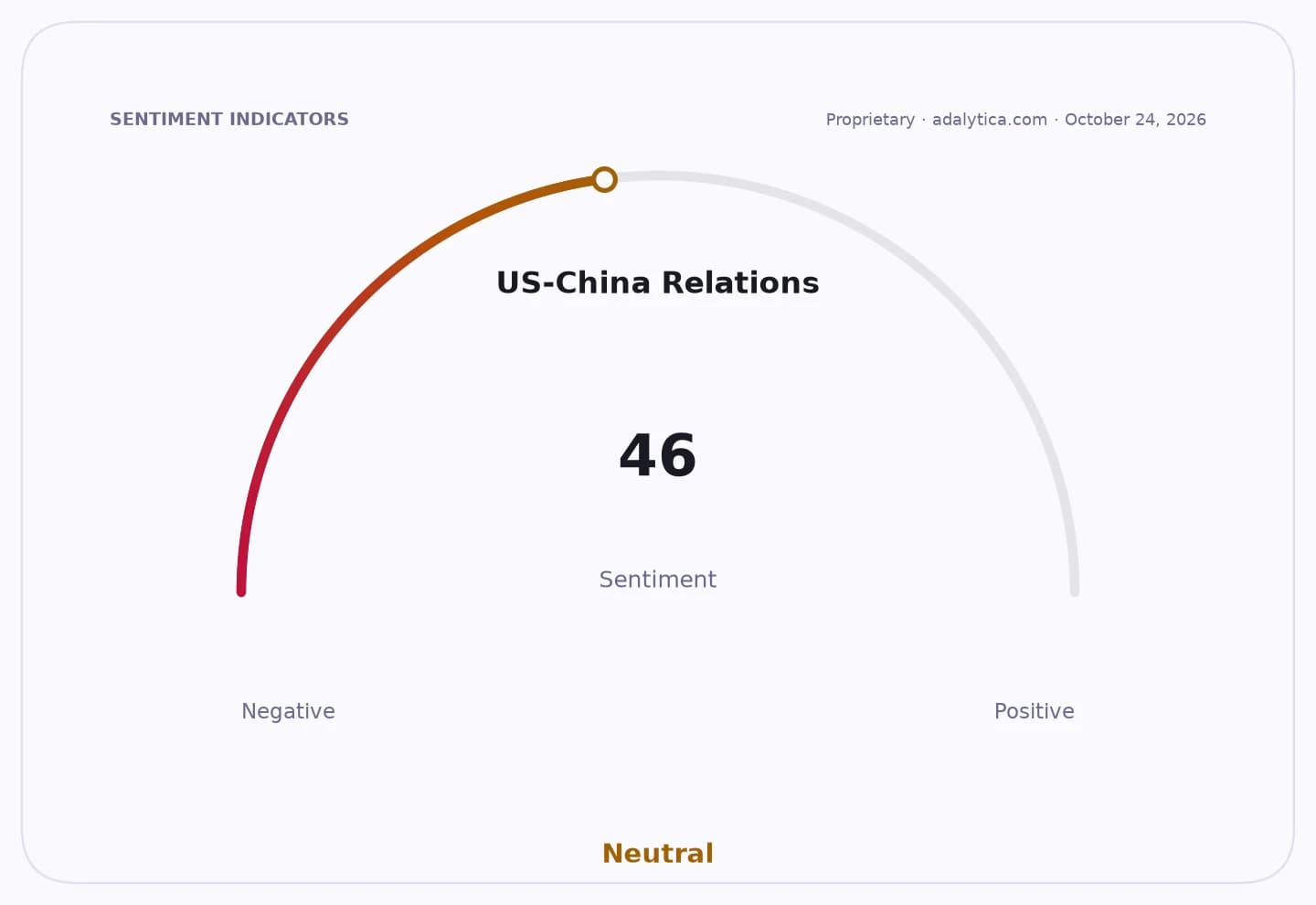
Sentiment Indicators
The Asahi Shimbun poll, conducted Sept. 26-27, found 57% of respondents said Takaichi needs to put effort into improving ties with China, compared with 35% who said she does not. The split helps explain the political background to the current chill: relations have deteriorated since Takaichi’s remarks in parliament last November over a possible Taiwan contingency, comments that Beijing viewed as provocative.
The survey suggests the diplomatic strain is not translating into a broad public appetite for confrontation. Support for better ties was strongest among older voters, at 67% among those 70 and above, but even 18- to 29-year-olds backed improvement by 59%. Women were more inclined than men to favor better relations, and even among ruling Liberal Democratic Party supporters, 58% said the government should work on the relationship.
For investors, that creates an important asymmetry. The market often prices Japan’s China exposure through the lens of risk — weaker tourism flows, consumer boycotts, trade frictions and headline volatility — but public opinion is signaling that the political ceiling for escalation may be limited. That should matter for Japan ETFs, the yen and sectors tied to cross-border demand, including autos, machinery, luxury retail and inbound travel.
The backdrop also includes domestic frustration with Takaichi’s handling of inflation. In the same poll, 59% said they did not approve of her response to rising prices, which can make external tensions more dangerous politically: a government under pressure at home has less room to absorb the economic hit from a China dispute.
Japan’s equity market has already been volatile, with the EWJ ETF pulling back to $94.42 on Oct. 28 after a summer rally, while technical indicators such as the 50-day moving average and RSI readings suggest the fund has cooled from earlier strength. China-focused FXI has also weakened, closing at $32.40, reflecting the market’s sensitivity to policy and growth risks in China. For Japan, though, the bigger point is that a de-escalation premium could emerge if Takaichi is forced by politics or economics to soften her tone.
Our thesis is that the market underestimates how quickly diplomacy can become an investable catalyst in Japan. If Takaichi moves to repair ties with Beijing, or at least stops the rhetoric from worsening, the beneficiaries are clear: Japanese exporters, travel names and broader Japan-listed equities. If she does not, the drag falls on exactly those sectors the market has most wanted to own for Japan’s secular re-rating. Position early.
| Entity | Gains | Losses |
|---|---|---|
| Japanese exporters | ▲Smoother China demand | ▼Retaliation risk |
| Inbound tourism firms | ▲Easier China travel flows | ▼Boycott headlines |
| Japan equities/EWJ | ▲Lower geopolitic discount | ▼Volatility premium |
| China hawks | ▲Hardline political appeal | ▼Public support for escalation |