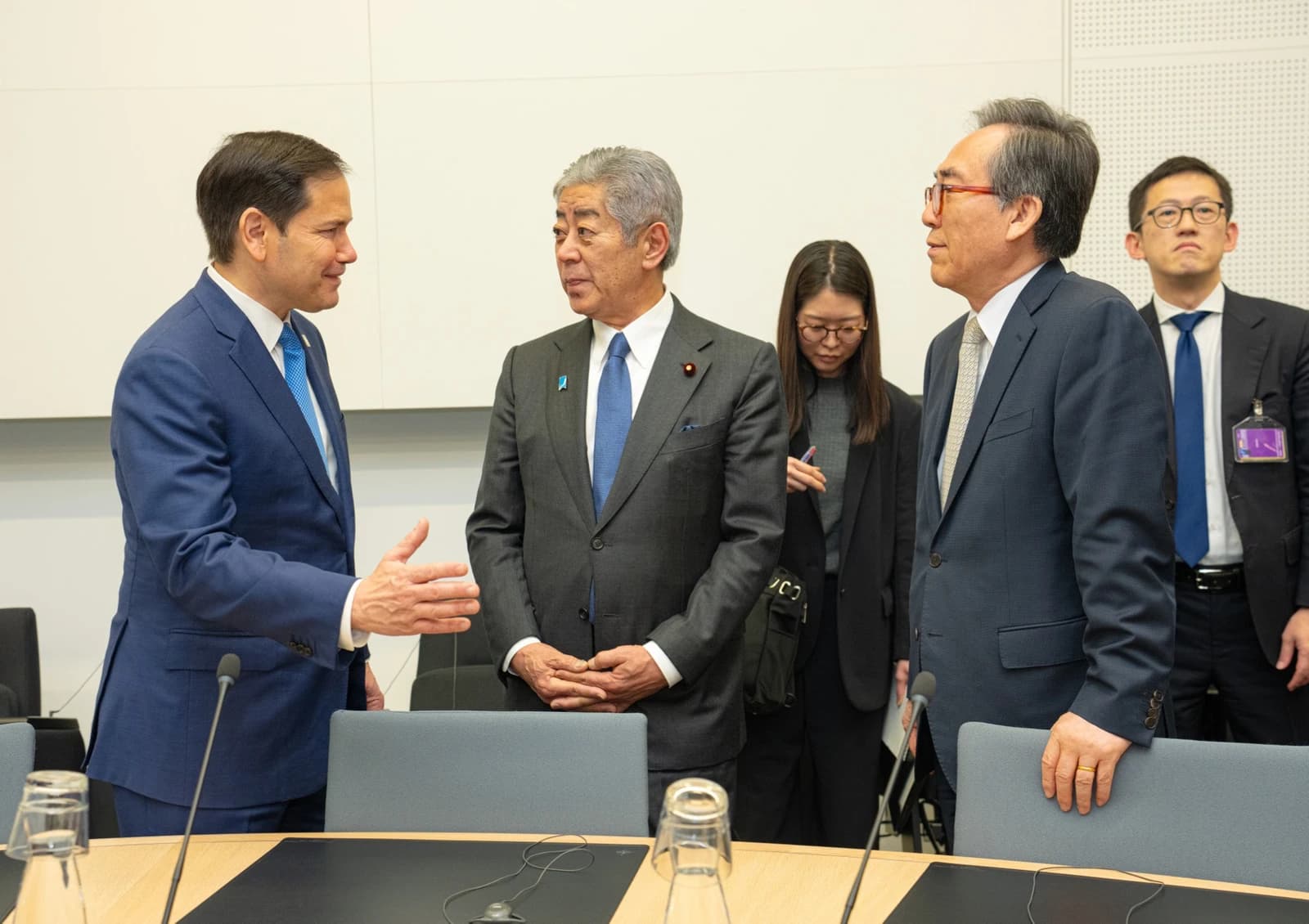
Tokyo is building a wider web of defence partnerships across the Indo-Pacific and beyond as it prepares for a potentially prolonged conflict over Taiwan, a shift that could reshape the region’s military balance and Japan’s own fiscal priorities.
Japan widens Indo-Pacific defense partnerships

The strategy matters because Japan is no longer treating Taiwan as a distant contingency. It is trying to make itself, and its allies, harder to isolate in any crisis by linking operational cooperation with Australia and the Philippines to weapons production, intelligence sharing and more resilient supply chains with North America and Europe. For investors and policymakers, that points to a longer cycle of defence spending, industrial cooperation and dual-use technology demand that could outlast the current cycle of geopolitical tension.
Sentiment IndicatorsⓘProprietary · adalytica.com · September 8, 2026
This is a snapshot — live sentiment, awareness and momentum for 130+ markets update continuously in the dashboard.Open AlphaPulse

The push was visible in Australia last month, when Tokyo and Canberra deepened cooperation on defence planning, advanced weapons development and the construction and sustainment of Japanese-designed warships. That relationship is becoming a template for what Japan wants more broadly: not just bilateral ties with the US, its sole treaty ally and security cornerstone, but a network that can support logistics, replenishment and industrial capacity if a regional conflict stretches on.
That logic reflects a basic military reality. A Taiwan crisis would not be won only by frontline assets; it would also be shaped by stockpiles, shipbuilding capacity, supply chains, intelligence fusion and the ability to keep forces operating under pressure. Japan’s widening partnerships are designed to strengthen strategic endurance, making it harder for Beijing to assume Tokyo could be neutralised, pressured or forced to stand back.

The economic significance is sizeable. Japan is trying to convert security concerns into a broader defence-industrial platform, which should support contracts in shipbuilding, munitions, sensors, electronic warfare and maintenance. A proposed record defence budget of $55.6 billion underscores how far the country is willing to go, even as it faces demographic constraints, tight labour markets and political resistance to a sharp military expansion. Defence Minister Shinjiro Koizumi’s emphasis on prioritising current personnel over foreign recruitment also highlights those limits: Japan is expanding capability, but within a system that still struggles to scale manpower.
For investors, the implications are twofold. Japanese defence contractors and industrial groups with exposure to shipbuilding, systems integration and advanced manufacturing stand to benefit if the budget trajectory turns into multi-year procurement. Allied suppliers in the US, Australia and Europe may also see more opportunities as Tokyo diversifies partners and seeks more secure supply chains. The flip side is that sustained defence outlays could add pressure to public finances and force trade-offs with other spending priorities, while the region’s escalation risk keeps a lid on confidence in sectors exposed to East Asian trade flows.
Market indicators in Japan have not been driven solely by this defence narrative, but the broader backdrop is one of heightened geopolitical attention. Standard technical readings on the yen-tracking FXY ETF show the fund trading near the middle of its recent range, with the 50-day moving average still above the current price and momentum indicators improving from earlier weakness. That suggests markets are not yet pricing a full-blown crisis premium into Japanese assets, even as geopolitical risk sentiment around US–China relations has turned sharply more volatile.
The bull case for Tokyo’s approach is that a dense network of partnerships raises the cost of coercion and improves deterrence without forcing Japan to rely on a single security channel. The bear case is that industrial cooperation and budget increases may not fully offset Japan’s manpower constraints, and that Beijing could still interpret the buildup as containment, worsening the very instability Tokyo wants to manage.
For now, the key investor takeaway is that Japan’s defence transformation is becoming as much about alliances and industrial capacity as it is about hardware. If that continues, the biggest beneficiaries are likely to be companies and countries embedded in Tokyo’s expanding security network — and the biggest losers may be those betting Japan can remain strategically peripheral in a Taiwan contingency.
| Entity | Gains | Losses |
|---|---|---|
| Japan defence contractors | ▲More procurement | ▼Fiscal restraint |
| Australia and Philippines | ▲Deeper security ties | ▼Strategic ambiguity |
| US allies/suppliers | ▲Industrial contracts | ▼Limited if tensions ease |
| Beijing | ▲None | ▼Higher deterrence costs |