Japan’s quantum and AI-chip race is sharpening around two adjacent markets: practical quantum computing and power-efficient semiconductors for inference, both of which could reshape industrial supply chains and where investors place capital. NIKKEI Tech Foresight’s latest featured roundup highlights a six-way map of the quantum industry, a Japanese startup building an AI chip architecture for agent-era workloads, and growing adoption of Chinese AI semiconductors by Japanese and German automakers.
Japan quantum and AI chips race expands
The biggest economic takeaway is that quantum computing is moving from abstract promise to a mapped industrial contest, while AI semiconductors are already feeding into real deployments. That matters because the companies that control core hardware, cooling, and packaging standards will sit closer to future revenue pools in drugs, materials, finance and automotive, while countries that miss the technology stack risk importing both the chips and the strategic leverage that comes with them.
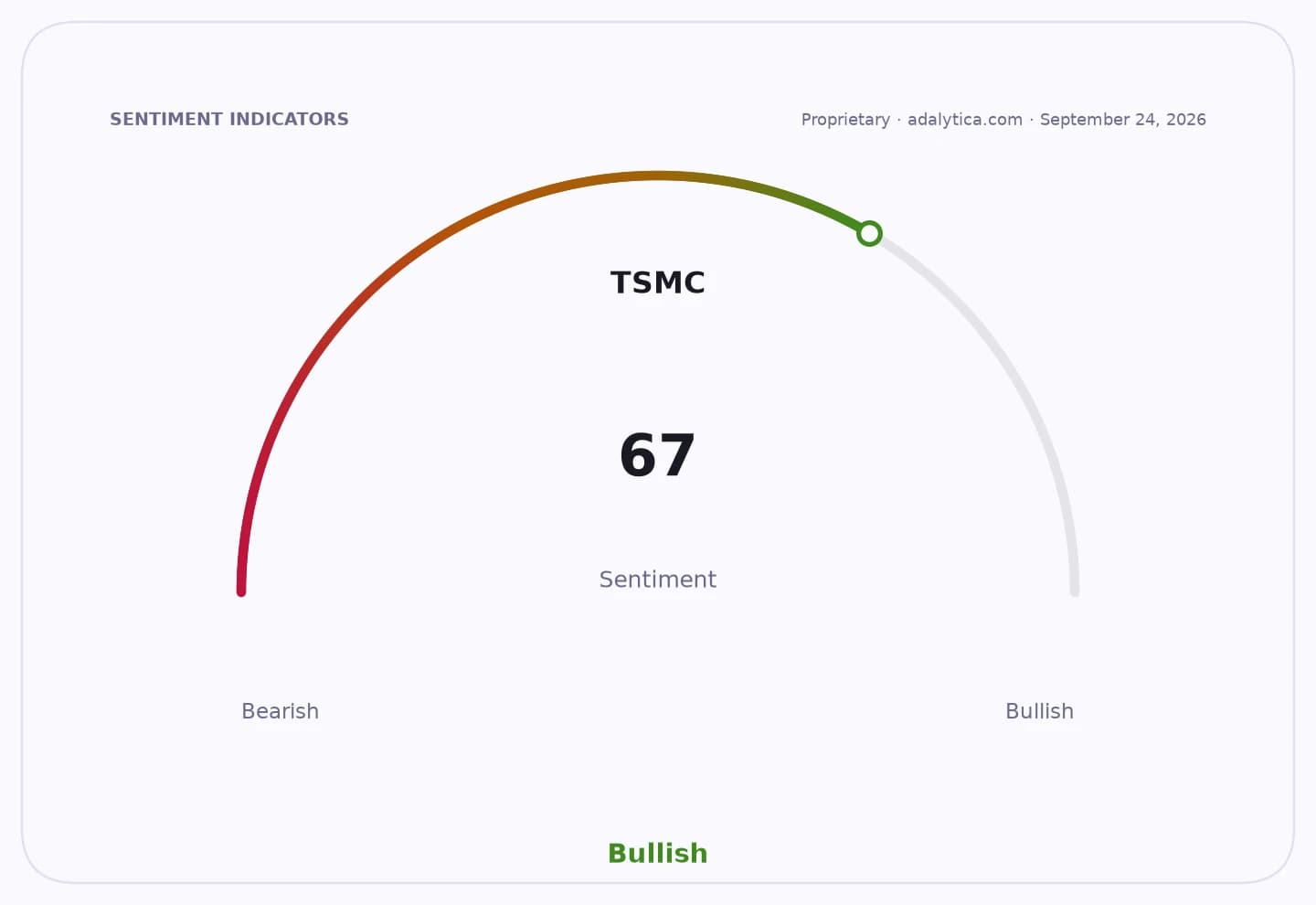
Sentiment IndicatorsⓘProprietary · adalytica.com · September 5, 2026
This is a snapshot — live sentiment, awareness and momentum for 130+ markets update continuously in the dashboard.Open AlphaPulse
The quantum piece is especially important for Japan, where the industry map sorts the field by six methods and points to where domestic companies can still compete. The article notes that multiple approaches are now expected to reach practical development around 2030, which suggests the market is entering a standards-and-scale phase rather than a pure research phase.
The AI-chip angle is more immediate. LENZO, a Japanese startup led by a former PlayStation developer, is developing a semiconductor based on its CGLA architecture with a focus on power efficiency, a key selling point as AI agents increase demand for cheaper inference. For investors, that is the part of the market where differentiation is harder, but margins can be stronger if a company proves it can cut power use without sacrificing performance.
The roundup also points to rising competitive pressure from China. Horizon Robotics is expanding adoption of its AI chips with Japanese and German carmakers, and Bosch and Aumovio’s joint venture said orders for Horizon-based advanced driver-assistance systems are growing, with shipments slated to reach 20 million units. That shows Chinese auto semiconductors are not just a domestic story anymore; they are becoming embedded in global vehicle platforms.
The adjacent supply-chain story is equally relevant. IBM said it can combine two cryogenic modules in a single environment, a step toward connecting multiple quantum processors and building the hundreds of linked chips needed for fault-tolerant quantum computing by 2029. That kind of progress is what turns quantum computing from lab hardware into an industrial ecosystem, lifting demand for cooling systems, photonics and specialized semiconductors.
For investors, the setup favors the companies that can sell enabling tools before the full market for quantum computers arrives. It also puts pressure on legacy chipmakers and automakers to secure supply, because AI and quantum are increasingly converging with energy efficiency, cooling and packaging as competitive battlegrounds.
The listed names tied most directly to the theme are trading with very different momentum. QUBT closed at $8.01 on Sept. 4, below its 200-day moving average of $9.51 and with RSI readings in the high 30s, while NVIDIA ended at $230.36 and AMD at $477.57, both still above their 200-day averages. That gap underscores the market split between speculative quantum plays and cash-rich AI chip leaders.
The next catalyst is execution: quantum milestones around cryogenic integration and fault tolerance, plus customer wins for low-power AI chips in automotive and edge inference. Any evidence that Japanese firms can convert the industry map into commercial traction would likely matter as much to stock selection as the broader technology trend.
| Entity | Gains | Losses |
|---|---|---|
| Quantum hardware makers | ▲Longer-term platform demand | ▼Pure research-only rivals |
| Japanese startups like LENZO | ▲Inference-chip openings | ▼Incumbent AI chip suppliers |
| Horizon Robotics and China auto semis | ▲Global design wins | ▼Western auto suppliers |
| Investors in AI/quantum enablers | ▲New hardware cycles | ▼Late movers and capital-starved peers |