Japan is set to announce a joint action with Washington on the yen after the currency’s slide toward 158 to the dollar forced the issue back onto the global policy agenda, underscoring how far exchange-rate weakness has become a macroeconomic and market risk.
Japan, U.S. Prepare Yen Action Near 158 per Dollar
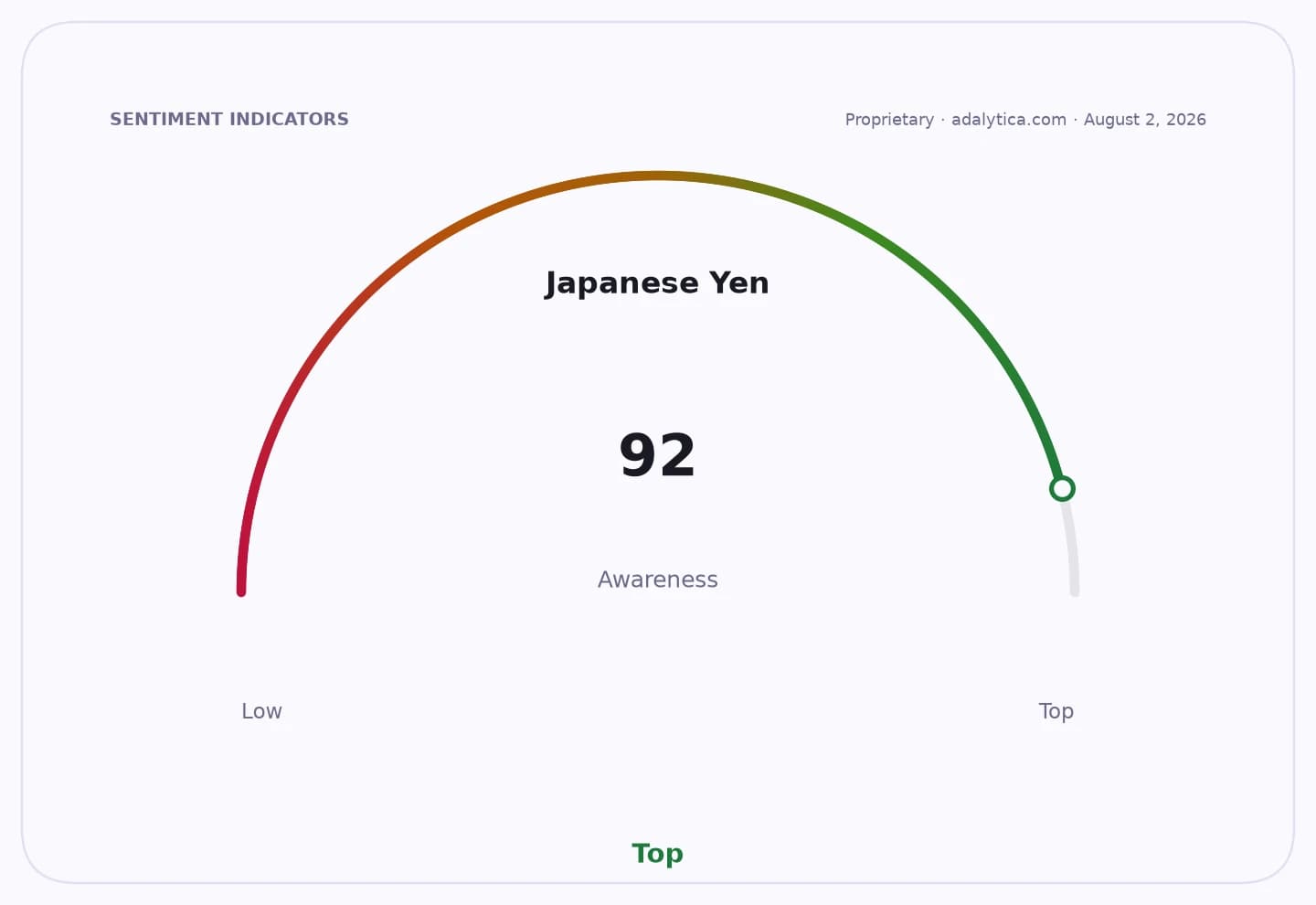
A coordinated move would be the clearest signal yet that policymakers are willing to lean against disorderly currency moves, not just watch from the sidelines. For Japan, the yen’s depreciation has added to imported inflation and squeezed households already coping with higher energy and food costs. For the U.S., a weaker yen can complicate the broader dollar outlook at a time when investors are already questioning how long the Federal Reserve can keep rates restrictive.
Sentiment IndicatorsⓘProprietary · adalytica.com · August 2, 2026
This is a snapshot — live sentiment, awareness and momentum for 130+ markets update continuously in the dashboard.Open AlphaPulse
The scale of the move matters because the yen has been trading close to levels that were once considered unlikely to be tolerated for long. The currency’s latest rebound, after touching around 158 per dollar, came amid heavy speculation that both Tokyo and the Bank of Japan were preparing to act. A joint statement or intervention would aim to restore credibility to that threat by showing the two governments are aligned on limiting excessive volatility.
The market backdrop has also been shaped by the widening policy gap between the U.S. and Japan. The Fed funds rate is still around 3.6%, while U.S. 10-year Treasury yields are near 4.7%, leaving dollar assets attractive versus Japan’s still-low rates. That interest-rate differential has been the core driver of yen weakness, and it is why verbal warnings alone have repeatedly failed to reverse the trend for long.
For investors, the immediate issue is whether any coordinated action can do more than slow the depreciation. Japan has already shown a willingness to intervene when the move becomes too fast, but history suggests that currency operations work best when they reinforce a shift in fundamentals. If the Bank of Japan remains cautious on rate hikes while the Fed keeps policy tight, the yen may recover only temporarily after any official action.
The implications extend beyond FX traders. A firmer yen would help Japanese consumers and importers, but it would pressure exporters’ foreign earnings when translated back into yen. That tension is visible in Japanese equities: Toyota Motor, for example, has benefited from a weak currency over time, while a stronger yen would likely trim that tailwind. In the U.S., a softer dollar could ease some imported inflation pressures, but it may also reflect a market reassessment of U.S. rate support.
The key question now is whether Tokyo and Washington are prepared to make the currency move part of a broader policy reset. If the statement is followed by repeated action, the yen could find a floor. If not, investors are likely to treat the announcement as a warning shot rather than a turning point.
| Entity | Gains | Losses |
|---|---|---|
| Japanese households/importers | ▲Lower import costs | ▼Less currency weakness |
| Toyota and other exporters | ▲Weaker yen tailwind fades slower if muted action | ▼Yen strength cuts overseas profits |
| U.S. Treasury / Tokyo policymakers | ▲Credibility on volatility control | ▼Risks market testing if action is symbolic |
| Dollar bulls / yen shorts | ▲Short-term cover if action is limited | ▼Sharp squeeze if intervention intensifies |